John Keegan’s Essential History Of The First World War
John Keegan’s The First World War, first published in 1998, remains a significant work for understanding the Great War. This review assesses its strengths, limitations, and suitability for contemporary readers, particularly those new to the subject or seeking a detailed military history.
Quick Answer
- Comprehensive Overview: Offers a well-structured narrative covering the war’s origins, major campaigns, and immediate aftermath.
- Focus on Experience: Excels at portraying the soldier’s perspective and the brutal realities of combat.
- Foundation for Study: Serves as an excellent starting point, though readers should be aware of subsequent scholarship.
Who This Is For
- Readers new to the study of World War I seeking an engaging and accessible introduction.
- Individuals interested in military history and the human cost of large-scale conflict.
What to Check First
Before engaging with The First World War by John Keegan, consider these points:
- Publication Date: Published in 1998, it predates some significant archival discoveries and reinterpretations of the war’s causes and consequences.
- Author’s Expertise: Keegan was a renowned military historian, and his analysis strongly emphasizes operational and tactical aspects, as well as the soldier’s lived experience.
- Scope and Depth: The book provides a broad overview of the entire conflict, rather than deep dives into niche aspects or specific national experiences.
- Keegan’s Style: Expect clear, evocative prose focused on the “face of battle,” with less emphasis on extensive diplomatic or economic minutiae.
Step-by-Step Plan for Engaging with The First World War by John Keegan
To derive maximum benefit from this work, a structured approach is recommended.
For anyone looking to understand the complexities of the Great War, John Keegan’s seminal work, The First World War, is an essential read. This book provides a comprehensive and engaging narrative that has stood the test of time.
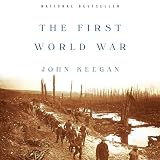
- Audible Audiobook
- John Keegan (Author) - James Langton (Narrator)
- English (Publication Language)
- 06/11/2019 (Publication Date) - Random House Audio (Publisher)
1. Review the Pre-War Context: Read Keegan’s initial chapters detailing the complex political landscape and the rapid slide into war.
- Action: Identify the key diplomatic failures and the interlocking alliance systems.
- What to look for: Keegan’s assessment of the war’s inevitability versus contingency.
- Mistake: Assuming the war’s outbreak was a simple, singular event without appreciating the intricate web of decisions and miscalculations.
2. Analyze the Western Front Narrative: Focus on Keegan’s vivid descriptions of trench warfare, tactics, and the soldier’s daily existence.
- Action: Note recurring themes of attrition, technological impact, and psychological endurance.
- What to look for: The author’s portrayal of the “stupidity” and “waste” inherent in prolonged trench conflict.
- Mistake: Overemphasizing grand strategy at the expense of the detailed accounts of individual combat experiences.
3. Examine Other Theaters of War: Pay attention to Keegan’s coverage of the Eastern Front, Gallipoli, and other global fronts.
- Action: Compare the operational challenges and strategic objectives across different theaters.
- What to look for: Evidence of the war’s global reach and the interconnectedness of various campaigns.
- Mistake: Confining your understanding solely to the Western Front, thereby missing the war’s broader international dimensions.
4. Evaluate the Post-War Impact: Read Keegan’s concluding chapters on the war’s legacy and its influence on the 20th century.
- Action: Consider his assessment of how the conflict reshaped political, social, and military landscapes.
- What to look for: The author’s articulation of the war’s enduring consequences.
- Mistake: Dismissing the post-war analysis as outdated without recognizing its foundational role in shaping historical understanding of the period.
5. Cross-Reference with Contemporary Scholarship: After completing the book, consult more recent works on specific aspects of the war.
- Action: Compare Keegan’s interpretations with historians who have benefited from newer sources and analytical frameworks.
- What to look for: Areas where Keegan’s narrative has been refined or challenged by later research.
- Mistake: Treating Keegan’s account as the definitive final word on all aspects of the war.
The First World War by John Keegan: Enduring Strengths and Potential Weaknesses
John Keegan’s The First World War is widely praised for its narrative power and its humanistic approach to military history. However, like any historical work, it has specific strengths and limitations that readers should consider.
Strengths:
- Narrative Vividness and Human Focus: Keegan’s prose is exceptionally compelling. He masterfully conveys the grim realities and the sheer physicality of combat, particularly in his focus on the “face of battle.” His descriptions of the soldier’s experience—the fear, the exhaustion, the camaraderie, the futility—are deeply affecting. For example, his account of the initial stages of the Somme offensive in Chapter 7 is a powerful testament to the brutal nature of trench warfare, offering visceral insight into the individual soldier’s ordeal.
- Accessibility for Newcomers: The book is written with a broad audience in mind, avoiding overly academic jargon. This makes it an ideal entry point for those unfamiliar with the complexities of World War I, providing a clear, engaging, and comprehensive overview of the war’s major events, causes, and immediate consequences.
- Holistic Chronological Sweep: Keegan covers the war from its origins through its conclusion and immediate aftermath. He effectively bridges the gap between the political and diplomatic precursors and the military operations, presenting a coherent, though broad, understanding of the entire conflict.
Limitations:
- Temporal Context of Scholarship: Published in 1998, The First World War by John Keegan predates significant archival releases and shifts in historical interpretation that have occurred in recent decades. For instance, contemporary scholarship has delved more deeply into the social, cultural, and gendered dimensions of the war, as well as the internal political dynamics of nations. Readers seeking the absolute latest academic debates on topics like war guilt, the role of popular opinion, or specific economic factors might find this work less current.
- Emphasis on Military Operations: While a strength for many, Keegan’s primary focus on military history means that other crucial aspects, such as detailed economic mobilization, the intricacies of colonial involvement beyond direct combat roles, or the internal political upheavals within nations like Russia or Austria-Hungary, receive less in-depth treatment. Readers desiring a more multifaceted analysis integrating these elements more thoroughly may need to consult additional sources.
- Potential for Generalization: Given the immense scope of the war, Keegan sometimes employs broad strokes to maintain narrative flow. While this enhances readability, it can occasionally lead to generalizations about specific experiences or national perspectives. For example, his portrayal of the German soldier’s experience, while empathetic, may not encompass the full spectrum of individual variations and motivations.
Common Myths about The First World War
Several common misconceptions can obscure a nuanced understanding of historical events, including World War I. Addressing these myths is crucial for a balanced perspective.
- Myth: The First World War was an inevitable consequence of imperial rivalries.
- Why it matters: This perspective can oversimplify the complex interplay of diplomatic miscalculations, nationalism, and specific events that triggered the war. It risks absolving individual decision-makers of responsibility.
- Fix: Examine Keegan’s detailed account of the July Crisis of 1914. Focus on the specific choices made by leaders and the failure of diplomatic mechanisms, rather than assuming a predetermined outcome.
- Myth: Soldiers in World War I were mere automatons, blindly following orders.
- Why it matters: This stereotype diminishes the agency, resilience, and complex psychological experiences of individuals caught in the conflict. It overlooks the diverse motivations and responses of those who fought.
- Fix: Engage closely with Keegan’s passages that detail the soldier’s daily life, their relationships, and their internal struggles. Note his emphasis on the “face of battle” as a means to understand individual reactions to extreme stress.
- Myth: The war’s primary impact was limited to military casualties.
- Why it matters: This overlooks the profound and lasting social, economic, political, and cultural transformations that the war wrought across the globe, affecting civilian populations and future generations.
- Fix: Pay close attention to Keegan’s concluding chapters on the war’s aftermath. Consider his analysis of how the conflict reshaped societies, redrew maps, and influenced subsequent historical developments.
Expert Tips for Engaging with The First World War by John Keegan
To achieve a deeper and more critical understanding of Keegan’s work, consider these advanced reading strategies.
- Tip 1: Integrate Cartographic Resources.
- Actionable Step: Maintain a detailed historical atlas of World War I readily accessible. Consult maps frequently when Keegan describes troop movements, battle locations, and the geographical context of campaigns.
- Common Mistake to Avoid: Reading operational descriptions without a visual reference, leading to a vague or inaccurate spatial understanding of strategic maneuvers and territorial gains.
- Tip 2: Identify and Track Keegan’s Analytical Framework.
- Actionable Step: As you read, jot down recurring analytical themes or concepts Keegan employs, such as the impact of specific technologies, the nature of leadership, or the psychological dimensions of warfare.
- Common Mistake to Avoid: Treating the book as a purely chronological narrative without recognizing and analyzing the author’s consistent interpretive lens and theoretical underpinnings.
- Tip 3: Supplement with Primary Source Excerpts.
- Actionable Step: If possible, seek out collections of letters, diaries, or memoirs from World War I soldiers and read them in conjunction with Keegan’s descriptive passages. This provides a direct point of comparison to the author’s synthesis.
- Common Mistake to Avoid: Relying solely on secondary interpretations without any exposure to the unfiltered voices of those who experienced the war firsthand, which can limit appreciation for Keegan’s descriptive power and interpretive choices.
The First World War by John Keegan: A Comparative Table
| Aspect | John Keegan’s *The First World
Quick Comparison
| Option | Best for | Pros | Watch out |
|---|---|---|---|
| Quick Answer | General use | Comprehensive Overview: Offers a well-structured narrative covering the war’s… | Mistake: Assuming the war’s outbreak was a simple, singular event without app… |
| Who This Is For | General use | Focus on Experience: Excels at portraying the soldier’s perspective and the b… | Mistake: Overemphasizing grand strategy at the expense of the detailed accoun… |
| What to Check First | General use | Foundation for Study: Serves as an excellent starting point, though readers s… | Mistake: Confining your understanding solely to the Western Front, thereby mi… |
| Step-by-Step Plan for Engaging with The First World War by John Keegan | General use | Readers new to the study of World War I seeking an engaging and accessible in… | Mistake: Dismissing the post-war analysis as outdated without recognizing its… |
Decision Rules
- If reliability is your top priority for The First World War by John Keegan, choose the option with the strongest long-term track record and support.
- If value matters most, compare total ownership cost instead of headline price alone.
- If your use case is specific, prioritize fit-for-purpose features over generic ‘best overall’ claims.