John Henry Newman’s The Idea of a University
Quick Answer
- The Idea Of A University by John Henry Newman advocates for a liberal education focused on intellectual development and the pursuit of knowledge for its own sake, rather than for immediate practical application.
- This work is a foundational text for understanding the historical philosophical debates surrounding the purpose and structure of higher education.
- While influential, its arguments are rooted in a specific 19th-century context, requiring careful consideration for application to modern, diverse educational institutions.
Who This Is For
- Academics, educators, and students of philosophy and educational theory seeking to engage with a seminal work on the nature of liberal learning.
- Individuals interested in the historical evolution of university ideals and the enduring debate between vocational and intellectual aims in education.
For a comprehensive understanding of Newman’s seminal work, consider acquiring a copy of ‘The Idea Of A University by John Henry Newman’. It’s essential for grasping the historical philosophical debates surrounding higher education.
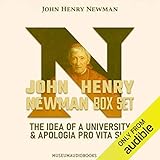
- Audible Audiobook
- John Henry Newman (Author) - Museum Audiobooks cast (Narrator)
- English (Publication Language)
- 12/15/2020 (Publication Date) - MuseumAudiobooks.com (Publisher)
What to Check First
- Newman’s Definition of “Liberal Knowledge”: Understand that Newman defines this as knowledge pursued for its own sake, aimed at intellectual enlargement and critical faculty development, distinct from specialized or vocational skills.
- The Historical Context: Recognize that Newman wrote in the mid-19th century, and his arguments reflect the social, religious, and academic structures of that era, which differ significantly from contemporary universities.
- Critique of Utilitarianism: Identify Newman’s central argument against an education solely focused on economic utility or immediate practical outcomes, as this forms a core pillar of his thesis.
- The Role of Religion: Note that Newman, as an Anglican clergyman and later Catholic Cardinal, integrates religious and moral formation into his ideal university, a dimension that shapes his holistic vision.
Step-by-Step Plan to Understanding The Idea Of A University by John Henry Newman
1. Engage with the Preface and Introductory Lectures:
- Action: Read Newman’s Preface and the first few lectures, particularly “The Aim of a University” and “Liberal Knowledge, Its Own End.”
- What to look for: Newman’s explicit articulation of his purpose in writing and his foundational definition of what constitutes a university’s core mission. Pay attention to his distinction between knowledge as an end in itself versus knowledge as a means to an external end.
- Mistake: Skipping these initial sections or treating them as mere preamble can lead to misinterpreting Newman’s subsequent arguments, as they establish the philosophical groundwork for his entire thesis.
2. Analyze the Concept of “Liberal Knowledge”:
- Action: Deeply examine the lectures that define and defend “liberal knowledge.”
- What to look for: How Newman contrasts this with vocational training and specialized disciplines. Note his emphasis on the cultivation of the intellect, the development of reasoning skills, and the acquisition of a broad intellectual perspective as ends in themselves.
- Mistake: Equating Newman’s “liberal knowledge” with modern general education requirements without understanding its philosophical underpinnings or Newman’s specific rationale for its pursuit.
3. Deconstruct the Critique of Utilitarian Education:
- Action: Focus on Newman’s arguments against an education solely for utility or profit.
- What to look for: The specific criticisms Newman levels against a purely pragmatic approach to education. Observe how he argues that such an approach narrows intellectual horizons and fails to cultivate the full potential of the human mind.
- Mistake: Assuming Newman rejects all practical application of knowledge; his critique is directed at education whose sole or primary aim is utility, not at the beneficial outcomes of a well-rounded intellect.
4. Examine the Role of the University as an Institution:
- Action: Study lectures that discuss the university’s function in society and its internal structure, such as “The University and the Working Classes” or “Duties of a University in its Relation to the State.”
- What to look for: Newman’s vision of the university as a place for the “diffusion of knowledge” and the cultivation of intellectual character among its students, fostering a community of learning.
- Mistake: Directly applying Newman’s 19th-century institutional models to contemporary universities without accounting for vast differences in governance, funding, and societal roles.
5. Integrate the Religious and Moral Dimension:
- Action: Carefully consider the lectures addressing religion and morality, such as “The Religious Aspects of the University.”
- What to look for: How Newman believes religious truth and moral development are integral to a complete university education, contributing to the formation of character alongside intellectual prowess.
- Mistake: Ignoring or downplaying the significant role Newman assigns to religion, which is a key component of his holistic educational philosophy and inseparable from his concept of liberal learning.
6. Consult Scholarly Interpretations and Counterarguments:
- Action: Seek out reputable academic reviews, essays, or books that analyze The Idea Of A University by John Henry Newman.
- What to look for: Diverse perspectives on Newman’s arguments, their historical reception, and their relevance or limitations in the 21st century. This provides a more nuanced understanding.
- Mistake: Relying solely on a solitary reading of the text without engaging with critical scholarship, which can lead to an incomplete or biased interpretation of Newman’s complex ideas.
The Idea Of A University by John Henry Newman: Core Principles and Contemporary Relevance
John Henry Newman’s The Idea Of A University by John Henry Newman remains a touchstone in discussions about the purpose of higher education. At its heart, Newman champions a concept of “liberal knowledge” – an education pursued not for a specific profession or immediate gain, but for the cultivation of the intellect itself. He argues that this broad intellectual training expands one’s understanding, sharpens critical faculties, and fosters a more informed and discerning mind. This process, for Newman, is intrinsically valuable, preparing individuals to engage with the world more thoughtfully and to lead richer intellectual lives. He famously states, “Knowledge, then, I say, is the instrument we must use; and the more we have of it, the better.” This perspective stands in direct contrast to purely utilitarian models of education, which Newman critiques for their narrow focus, arguing they fail to develop the full intellectual potential of students. For example, in his lectures, he contrasts the aim of a university with that of a trade school, emphasizing that the former seeks to enlarge the mind, while the latter seeks to impart specific skills.
The long-term relevance of The Idea Of A University by John Henry Newman lies in its eloquent defense of intellectual pursuits against the relentless pressure of vocationalism. It speaks to a timeless human desire for understanding and wisdom beyond mere professional competence. The text offers a powerful counter-narrative to the instrumentalization of education, reminding us of the intrinsic worth of learning and the importance of intellectual development for personal and societal flourishing.
The Idea Of A University by John Henry Newman: A Contrarian Perspective
While Newman’s arguments for liberal education are compelling, a contrarian viewpoint necessitates examining their limitations and potential downsides. Newman’s vision is deeply rooted in the 19th century, a period characterized by a more homogenous intellectual and social elite. His ideal university was largely envisioned as a place for the formation of gentlemen, with less emphasis on broad accessibility or the diverse needs of a modern,
Quick Comparison
| Option | Best for | Pros | Watch out |
|---|---|---|---|
| Quick Answer | General use | <em>The Idea Of A University by John Henry Newman</em> advocates for a liberal educa… | Mistake: Skipping these initial sections or treating them as mere preamble ca… |
| Who This Is For | General use | This work is a foundational text for understanding the historical philosophic… | Mistake: Equating Newman’s “liberal knowledge” with modern general education… |
| What to Check First | General use | While influential, its arguments are rooted in a specific 19th-century contex… | Mistake: Assuming Newman rejects all practical application of knowledge; his… |
| Step-by-Step Plan to Understanding The Idea Of A University by John Henry Newman | General use | Academics, educators, and students of philosophy and educational theory seeki… | Mistake: Directly applying Newman’s 19th-century institutional models to cont… |
Decision Rules
- If reliability is your top priority for The Idea Of A University by John Henry Newman, choose the option with the strongest long-term track record and support.
- If value matters most, compare total ownership cost instead of headline price alone.
- If your use case is specific, prioritize fit-for-purpose features over generic ‘best overall’ claims.