John Brunner’s ‘The Shockwave Rider’: A Cyberpunk Classic
The Shockwave Rider by John Brunner: Quick Answer
- The Shockwave Rider by John Brunner is a seminal 1975 science fiction novel that presciently explores themes of information control, digital identity, and societal fragmentation, laying crucial groundwork for the cyberpunk genre.
- Its enduring strength lies in its intricate, philosophical dissection of how advanced technology, particularly networked information, can both empower and oppress individuals and societies.
- This book is essential for readers interested in the origins of cyberpunk, those who appreciate complex, thought-provoking speculative fiction, and individuals examining the societal impact of pervasive technology.
The Shockwave Rider by John Brunner: Who This Is For
- Readers seeking to understand the foundational texts and philosophical underpinnings that shaped the cyberpunk genre, offering a look at its early conceptualization.
- Individuals who appreciate speculative fiction that critically examines the intricate relationship between information technology, social structures, and the evolving nature of individual autonomy and consciousness.
What to Check First
- Information Control as a Central Mechanism: Brunner’s novel posits information as the ultimate tool of power and control. Assess your engagement with narratives that meticulously dissect how data is managed, manipulated, and weaponized by governing entities.
- Protagonist’s Moral Complexity: Nickie, the central figure, operates in shades of gray. His methods are often ethically questionable, and his actions have far-reaching, disruptive consequences. Consider your preference for morally ambiguous characters.
- Narrative Density and Philosophical Depth: The Shockwave Rider is not a fast-paced thriller. It features intricate plotting, significant philosophical digressions, and a demanding, often non-linear, reading experience. Determine if you are prepared for this level of intellectual engagement.
- Historical Context as a Precursor: It is vital to recognize that this novel was published in 1975. Understanding its role as a pioneering work that anticipated many cyberpunk tropes is crucial for appreciating its innovation and impact, rather than judging it by later genre standards.
Step-by-Step Plan for Understanding The Shockwave Rider
1. Establish the Novel’s Historical Significance: Begin by understanding that The Shockwave Rider by John Brunner is a foundational work that significantly influenced the development of the cyberpunk genre.
- Action: Read the novel with a conscious awareness of its 1975 publication date and its role as an early exploration of themes that would later define cyberpunk.
- What to Look For: Identify how Brunner presciently explores concepts such as ubiquitous computing, the malleability of digital identity, and the pervasive influence of networked information systems before these became commonplace in society and fiction.
- Mistake: Approaching the novel as if it were a product of the later cyberpunk boom, thereby overlooking its pioneering contributions and innovative vision for its time.
2. Analyze Information as the Primary Power Dynamic: Focus on how information is systematically controlled, distributed, and weaponized within the novel’s meticulously constructed society.
- Action: Actively identify specific instances where characters leverage, hoard, or are victimized by the control and manipulation of data streams.
- What to Look For: Observe the functions and implications of systems like “Olympus” (the overarching governing computer network) and the “Public Eye” (pervasive surveillance), noting how various factions vie for informational dominance and control.
- Mistake: Underestimating the critical role of data control as the primary engine of conflict, societal organization, and individual oppression within the narrative.
3. Deconstruct Nickie’s Rebellion and Digital Identity: Examine the motivations, methods, and the profoundly complex nature of the protagonist, Nickie.
- Action: Trace Nickie’s journey and his fugitive existence, paying close attention to the ethical implications and consequences of his actions aimed at disrupting the ruling power structure.
- What to Look For: Note the conceptualization and intended effects of the “shockwave” he plans to unleash, as well as the nature of his own digitally-constructed and fragmented existence, including his “ghost” status.
- Mistake: Perceiving Nickie as a straightforward hero or anti-hero; his character is intentionally morally ambiguous, shaped by the extreme circumstances of his digitally-mediated life and the dystopian society he inhabits.
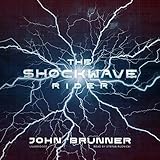
- Audible Audiobook
- John Brunner (Author) - Stefan Rudnicki (Narrator)
- English (Publication Language)
- 04/07/2020 (Publication Date) - Skyboat Media (Publisher)
4. Evaluate Societal Fragmentation and Technological Reliance: Consider the state of the novel’s post-cataclysmic society and its profound dependence on advanced technology for both survival and control.
- Action: Observe the breakdown of traditional social structures and the emergence of isolated, technologically dependent communities and individuals.
- What to Look For: Note the impact of the fictional “Great Depression” and how subsequent societal organization relies heavily on sophisticated technology for maintaining order, managing resources, and enforcing compliance.
- Mistake: Assuming the existence of a cohesive or unified society; Brunner depicts a world that is deeply fractured and atomized, with technology serving as both a binding agent and a tool of division and control.
5. Engage with the Novel’s Philosophical Inquiries: Reflect on the deeper questions the novel poses regarding identity, reality, consciousness, and the human behavior in a technologically saturated future.
- Action: Consider the implications of digital immortality, simulated realities, and the fluid definition of self in a world where consciousness can be detached from or augmented by physical form.
- What to Look For: Pay attention to scenes and dialogues that explore the concept of the “ghost in the machine,” the nature of consciousness divorced from a biological body, and the philosophical ramifications of digitally preserved or simulated minds.
- Mistake: Focusing solely on the plot mechanics and technological elements without engaging with the novel’s profound philosophical questions about existence, selfhood, and the nature of reality itself.
6. Contextualize within Cyberpunk’s Evolutionary Trajectory: Place The Shockwave Rider within the broader history of science fiction and its transition into the cyberpunk movement, recognizing its seminal status.
- Action: Compare Brunner’s themes, narrative style, and technological visions with those found in later, more established cyberpunk works by authors such as William Gibson or Neal Stephenson.
- What to Look For: Identify the early manifestations of core cyberpunk themes like corporate dominance, advanced human-machine interfaces, the blurring of the physical and digital realms, and the pervasive influence of technology on everyday life.
- Mistake: Judging the book solely by contemporary cyberpunk standards or expecting it to perfectly align with later genre conventions, thereby overlooking its significant contribution as a pioneering and highly influential work.
Common Mistakes
- Mistake: Expecting a straightforward, action-heavy narrative driven by constant physical conflict.
- Why it matters: The Shockwave Rider prioritizes thematic depth, intricate philosophical exploration, and the intellectual dissection of societal systems over relentless action sequences. Readers anticipating a fast-paced thriller may find the novel’s deliberate pacing and focus on ideas less engaging.
- Fix: Approach the novel as a dense intellectual exercise. Allow ample time to process its complex ideas, intricate narrative structure, and the philosophical questions it raises about technology and society.
- Mistake: Underestimating the prescience of its technological and societal predictions.
- Why it matters: Many concepts Brunner explored in 1975—such as pervasive digital surveillance, the immense power of networked information, the creation of digital identities, and the potential for information to be weaponized—have become realities or are actively pursued today. Dismissing these as mere fiction overlooks the book’s remarkable foresight.
- Fix: Actively seek parallels between the novel’s depicted technological landscape and our current digital environment. Recognizing these connections will enhance appreciation for its visionary qualities and its enduring relevance.
- Mistake: Dismissing Nickie as a simple anti-hero without fully considering his context.
- Why it matters: Nickie’s morally ambiguous actions and methods are not arbitrary; they stem directly from the oppressive, technologically controlled society he inhabits and his unique, digitally-mediated existence. He is a complex character study shaped by extreme circumstances, not a one-dimensional figure.
- Fix: Analyze Nickie’s motivations and the societal pressures that shape his choices. Recognize the nuanced portrayal of rebellion and survival within a system designed to suppress individuality and dissent.
- Mistake: Overlooking the novel’s profound critique of centralized power and information monopolies.
- Why it matters: A core thematic concern in The Shockwave Rider is the inherent danger of concentrated power, particularly over information. Brunner vividly illustrates this through the oppressive “Olympus” system, showcasing how unchecked control of data can lead to societal stagnation and the erosion of freedom.
- Fix: Pay close attention to how the narrative depicts the manipulation, suppression, and control facilitated by centralized data management. Consider the long-term consequences for individual liberty and societal progress.
Expert Tips for Reading The Shockwave Rider
- Tip: Focus on the concept of “information as the ultimate currency and weapon.”
- Actionable Step: When reading, actively highlight or make notes on instances where information is traded, hoarded, weaponized, used for manipulation, or serves as the primary means of influence and control.
- Common Mistake to Avoid: Treating information solely as a plot device or background element. Instead, recognize its systemic importance in shaping character actions, societal structures, and the overarching conflict.
- Tip: Embrace the ambiguity and complexity of Nickie’s character and motivations.
- Actionable Step: Resist the immediate urge to categorize Nickie as purely good or evil. Instead, analyze his actions and decisions within the context of the highly controlled, dystopian world he inhabits and his unique digitally augmented or fragmented existence.
- Common Mistake to Avoid: Judging Nickie by conventional moral standards without accounting for the extreme pressures, technological realities, and existential challenges he faces within the narrative.
- Tip: Understand the novel’s role as a genre precursor and its historical context.
- Actionable Step: Before or during your reading, research the key themes, stylistic elements, and authors associated with the early cyberpunk genre. See how *
Quick Comparison
| Option | Best for | Pros | Watch out |
|---|---|---|---|
| The Shockwave Rider by John Brunner Quick Answer | General use | The Shockwave Rider by John Brunner is a seminal 1975 science fiction novel t… | Mistake: Approaching the novel as if it were a product of the later cyberpunk… |
| Who This Is For | General use | Its enduring strength lies in its intricate, philosophical dissection of how… | Mistake: Underestimating the critical role of data control as the primary eng… |
| What to Check First | General use | This book is essential for readers interested in the origins of cyberpunk, th… | Mistake: Perceiving Nickie as a straightforward hero or anti-hero; his charac… |
| Step-by-Step Plan for Understanding The Shockwave Rider | General use | Readers seeking to understand the foundational texts and philosophical underp… | Mistake: Assuming the existence of a cohesive or unified society; Brunner dep… |
Decision Rules
- If reliability is your top priority for The Shockwave Rider by John Brunner, choose the option with the strongest long-term track record and support.
- If value matters most, compare total ownership cost instead of headline price alone.
- If your use case is specific, prioritize fit-for-purpose features over generic ‘best overall’ claims.