John Barth’s ‘Lost In The Funhouse’ Stories
Lost In The Funhouse by John Barth: Quick Answer
- Lost in the Funhouse is a collection of highly experimental postmodern short stories that dissect the nature of narrative, consciousness, and reality.
- It is essential reading for those interested in literary theory, metafiction, and the deconstruction of traditional storytelling.
- Readers seeking straightforward plots or easily digestible narratives will likely find this collection challenging and may wish to approach it with caution.
Who This Is For
- Readers who enjoy intellectual engagement with literature and appreciate texts that challenge conventional forms and expectations.
- Students and scholars of postmodernism, literary criticism, and experimental fiction.
What to Check First
- The Nature of Metafiction: Understand that many stories in this collection are “self-aware,” meaning they comment on their own construction, the act of writing, or the reader’s experience.
- Experimental Form: Be prepared for unconventional narrative structures, typographical experiments, and non-linear timelines, which are integral to the stories’ meaning.
- Thematic Depth: The collection delves into complex themes such as consciousness, identity, language, the relationship between fiction and reality, and the limitations of communication.
- John Barth’s Literary Context: Familiarize yourself with John Barth’s place within the postmodern literary landscape, as this collection is a seminal example of the movement’s preoccupations.
Step-by-Step Plan to Reading Lost In The Funhouse
1. Engage with the Titular Story First: Begin with “Lost in the Funhouse.”
- Action: Read the story, paying close attention to its unique formatting and the protagonist’s internal stream of consciousness.
- What to look for: The story’s structure mirrors its content; observe how the narrative itself becomes a “funhouse” of confusion and self-reflection.
- Mistake: Attempting to find a traditional plot resolution will lead to frustration, as the story’s focus is on the experience of being lost within narrative.
2. Identify Metafictional Devices: Actively seek out instances of self-reference.
- Action: Note passages where the narrator or characters discuss the story, the author, or the reader’s role.
- What to look for: Direct addresses to the reader, discussions about narrative choices, or characters aware of their fictional status.
- Mistake: Overlooking these self-aware moments means missing a core philosophical and structural element of Barth’s technique.
3. Analyze Formal Experimentation: Appreciate the structural and typographical innovations.
- Action: Examine how different stories employ varied layouts, fragmented sentences, or unconventional dialogue formats.
- What to look for: How the physical form of the text contributes to its thematic resonance and the reader’s cognitive experience.
- Mistake: Dismissing unusual formatting as mere stylistic flourish without considering its deliberate thematic purpose.
4. Track Thematic Resonances: Observe recurring ideas across the collection.
- Action: Keep a mental or physical note of concepts like identity fragmentation, the unreliability of memory, and the struggle for genuine communication.
- What to look for: The consistent exploration of how individuals perceive themselves and the world through the lens of narrative and language.
- Mistake: Focusing solely on plot, where present, will obscure the deeper, interconnected philosophical concerns Barth explores.
5. Consider the Reader’s Active Role: Recognize your participation in meaning-making.
- Action: Reflect on how the stories implicitly or explicitly draw you into the process of interpretation and construction of meaning.
- What to look for: Situations where the narrative forces the reader to make choices or question assumptions, highlighting the reader’s agency.
- Mistake: Approaching the text as a passive recipient of information will limit your engagement with the collection’s interactive nature.
6. Contextualize within Postmodernism: Place the stories within their literary movement.
- Action: Research key tenets of postmodern literature and compare Barth’s techniques to those of his contemporaries.
- What to look for: Similarities in deconstructive approaches, skepticism towards grand narratives, and an emphasis on language and form.
- Mistake: Reading Lost in the Funhouse in isolation, without understanding its contribution to and commentary on the broader postmodern literary project.
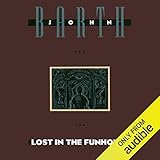
- Audible Audiobook
- John Barth (Author) - Kevin Pariseau (Narrator)
- English (Publication Language)
- 10/07/2011 (Publication Date) - Audible Studios (Publisher)
Lost In The Funhouse by John Barth: A Counter-Intuitive Reading
A common approach to Lost in the Funhouse by John Barth is to view it as a purely intellectual exercise, a collection of puzzles to be solved. However, a more fruitful, albeit counter-intuitive, perspective is to embrace the experience of being lost. Barth’s stories are not designed to be definitively “figured out” in a traditional sense; instead, they aim to replicate the feeling of navigating a complex, self-referential system. The “funhouse” is not just a metaphor for narrative but for consciousness itself, constantly reflecting, distorting, and questioning its own reality. Engaging with the disorientation, rather than fighting it, allows for a deeper appreciation of Barth’s profound exploration of subjective experience.
Common Myths About Lost In The Funhouse
- Myth: The stories are simply difficult for the sake of being difficult, lacking any underlying purpose.
- Correction: Barth’s experimental techniques are deliberate tools to explore themes of consciousness, language, and the nature of reality. The difficulty is not gratuitous but integral to the stories’ meaning. For example, the fragmented structure of “Lost in the Funhouse” directly mirrors the protagonist’s confused state.
- Myth: The collection offers clear moral lessons or straightforward philosophical conclusions.
- Correction: Postmodern literature, including this collection, often questions the possibility of universal truths or definitive answers. Instead, Barth foregrounds ambiguity and the subjective nature of interpretation, prompting readers to form their own understandings rather than receive pre-packaged ones.
Common Mistakes
- Mistake: Expecting clear, linear narratives with conventional plot progression.
- Why it matters: Barth deliberately subverts traditional narrative structures to explore the nature of storytelling itself. This expectation can lead to significant frustration.
- Fix: Approach each story with an awareness that narrative might be fragmented, self-referential, or even absent in its conventional form.
- Mistake: Dismissing experimental formatting as mere gimmickry.
- Why it matters: The unique layouts, typography, and structural choices in Lost in the Funhouse are integral to the stories’ thematic concerns, often mirroring the fragmentation of consciousness or the complexities of communication.
- Fix: Consider how the form of each story actively contributes to its meaning and the reader’s cognitive engagement.
- Mistake: Reading for simple entertainment or escapism.
- Why it matters: This collection is an intellectual and philosophical challenge. Its aim is to provoke thought about literature, reality, and consciousness, not to provide light diversion.
- Fix: Prepare for an engaged, analytical reading experience that requires concentration and a willingness to grapple with complex, abstract ideas.
- Mistake: Overlooking the metafictional layers.
- Why it matters: The self-referential nature of the stories—where fiction comments on its own construction—is a hallmark of Barth’s work and a key to unlocking their deeper meanings.
- Fix: Actively look for moments where the narrative draws attention to itself, the author, or the reader’s role in creating meaning.
Expert Tips for Navigating Postmodern Narratives
- Tip 1: Embrace Ambiguity.
- Action: When encountering uncertainty or multiple interpretations, resist the urge to find a single “correct” meaning. Instead, explore the range of possibilities the text offers.
- Mistake to Avoid: Forcing a definitive conclusion onto a story that is deliberately designed to be open-ended or ambiguous.
- Tip 2: Focus on Process, Not Just Product.
- Action: Pay attention to how the story is being told—the narrative techniques, structural choices, and authorial interventions—as much as what is being told.
- Mistake to Avoid: Reading solely for plot resolution or character development, thereby missing the commentary on the storytelling process itself.
- Tip 3: Understand the Author’s Intentionality.
- Action: Research John Barth’s broader literary philosophy and his engagement with postmodernism to contextualize the stories’ experimental nature.
- Mistake to Avoid: Treating the experimental elements as accidental or gratuitous, rather than as deliberate artistic and philosophical choices.
Decision Rules
- If reliability is your top priority for Lost In The Funhouse by John Barth, choose the option with the strongest long-term track record and support.
- If value matters most, compare total ownership cost instead of headline price alone.
- If your use case is specific, prioritize fit-for-purpose features over generic ‘best overall’ claims.
Quick Comparison
| Option | Best for | Pros | Watch out |
|---|---|---|---|
| Lost In The Funhouse by John Barth Quick Answer | General use | Lost in the Funhouse is a collection of highly experimental postmodern shor… | Mistake: Attempting to find a traditional plot resolution will lead to frustr… |
| Who This Is For | General use | It is essential reading for those interested in literary theory, metafiction,… | Mistake: Overlooking these self-aware moments means missing a core philosophi… |
| What to Check First | General use | Readers seeking straightforward plots or easily digestible narratives will li… | Mistake: Dismissing unusual formatting as mere stylistic flourish without con… |
| Step-by-Step Plan to Reading Lost In The Funhouse | General use | Readers who enjoy intellectual engagement with literature and appreciate text… | Mistake: Focusing solely on plot, where present, will obscure the deeper, int… |
FAQ
Q: Is Lost in the Funhouse a good starting point for reading John Barth?
A: While it is a seminal work, it is also highly experimental. For readers new to Barth, starting with a slightly less demanding work like The Sot-Weed Factor or Giles Goat-Boy might be advisable, though “Lost in the Funhouse” itself is an excellent, albeit challenging, introduction to his style.
Q: What makes Lost in the Funhouse a postmodern collection?
A: It embodies key postmodern characteristics: metafiction (stories about stories), fragmentation, skepticism of grand narratives, self-reflexivity, and a playful, often ironic, engagement with literary conventions.
Q: How should I approach the story “Lost in the Funhouse” specifically?
A: Read it slowly and pay attention to the physical layout. The text’s structure and the protagonist’s internal monologue are intrinsically linked. Consider how the act of reading the