Jim Crace’s Harvest: A Literary Analysis
Jim Crace’s Harvest is a novel that requires careful consideration, offering a profound meditation on societal change and the delicate balance of tradition and progress. This analysis is intended for readers seeking a deeper understanding of its allegorical depth, character nuance, and the specific literary techniques employed by Crace to explore the erosion of a rural way of life.
Who This Is For
- Readers interested in allegorical fiction that probes the impact of modernization on traditional ways of life.
- Those who appreciate dense prose and character studies, even if the plot progression is deliberate.
What to Check First
- Setting and Atmosphere: The novel is set in an unnamed, pre-industrial English village. Pay attention to how Crace establishes the sensory details of this rural environment to highlight its fragility and the deep connection its inhabitants have to the land.
- Protagonist’s Role: Walter is an outsider, a cripple, and a healer. His perspective is crucial for understanding the village’s internal dynamics and the encroaching external forces that threaten its existence.
- Symbolism of the Harvest: The titular harvest is not merely agricultural; it represents the village’s livelihood, its traditions, and its very existence. Its fate is intrinsically linked to the characters’ destinies.
- Pacing and Narrative Style: Crace employs a measured, almost lyrical prose. The narrative unfolds gradually, emphasizing observation and internal reflection over rapid plot development.
Step-by-Step Plan for Understanding Harvest by Jim Crace
This plan outlines key elements to focus on during your reading to gain a deeper appreciation of Harvest by Jim Crace.
1. Observe Walter’s Daily Rituals:
- Action: Note Walter’s meticulous care for his plants and his interactions with the village dwellers.
- What to look for: The contrast between his ordered, natural existence and the growing anxieties of the villagers as external influences begin to manifest.
- Mistake: Dismissing Walter’s routines as mere background detail; they are foundational to the novel’s themes of sustainability and connection to the land.
2. Analyze the Arrival of the “Newcomers”:
- Action: Track the introduction and influence of the outsiders who represent external progress and disruption.
- What to look for: How their technologies, language, and goals clash with the village’s established order and their impact on the villagers’ perceptions.
- Mistake: Focusing solely on the external conflict; the internal village reactions and divisions are equally significant in demonstrating the destabilizing effect of change.
3. Examine the Symbolism of the Fire:
- Action: Pay close attention to the descriptions of the fire that occurs midway through the novel.
- What to look for: The immediate aftermath and the long-term psychological and physical impact on the village and its inhabitants, considering its destructive and potentially transformative qualities.
- Mistake: Viewing the fire as a singular destructive event; its symbolic weight extends to cleansing, loss, and the irreversible transformation of the community.
4. Deconstruct the Language of Progress:
- Action: Identify and analyze the terms and concepts introduced by the newcomers.
- What to look for: The subtle ways these new ideas begin to reframe the villagers’ understanding of their world and their worth, often through persuasive rhetoric.
- Mistake: Accepting the newcomers’ rhetoric at face value; Crace uses their language to expose its potentially hollow promises and its power to dismantle existing values.
5. Assess Walter’s Response to Change:
- Action: Monitor Walter’s reactions and decisions as the village undergoes irreversible transformation.
- What to look for: His attempts to maintain his principles and his eventual adaptation or resistance in the face of overwhelming societal shifts.
- Mistake: Expecting Walter to be a conventional hero; his strength lies in his quiet endurance, his unique perspective, and his unwavering connection to the natural world.
For those seeking to delve into the rich allegorical landscape of Jim Crace’s Harvest, this novel offers a profound meditation on societal change. It’s a powerful exploration of tradition versus progress that resonates deeply.
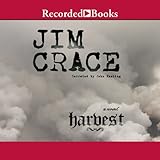
- Audible Audiobook
- Jim Crace (Author) - John Keating (Narrator)
- English (Publication Language)
- 04/08/2013 (Publication Date) - Recorded Books (Publisher)
6. Consider the Novel’s Ending:
- Action: Reflect on the final scenes and Walter’s ultimate fate.
- What to look for: The lingering questions about what has been lost and what, if anything, has been gained through the process of change.
- Mistake: Seeking a definitive resolution; the novel’s power lies in its ambiguity and the enduring questions it poses about progress and its costs.
Understanding Harvest by Jim Crace: Key Themes and Criticisms
Harvest by Jim Crace is a novel rich in thematic resonance, but its deliberate pacing and allegorical nature can present challenges for some readers. Understanding these aspects is key to appreciating its literary merit and its critical reception.
Strengths:
- Evocative Prose: Crace masterfully crafts sentences that are both precise and lyrical, imbuing the natural world with a palpable presence. The descriptions of the rural landscape are particularly vivid, making the setting an active participant in the narrative.
- Thematic Depth: The novel explores profound themes of tradition versus modernity, the impact of industrialization on rural communities, and the quiet resilience of individuals in the face of overwhelming change. It prompts reflection on what is lost when old ways are supplanted.
- Character Nuance: Walter, the protagonist, is a complex and memorable character. His physical disability serves not as a weakness, but as a source of unique insight and a profound connection to the natural world, offering a different mode of being.
Limitations:
- Deliberate Pacing: The narrative unfolds slowly, focusing on atmosphere and internal reflection rather than plot-driven action. Readers accustomed to faster-paced novels may find this challenging and may miss the subtle development of themes.
- Allegorical Nature: While powerful, the novel’s allegorical intent can sometimes overshadow character development. The “Newcomers” and their impact can feel symbolic rather than fully realized agents of change, which can make their motivations seem less organic.
Common Misconceptions
Here we address prevalent misunderstandings that can hinder a full appreciation of Harvest by Jim Crace.
- Myth: Walter is a passive victim of circumstance.
- Why it matters: This view overlooks his internal strength and his subtle acts of resistance and preservation, misinterpreting his quietude as inaction.
- Fix: Recognize Walter’s quiet determination and his role as a keeper of the old ways, even as his world crumbles. His agency is expressed through his connection to nature and his healing practices, which stand in stark contrast to the encroaching industrial order.
- Myth: The novel is simply a lament for a lost rural past.
- Why it matters: While it mourns loss, the novel is more nuanced, exploring the inevitability of change and the complex human response to it, not just romanticizing the past.
- Fix: Consider the novel as an exploration of transition. Crace doesn’t necessarily advocate for a return to the past but rather examines the human cost of progress and the loss of deeply ingrained traditions and community bonds.
- Myth: The “Newcomers” are purely villainous antagonists.
- Why it matters: This binary view simplifies the complex forces of modernization and societal evolution that Crace depicts, reducing them to simple good-versus-evil.
- Fix: Understand the “Newcomers” as embodiments of historical forces—progress, industrialization, and a different worldview—rather than simple villains. Their actions have unintended consequences, but they also represent a trajectory of human development that is often presented as inevitable.
Expert Tips for Reading Harvest
To maximize your engagement with Harvest by Jim Crace, consider these practical recommendations.
1. Tip: Engage with the novel’s sensory details.
- Actionable Step: Actively visualize and “feel” the descriptions of the land, the weather, and the physical sensations of the characters, paying close attention to the textures and sounds of the rural environment.
- Common Mistake to Avoid: Skimming descriptive passages, which are crucial for building the novel’s atmosphere and thematic weight, and for understanding the deep connection the villagers have to their land.
2. Tip: Track the evolution of language.
- Actionable Step: Pay attention to new words or phrases introduced by the “Newcomers” and observe how they begin to infiltrate the villagers’ speech and thinking, noting the subtle shifts in their worldview.
- Common Mistake to Avoid: Ignoring shifts in dialogue and terminology, which signal the subtle erosion of the old order and the adoption of new values and priorities.
3. Tip: Consider the protagonist’s physical limitations as a narrative device.
- Actionable Step: Analyze how Walter’s lameness influences his perspective, his interactions, and his unique connection to the earth, understanding it as a lens through which to view the changing world.
- Common Mistake to Avoid: Viewing Walter’s disability solely as a tragic characteristic; it is integral to his role as a healer and his unique, grounded understanding of the world.
Decision Rules for Interpreting the Narrative
- If understanding the allegorical framework is your top priority for Harvest by Jim Crace, focus on the symbolic representation of characters and events.
- If appreciating the literary style matters most, prioritize the examination of Crace’s prose and descriptive techniques.
- If your interest lies in the thematic exploration of societal change, prioritize analysis of the conflict between tradition and modernity.
Quick Comparison
| Element | Focus | Strengths | Limitations |
|---|---|---|---|
| Allegorical Framework | Symbolic representation of characters and events. | Offers profound thematic depth and invites philosophical interpretation. | Can sometimes feel less grounded in realistic character development. |
| Literary Style | Crace’s prose and descriptive techniques. | Creates a rich, evocative atmosphere and enhances the reader’s sensory experience. | May slow down the narrative pace for readers accustomed to plot-driven stories. |
| Thematic Exploration | Conflict between tradition and modernity, societal change. | Provokes thought on the costs of progress and |