Jeffrey Steingarten’s The Man Who Ate Everything
The Man Who Ate Everything by Jeffrey Steingarten: Quick Answer
- The Man Who Ate Everything is a collection of rigorously researched, opinionated essays on food, taste, and culinary history, offering a contrarian perspective.
- It challenges conventional food wisdom and explores the cultural significance of various dishes with intellectual depth, demanding critical engagement from the reader.
- Ideal for readers who appreciate detailed analysis and are open to having their culinary assumptions rigorously examined.
Who This Is For
- Readers seeking a sophisticated exploration of food that goes beyond simple recipes or reviews, delving into history, culture, and philosophy with intellectual rigor.
- Those who enjoy meticulously argued, often provocative, viewpoints on well-known and obscure culinary subjects, and are prepared for a challenging read.
What to Check First
Before engaging with The Man Who Ate Everything by Jeffrey Steingarten, consider these points:
- Author’s Stance: Jeffrey Steingarten is known for his authoritative and often contrarian opinions. He does not shy away from declaring certain foods “perfect” or definitively “inferior” based on his extensive research and personal criteria.
- Essay Structure: The book is a compilation of essays, some previously published in Vogue. Each piece stands alone, focusing on a specific food or culinary concept, rather than a linear narrative.
- Depth of Analysis: Steingarten’s approach is deeply analytical, often involving historical tracing, scientific principles, and cultural context. Be prepared for detailed examinations rather than quick culinary tips.
- Tolerance for Strong Opinions: If you prefer universally agreeable food commentary or are easily swayed by popular opinion, Steingarten’s often provocative conclusions might require a critical, open-minded approach.
Step-by-Step Plan for Reading The Man Who Ate Everything
1. Begin with the Titular Essay: Start with “The Man Who Ate Everything,” which introduces Steingarten’s relentless pursuit of understanding and experiencing food to its utmost.
- Action: Read the essay titled “The Man Who Ate Everything.”
- What to Look For: Steingarten’s personal journey, his methodology for deep culinary exploration, and the foundational philosophy of his approach.
- Mistake to Avoid: Treating this as a typical narrative introduction; it is an exploration of a concept and a personal manifesto for culinary inquiry.
2. Engage with Specific Food Deep Dives: Steingarten dedicates distinct essays to individual foods, such as the notorious hot dog, French fries, or even the concept of a perfect martini.
- Action: Select an essay on a food item that either fascinates you or one you believe you know well.
- What to Look For: The historical evolution, variations, cultural impact, and Steingarten’s definitive, often unexpected, conclusions on what constitutes excellence.
- Mistake to Avoid: Overlooking essays on familiar foods; Steingarten frequently uncovers surprising historical details or offers challenging critiques of widely accepted norms.
3. Analyze His Quest for “Perfection”: Throughout the collection, Steingarten grapples with the elusive concept of culinary perfection.
- Action: Observe how he defines and seeks perfection in each food subject he examines.
- What to Look For: His specific criteria for evaluation, the experiments he undertakes, and the rigorous logic behind his ultimate judgments.
- Mistake to Avoid: Expecting prescriptive recipes; the book’s focus is on understanding, appreciation, and critical evaluation, not on providing instructions for preparation.
4. Acknowledge His Contrarian Stance: Steingarten frequently adopts positions that diverge from popular opinion or prevailing food trends.
- Action: Identify instances where his views challenge common perceptions or widely held beliefs about food.
- What to Look For: The evidence, research, and logical framework he employs to support his unconventional perspectives.
- Mistake to Avoid: Dismissing his arguments outright due to their contrarian nature; consider the detailed research and argumentation he presents.
5. Appreciate the Cultural and Historical Tapestry: Many essays extend beyond the food itself to examine its broader societal role and context.
- Action: Read the essays with an awareness of their wider cultural implications.
- What to Look For: Connections between food, tradition, identity, social history, and human behavior.
- Mistake to Avoid: Viewing the book solely as a culinary guide; it is also a profound commentary on culture and human behavior through the lens of food.
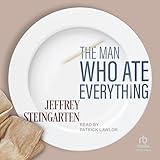
- Audible Audiobook
- Jeffrey Steingarten (Author) - Patrick Lawlor (Narrator)
- English (Publication Language)
- 01/28/2025 (Publication Date) - Tantor Media (Publisher)
6. Evaluate His Distinctive Prose: Steingarten’s writing style is characterized by its precision, intellectual rigor, and often dry wit.
- Action: Pay attention to the craftsmanship of his prose, appreciating the clarity and authority with which he conveys complex ideas.
- What to Look For: His precise vocabulary, his argumentation structure, and his ability to make intricate subjects accessible.
- Mistake to Avoid: Skimming dense passages or technical details; the nuance and strength of his arguments are often embedded within these precise descriptions.
The Man Who Ate Everything by Jeffrey Steingarten: A Contrarian’s Culinary Canon
Jeffrey Steingarten’s The Man Who Ate Everything by Jeffrey Steingarten is not a typical food book; it is a rigorous intellectual dissection of culinary obsessions and the pursuit of what the author deems “perfect” food. Steingarten’s essays are characterized by meticulous research, an unwavering commitment to his own exacting standards, and a willingness to challenge deeply ingrained culinary assumptions. This book is best approached not as a collection of recipes or endorsements, but as a deep dive into the history, culture, and subjective experience of food, delivered with a unique, often contrarian, voice.
One of the book’s primary strengths is Steingarten’s almost scientific approach to food. He treats each subject, from the humble hot dog to the complexities of French cuisine, as a subject worthy of exhaustive investigation. His essay on the hot dog, for example, is a testament to this, tracing its lineage and cultural significance with an obsessive detail that is both informative and entertaining. He seeks not just to describe food, but to understand its essence, its cultural weight, and its potential for perfection. This analytical depth provides a rich reading experience for those who appreciate a serious examination of their plates.
However, the defining characteristic of Steingarten’s work—his authoritative and often contrarian pronouncements—can also be a point of contention. He rarely offers lukewarm opinions, instead delivering definitive judgments on what constitutes the best version of a dish. This can be liberating for readers who appreciate decisive guidance, but it can also be alienating if one’s personal tastes or existing beliefs are directly challenged. The crucial decision criterion for embracing The Man Who Ate Everything hinges on the reader’s receptiveness to having their culinary assumptions rigorously examined and potentially dismantled. If you are seeking validation for your current food preferences, this book may prove challenging; if you are open to having your palate and your perceptions educated by a sharp, well-supported intellect, then Steingarten offers a deeply rewarding, albeit sometimes provocative, journey.
BLOCKQUOTE_0
This quote encapsulates Steingarten’s relentless pursuit of culinary excellence and his often uncompromising standards, a principle he applies across a wide spectrum of foods.
Common Myths About The Man Who Ate Everything
- Myth: This book is a cookbook filled with recipes for perfect dishes.
- Why it Matters: Readers expecting instructions on how to prepare food will be disappointed and may overlook the book’s true value.
- Fix: Understand that The Man Who Ate Everything is a collection of essays focusing on the history, cultural context, and Steingarten’s critical evaluation of foods, not a practical guide to cooking.
- Myth: Steingarten’s conclusions are universally accepted culinary truths.
- Why it Matters: This can lead readers to dismiss his arguments if they disagree, overlooking the depth of his research and the logical framework he employs.
- Fix: Recognize that Steingarten presents well-researched, authoritative, and often contrarian personal judgments. The value lies in his rigorous exploration and evidence, not necessarily in universal agreement.
- Myth: The book is only for professional chefs or serious food critics.
- Why it Matters: This perception may deter a broader audience who could find his insights fascinating and accessible.
- Fix: The book is suitable for any intellectually curious reader interested in food beyond mere consumption. His detailed explanations make complex topics understandable to the dedicated amateur.
Expert Tips for Engaging with The Man Who Ate Everything
- Tip: Read essays that immediately capture your interest, rather than adhering strictly to the publication order.
- Actionable Step: Browse the table of contents and select a topic that sparks your curiosity, whether it’s a familiar food or one you’ve never considered deeply.
- Common Mistake to Avoid: Feeling obligated to read chronologically, which might lead to initial disengagement if the first few essays don’t align with your immediate interests.
- Tip: Be prepared to pause and conduct brief research on tangential topics Steingarten mentions.
- Actionable Step: Keep a notebook or digital tool handy to jot down historical figures, specific ingredients, or culinary terms that pique your interest, and look them up later to deepen your understanding.
- Common Mistake to Avoid: Rushing through dense passages or technical descriptions without appreciating the context, which can diminish the overall depth of comprehension.
- Tip: Actively compare Steingarten’s arguments and conclusions with your own experiences and knowledge.
- Actionable Step: After reading an essay, reflect on your personal experiences with the food discussed and consider why your perspective might differ or align with his, fostering critical engagement.
- Common Mistake to Avoid: Passively accepting or rejecting his points without critical consideration, thereby missing an opportunity for personal culinary reflection and intellectual growth.
Quick Comparison
| Option | Best for | Pros | Watch out |
|---|---|---|---|
| The Man Who Ate Everything by Jeffrey Steingarten Quick Answer | General use | The Man Who Ate Everything is a collection of rigorously researched, opinio… | Mistake to Avoid: Treating this as a typical narrative introduction; it is an… |
| Who This Is For | General use | It challenges conventional food wisdom and explores the cultural significance… | Mistake to Avoid: Overlooking essays on familiar foods; Steingarten frequentl… |
| What to Check First | General use | Ideal for readers who appreciate detailed analysis and are open to having the… | Mistake to Avoid: Expecting prescriptive recipes; the book’s focus is on unde… |
| Step-by-Step Plan for Reading The Man Who Ate Everything | General use | Readers seeking a sophisticated exploration of food that goes beyond simple r… | Mistake to Avoid: Dismissing his arguments outright due to their contrarian n… |
Decision Rules
- If reliability is your top priority for The Man Who Ate Everything by Jeffrey Steingarten, choose the option with the strongest long-term track record and support.
- If value matters most, compare total ownership cost instead of headline price alone.
- If your use case is specific, prioritize fit-for-purpose features over generic ‘best overall’ claims.