Jeff VanderMeer’s Sci-Fi Thriller Annihilation
Quick Answer
- Annihilation by Jeff VanderMeer is a dense, atmospheric science fiction novel that prioritizes psychological dread and ecological mystery over conventional plot progression.
- Readers seeking clear narrative arcs and definitive answers may find it disorienting; those who appreciate ambiguity, unsettling imagery, and thematic depth will likely find it rewarding.
- The book’s primary strength is its creation of a unique, alien environment and its exploration of transformation, though its abstract nature can be a significant barrier for some.
Who This Is For
- Readers who enjoy ambiguous narratives and are comfortable with open-ended interpretations, particularly within speculative fiction.
- Individuals interested in explorations of ecological uncanny, psychological disintegration, and the limits of human understanding when faced with the truly alien.
What to Check First
- Tolerance for Ambiguity: Annihilation deliberately withholds concrete explanations. If you require clear plot points and character motivations, this book may not be suitable.
- Preference for Atmosphere over Action: The novel excels at building pervasive unease and wonder through detailed descriptions of an alien landscape and its effects. Action sequences are minimal.
- Interest in Ecological Themes: The novel deeply explores how environments can shape and fundamentally alter living organisms, presenting a unique perspective on nature’s power.
- Reading Context: While Annihilation can be read as a standalone, understanding its place within the larger Southern Reach Trilogy provides context for the overarching mysteries and thematic threads.
For those eager to dive into this unique narrative, the paperback edition of Annihilation by Jeff VanderMeer is an excellent choice.
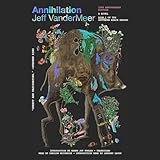
- Audible Audiobook
- Jeff VanderMeer (Author) - Carolyn McCormick (Narrator)
- English (Publication Language)
- 02/04/2014 (Publication Date) - Blackstone Audio, Inc. (Publisher)
Step-by-Step Plan for Approaching Annihilation by Jeff VanderMeer
1. Engage with the Narrator’s Perspective: Read the initial chapters carefully, focusing on the biologist’s detached, observational tone. What to look for: The procedural descriptions of the expedition’s preparations and the subtle hints of abnormality. Mistake to avoid: Dismissing the early details as mundane; they establish the novel’s unique mood and the peculiar rules governing Area X.
2. Observe the Environment’s Anomalies: Pay close attention to the descriptions of Area X’s flora, fauna, and physical laws. What to look for: Deviations from known ecological patterns and unsettling alterations to the landscape. Mistake to avoid: Expecting familiar biological or physical processes; Area X operates on its own alien logic.
3. Analyze Internal Transformations: Track the biologist’s internal monologue, memories, and scientific observations. What to look for: Shifts in her perception, her attempts to rationalize the inexplicable, and her evolving relationship with the environment. Mistake to avoid: Prioritizing external plot drivers over the internal psychological and physical journey.
4. Identify Unexplained Phenomena: Note the strange occurrences and phenomena within Area X, such as the lighthouse, the Crawler, and altered human forms. What to look for: The pervasive sense of wrongness and the effects on expedition members. Mistake to avoid: Seeking definitive, logical explanations for each anomaly; their purpose is often thematic rather than plot-driven.
5. Track Environmental and Personal Change: Observe how the environment and the characters undergo alteration. What to look for: Physical and psychological changes, the blurring of boundaries between self and environment, and increasing detachment from the outside world. Mistake to avoid: Assuming these transformations are purely symbolic; they have tangible, albeit alien, manifestations.
6. Comprehend the Narrative Structure: Recognize that the story is not strictly linear. What to look for: Flashbacks, fragmented memories, and the unreliable nature of the narrator’s account as influenced by Area X. Mistake to avoid: Demanding a chronological, cause-and-effect progression that the novel deliberately eschews.
7. Embrace Unanswered Questions: Accept that not all mysteries will be resolved by the narrative’s conclusion. What to look for: The lingering sense of dread, the thematic resonance, and the questions the book leaves the reader contemplating. Mistake to avoid: Frustration over a lack of definitive answers; the ambiguity is a core element of the intended reading experience.
Common Mistakes When Reading Annihilation by Jeff VanderMeer
- Mistake: Expecting a conventional plot with clear antagonists and resolutions.
- Why it matters: This expectation leads to disappointment because the novel focuses on internal transformation and ecological strangeness rather than external conflict with extraterrestrial beings or a defined villain.
- Fix: Approach it as an ecological horror and psychological thriller where the “alien” is the pervasive, transformative force of the environment itself. Recognize that narrative progression occurs through atmosphere, internal states, and environmental phenomena.
- Mistake: Trying to find a scientific or logical explanation for every anomaly within Area X.
- Why it matters: The novel operates on its own alien logic, and forcing familiar frameworks onto it will lead to frustration and a missed appreciation of its thematic depth.
- Fix: Accept the inherent unknowability of Area X. Instead of asking “why” or “how” in a scientific sense, consider the thematic implications and the emotional resonance of the phenomena.
- Mistake: Dismissing the biologist’s narration as simply unreliable due to mental instability.
- Why it matters: This misinterpretation can lead to distrust of all narrative elements, rather than an understanding of how trauma and alien influence distort perception in complex ways.
- Fix: Understand that her narration is unreliable due to the extreme, transformative pressures of Area X, which alter her senses and memory. Her perspective is shaped by the environment, not necessarily by deliberate deception.
- Mistake: Prioritizing external plot drivers over the internal psychological and physical journey.
- Why it matters: The novel’s core lies in the biologist’s experience and the environmental transformations, not in a sequence of external events. Focusing solely on action will cause readers to miss the nuanced thematic development.
- Fix: Pay close attention to the biologist’s internal monologue, her evolving perceptions, and the subtle (and not-so-subtle) changes occurring within her and the landscape.
Understanding Annihilation by Jeff VanderMeer: A Reader’s Guide
Annihilation by Jeff VanderMeer is a significant work in modern speculative fiction, celebrated for its dense atmosphere and profound thematic exploration. This novel, the first in the Southern Reach Trilogy, immerses readers in a mysterious and seemingly sentient ecological zone known as Area X. Unlike many science fiction narratives that focus on technological advancement or external conflict, Annihilation delves into the psychological and biological transformations that occur when humanity encounters something utterly alien and incomprehensible. The book’s strength lies in its ability to evoke a pervasive sense of dread and wonder, making the environment itself a central, active character.
The narrative follows a biologist, the sole narrator, as she joins a clandestine expedition into Area X. Previous expeditions have met with disaster, and the purpose of this new mission, like much else in the novel, remains deliberately vague. VanderMeer masterfully crafts an environment that is both beautiful and terrifying, where the laws of nature seem to have been rewritten. Flora and fauna are mutated, familiar landscapes are subtly or drastically altered, and the very air seems to hum with an alien intelligence. The biologist’s scientific training becomes a tool for observation, but it is ultimately insufficient to explain the profound changes happening to her and her surroundings. This disconnect between rational observation and inexplicable reality is a core tension throughout the novel.
One significant failure mode readers encounter with Annihilation is the expectation of a conventional plot with clear antagonists and resolutions. The novel’s structure is fragmented, mirroring the biologist’s own fractured perception as she succumbs to the influence of Area X. The “antagonist” is not a single entity but the pervasive, transformative force of the environment itself. Detecting this early involves recognizing that the narrative prioritizes internal experience and atmospheric buildup over external action. When the biologist begins to document the subtle shifts in her own body and mind, and the increasingly bizarre phenomena around her, it is crucial to understand that these are not mere plot devices but the central focus of the story. The book’s power is derived from its ambiguity and its ability to leave the reader contemplating the nature of self, consciousness, and the wildness of the unknown.
BLOCKQUOTE_0
This quote encapsulates the dual nature of the experience within Area X: a profound sense of discovery intertwined with a potentially dangerous detachment from conventional reality. It highlights how the environment can warp perception, leading to a subjective truth that may be alien to outsiders.
Key Strengths and Limitations
The primary strength of Annihilation is its unparalleled ability to create a unique and deeply unsettling atmosphere. VanderMeer’s prose is precise and evocative, painting vivid pictures of a world that is both alien and disturbingly familiar in its ecological underpinnings. The novel excels at generating a sense of creeping dread and profound mystery, drawing readers into the biologist’s subjective experience of Area X. Its thematic depth, exploring transformation, the uncanny in nature, and the limits of human comprehension, offers rich ground for interpretation.
However, the novel’s deliberate ambiguity and lack of conventional plot progression are also its primary limitations for many readers. Those who prefer clear narrative arcs, definitive answers, and easily identifiable character motivations may find Annihilation frustratingly opaque. The fragmented structure and unreliable narration, while integral to the book’s effect, can also serve as barriers to engagement if a reader is not prepared for them. The focus is overwhelmingly on internal experience and environmental immersion, which can make the narrative feel slow or meandering to those seeking external conflict or a more traditional story.
Expert Tips for Reading Annihilation
- Tip: Focus on sensory details and emotional responses to build immersion.
- Actionable Step: When reading descriptions of Area X, pay as much attention to how the biologist feels and perceives the environment as to what she is scientifically observing.
- Common Mistake to Avoid: Over-reliance on logical deduction. The novel often operates on a more primal, intuitive level, and understanding the emotional impact of the environment is key.
- Tip: Accept the inherent unknowability of Area X as a core thematic element.
- Actionable Step: Resist the urge to
Quick Comparison
| Option | Best for | Pros | Watch out |
|---|---|---|---|
| Quick Answer | General use | Annihilation by Jeff VanderMeer is a dense, atmospheric science fiction nov… | Mistake: Expecting a conventional plot with clear antagonists and resolutions. |
| Who This Is For | General use | Readers seeking clear narrative arcs and definitive answers may find it disor… | Why it matters: This expectation leads to disappointment because the novel fo… |
| What to Check First | General use | The book’s primary strength is its creation of a unique, alien environment an… | Fix: Approach it as an ecological horror and psychological thriller where the… |
| Step-by-Step Plan for Approaching Annihilation by Jeff VanderMeer | General use | Readers who enjoy ambiguous narratives and are comfortable with open-ended in… | Mistake: Trying to find a scientific or logical explanation for every anomaly… |
Decision Rules
- If reliability is your top priority for Annihilation by Jeff VanderMeer, choose the option with the strongest long-term track record and support.
- If value matters most, compare total ownership cost instead of headline price alone.
- If your use case is specific, prioritize fit-for-purpose features over generic ‘best overall’ claims.