Jeff Hawkins Explains The Theory Of A Thousand Brains
This review provides a detailed examination of Jeff Hawkins’ “A Thousand Brains: A Theory of Intelligence.” It focuses on the book’s central arguments, its potential impact on neuroscience and artificial intelligence, and its suitability for various readers. The analysis emphasizes a critical, evidence-based perspective, highlighting the theory’s strengths, limitations, and the practical takeaways for those engaging with its concepts.
Quick Answer
- Core Theory: Hawkins presents the “Thousand Brains Theory,” positing that the neocortex operates as a collection of thousands of semi-independent modules, each learning and recognizing patterns to build a predictive world model.
- Key Takeaway: The book offers a novel, unified framework for understanding intelligence, challenging current AI paradigms, but requires critical engagement with its speculative nature.
- Recommendation: Suitable for readers interested in theoretical neuroscience and AI, provided they approach the material as a hypothesis rather than established fact.
Who This Is For
- Individuals with a background or strong interest in neuroscience, cognitive science, and artificial intelligence research.
- Readers seeking to understand a new theoretical model that attempts to unify biological and artificial intelligence.
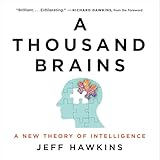
- Audible Audiobook
- Jeff Hawkins (Author) - Jamie Renell, Richard Dawkins (Narrators)
- English (Publication Language)
- 03/02/2021 (Publication Date) - Basic Books (Publisher)
What to Check First
- Hawkins’ Previous Work: Familiarity with his earlier book, “On Intelligence,” can provide valuable context for the evolution of his ideas.
- The Modular Hypothesis: Understand that the core of the theory is the proposal of thousands of self-contained cortical modules, a concept that diverges from some traditional neurological models.
- The Role of Prediction: Recognize that minimizing prediction error is presented as the fundamental driver of learning and intelligence within this framework.
- Speculative Nature: Be prepared for a theoretical model that, while drawing on neuroscience, is still a hypothesis under development and subject to ongoing scientific debate.
Step-by-Step Plan for Understanding A Thousand Brains
1. Deconstruct the Modular Concept:
- Action: Focus on the initial chapters explaining the proposed structure of the neocortex as thousands of semi-independent modules.
- What to Look For: Hawkins’ argument that each module is a complete learning machine capable of pattern recognition and prediction.
- Mistake to Avoid: Assuming these modules operate in isolation; pay attention to how Hawkins describes their integration and communication.
2. Grasp the “World Model” Mechanism:
- Action: Carefully study the explanation of how these modules collectively build and maintain a “world model.”
- What to Look For: The process by which diverse sensory inputs and internal states are integrated into a coherent, predictive representation of the environment.
- Mistake to Avoid: Equating this “world model” with simple data storage; it is a dynamic, predictive representation used for inference and action.
3. Analyze the Learning and Prediction Loop:
- Action: Examine the sections detailing how learning occurs through prediction error minimization.
- What to Look For: The mechanism by which discrepancies between predicted and actual outcomes drive adjustments within the modules.
- Mistake to Avoid: Underestimating the centrality of prediction error; it is the engine of adaptation and intelligence in this theory.
4. Evaluate the AI Implications:
- Action: Focus on the chapters discussing how the Thousand Brains Theory could inform the development of artificial general intelligence (AGI).
- What to Look For: Hawkins’ critique of current AI paradigms and his vision for future AI architectures based on modularity and prediction.
- Mistake to Avoid: Assuming immediate, practical applications; the book outlines a theoretical blueprint for future AI research.
5. Consider the Emergence of Consciousness:
- Action: Review the discussions on how the collective operation of modules might lead to consciousness and subjective experience.
- What to Look For: Hawkins’ hypothesis on the relationship between the integrated world models and self-awareness.
- Mistake to Avoid: Expecting a definitive solution to the “hard problem” of consciousness; the theory offers a potential neurological basis for it.
6. Identify Potential Counterpoints:
- Action: Actively look for areas where the theory might diverge from or challenge established neurological or AI principles.
- What to Look For: The evidence cited and the logical connections made, considering alternative interpretations.
- Mistake to Avoid: Accepting the theory uncritically; consider its testability and the empirical support for its core tenets.
Understanding A Thousand Brains by Jeff Hawkins
Jeff Hawkins’ “A Thousand Brains” introduces a compelling and ambitious framework for understanding intelligence, proposing what he terms the “Thousand Brains Theory.” The central premise is that the neocortex, the brain region responsible for higher cognitive functions, is not a monolithic computational unit but rather a collection of thousands of semi-independent “brain modules.” Each module, he argues, is a complete learning machine, capable of recognizing patterns and making predictions. These modules operate in parallel, constantly learning about the world from their unique perspectives.
The integration of these thousands of modules allows the brain to construct and continuously update a sophisticated “world model.” This model is not a static database but a dynamic, predictive representation of reality. The primary mechanism driving this process, according to Hawkins, is the minimization of prediction error. When the brain’s predictions about sensory input or future events do not match reality, the modules adjust their internal models to improve accuracy. This continuous cycle of prediction and correction is presented as the fundamental engine of learning, adaptation, and intelligence itself.
BLOCKQUOTE_0
Hawkins meticulously details how this modular architecture explains a wide range of cognitive phenomena, from sensory processing and motor control to abstract reasoning and consciousness. He posits that this unified theory offers a more robust explanation for intelligence than current approaches in both neuroscience and artificial intelligence, which he suggests often focus on specialized algorithms or massive data without capturing the brain’s fundamental predictive and modular nature.
A Thousand Brains by Jeff Hawkins: A Unified Theory of Intelligence
Jeff Hawkins’ “A Thousand Brains” presents a bold and comprehensive theory aiming to unify our understanding of intelligence, both biological and artificial. At its heart lies the “Thousand Brains Theory,” which proposes that the neocortex, the seat of higher cognitive functions, operates not as a single computational entity, but as a vast network of semi-independent “brain modules.” Each of these modules, roughly analogous to a cortical column, is capable of learning and recognizing patterns. The key innovation is that these modules operate in parallel, building and constantly updating a predictive “world model.” This model is not static; it’s a dynamic representation of reality that allows the brain to anticipate events, make inferences, and adapt to new information with remarkable efficiency.
Hawkins argues that this modular, predictive architecture is the fundamental basis of intelligence. He meticulously details how sensory inputs are processed by multiple modules, each specializing in different aspects of the input. The brain then integrates these specialized learnings to form a cohesive understanding. This process is driven by a continuous effort to minimize prediction error – the discrepancy between what the brain expects and what it actually perceives. When an error occurs, the modules adjust their internal models to improve future predictions. This constant refinement, he contends, is the engine of learning and adaptation, explaining phenomena ranging from simple motor control to complex abstract thought.
Implications for Artificial Intelligence
The theoretical framework laid out in “A Thousand Brains” has profound implications for the field of artificial intelligence. Hawkins suggests that much of the current progress in AI, while impressive in specific domains, lacks the foundational principles that enable true, general intelligence. He critiques approaches that rely solely on massive datasets for pattern recognition, arguing that they fail to capture the predictive and adaptive nature of biological intelligence.
Common Myths and Counterarguments
Here are common points of contention or potential misunderstandings regarding the Thousand Brains Theory:
- Myth: The theory describes the brain as a collection of isolated, disconnected specialists.
- Why it Matters: This misrepresents the core of the theory, which emphasizes the critical integration and communication between modules.
- Fix: Focus on Hawkins’ detailed explanations of how modules share information, achieve consensus, and form a coherent understanding of the world through interconnectedness.
- Myth: The theory is purely speculative with little empirical grounding.
- Why it Matters: While the theory is a hypothesis, it is built upon observable neuroscientific structures and proposes testable predictions.
- Fix: Examine the neuroscientific evidence Hawkins presents, such as the structure of cortical columns and the nature of sensory processing, and consider the experimental avenues he suggests for validation.
- Myth: The primary focus of the theory is on consciousness, not general intelligence.
- Why it Matters: While consciousness is discussed as an emergent property, the theory’s main objective is to explain the mechanisms of intelligence and learning.
- Fix: Differentiate between the explanation of intelligent processing and the philosophical debate surrounding consciousness; the theory offers a framework for the former.
Expert Tips for Engaging with the Theory
- Tip 1: Focus on the “Prediction Error” as the Core Learning Signal.
- Actionable Step: Identify every instance where Hawkins discusses prediction error and how it drives learning and adaptation within the proposed modular system.
- Common Mistake to Avoid: Overlooking the significance of prediction error, which is central to the theory’s explanation of how the brain learns and makes sense of novel situations.
- Tip 2: Differentiate Between “Recognition” and “Understanding.”
- Actionable Step: Pay close attention to how Hawkins defines “understanding” within the context of the Thousand Brains Theory, contrasting it with simple pattern matching or statistical correlation.
- Common Mistake to Avoid: Equating the advanced pattern recognition of current AI with the deeper, predictive “understanding” that Hawkins’ theory aims to elucidate.
- Tip 3: Understand the Role of Parallel Processing.
- Actionable Step: Grasp how Hawkins posits that thousands
Quick Comparison
| Option | Best for | Pros | Watch out |
|---|---|---|---|
| Quick Answer | General use | Core Theory: Hawkins presents the “Thousand Brains Theory,” positing that the… | Mistake to Avoid: Assuming these modules operate in isolation; pay attention… |
| Who This Is For | General use | Key Takeaway: The book offers a novel, unified framework for understanding in… | Mistake to Avoid: Equating this “world model” with simple data storage; it is… |
| What to Check First | General use | Recommendation: Suitable for readers interested in theoretical neuroscience a… | Mistake to Avoid: Underestimating the centrality of prediction error; it is t… |
| Step-by-Step Plan for Understanding A Thousand Brains | General use | Individuals with a background or strong interest in neuroscience, cognitive s… | Mistake to Avoid: Assuming immediate, practical applications; the book outlin… |
Decision Rules
- If reliability is your top priority for A Thousand Brains by Jeff Hawkins, choose the option with the strongest long-term track record and support.
- If value matters most, compare total ownership cost instead of headline price alone.
- If your use case is specific, prioritize fit-for-purpose features over generic ‘best overall’ claims.