Jay Winik’s April 1865: The Month That Saved America
Quick Answer
- Jay Winik’s April 1865: The Month That Saved America argues that the Civil War’s final month was a critical turning point, preventing further national disintegration.
- The book emphasizes Lincoln’s leadership and specific events, suggesting they steered the U.S. toward reunification.
- A contrarian perspective questions whether a single month could definitively “save” a nation still deeply divided, highlighting the protracted nature of reconciliation.
Who This Is For
- Readers seeking a narrative-focused account of the Civil War’s conclusion, emphasizing leadership and pivotal moments.
- Individuals interested in examining historical turning points and the debate surrounding their definitive impact.
What to Check First
- Author’s Central Thesis: Identify Winik’s specific argument for April 1865 being the decisive month of salvation.
- Lincoln’s Agency: Note the specific actions and decisions Winik attributes to Lincoln as crucial for averting disaster.
- Potential for Chaos: Examine how Winik depicts the alternative, more chaotic post-war scenarios that were supposedly avoided.
- Post-April 1865 Realities: Consider the historical events that followed April 1865 to assess the completeness of the “saving” narrative.
- Scholarly Critiques: Review academic responses to understand alternative interpretations of this period.
Step-by-Step Plan: Analyzing April 1865 by Jay Winik
This plan outlines a critical approach to evaluating Jay Winik’s April 1865: The Month That Saved America.
1. Deconstruct the “Saving” Claim: Action: Isolate and analyze the specific events and decisions Winik posits as preventing a worse outcome. What to look for: Direct causal links drawn by the author between April 1865 events and national salvation. Mistake: Accepting the title’s premise without scrutinizing the evidence for how this singular month achieved such a definitive outcome.
2. Evaluate Lincoln’s Agency: Action: Examine the extent to which Winik attributes the nation’s salvation to Lincoln’s individual actions and foresight. What to look for: Specific examples of Lincoln’s leadership, his plans for reconciliation, and his interactions with key figures. Mistake: Overemphasizing Lincoln’s singular impact without considering the broader political, social, and military context that also shaped events.
3. Assess the Narrative of Instability: Action: Identify how Winik portrays the potential for post-war chaos and fragmentation. What to look for: Descriptions of threats to national unity, potential for prolonged conflict, or severe societal breakdown. Mistake: Assuming that Winik’s depiction of potential disaster is a definitive forecast rather than a narrative device to emphasize the importance of April’s events.
4. Trace the Transition’s Complexity: Action: Analyze how the book depicts the shift from war to peace and the challenges inherent in that transition. What to look for: Discussions of demobilization, political maneuvering, and the immediate aftermath of Confederate surrender. Mistake: Confusing the end of major hostilities with the resolution of underlying national divisions and systemic issues.
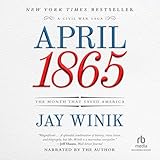
- Audible Audiobook
- Professor Jay Winik (Author) - Professor Jay Winik (Narrator)
- English (Publication Language)
- 04/06/2015 (Publication Date) - Recorded Books (Publisher)
5. Identify Unresolved Issues: Action: Note what Winik acknowledges as remaining challenges or unfinished business at the close of April 1865. What to look for: Mentions of lingering resentments, the future of freed slaves, or the process of political reintegration. Mistake: Believing that the “saving” of America implies a complete resolution of the conflicts that led to the war.
6. Consider Alternative Historical Perspectives: Action: Actively seek out or consider how other historians interpret the events of April 1865 and its aftermath. What to look for: Scholarly debates that question the singular importance of this month or Lincoln’s role. Mistake: Treating Winik’s interpretation as the sole or definitive account of this historical period.
April 1865 by Jay Winik: A Critical Juncture or Definitive Salvation?
Jay Winik’s April 1865: The Month That Saved America posits that the Civil War’s final month was a critical nexus, a period where the nation teetered on the brink of prolonged chaos but was steered toward reunification through decisive leadership, particularly that of Abraham Lincoln. The book argues that specific actions taken in April 1865 averted a potentially far more destructive post-war scenario, solidifying the Union and setting a course for the future. Winik emphasizes the precariousness of the situation, suggesting that without the events of this singular month, the United States might have fractured further or descended into extended guerrilla warfare and political instability.
From a contrarian viewpoint, the assertion that a single month “saved” America warrants careful scrutiny. While April 1865 undeniably marked a pivotal transition, the notion of definitive salvation can obscure the deeply entrenched issues that continued to plague the nation for decades. The fundamental questions of racial equality, states’ rights, and regional identity were far from resolved by the Confederacy’s surrender. The subsequent Reconstruction era, with its immense struggles and ultimate shortcomings, demonstrates that the process of national healing and true integration was a protracted and often contentious undertaking, extending well beyond the confines of that specific month.
Common Myths About April 1865
- Myth: The end of major hostilities in April 1865 immediately resolved the core conflicts of the Civil War.
- Evidence-based Rebuttal: This myth suggests a premature closure to the nation’s deep-seated divisions. The military victory was necessary but insufficient for national reconciliation; the underlying issues of slavery, states’ rights, and racial inequality persisted and evolved into new forms of conflict, as evidenced by the tumultuous Reconstruction period and the subsequent century of civil rights struggles.
- Myth: Lincoln’s leadership in April 1865 single-handedly ensured a stable post-war America.
- Evidence-based Rebuttal: This perspective overstates the agency of one individual. While Lincoln’s influence was significant, the outcome of April 1865 and its aftermath were the result of myriad factors and decisions by various actors, including military commanders, congressional leaders, and societal pressures. His assassination, as documented in historical accounts, fundamentally altered the trajectory of Reconstruction, demonstrating that no single individual could unilaterally guarantee stability.
- Myth: The Confederacy’s surrender marked a definitive end to the idea of secession or intense regional autonomy.
- Evidence-based Rebuttal: This myth ignores the lingering resentments and the continued assertion of regional identity and political grievances that shaped American politics for generations. While military defeat ended the immediate threat of secession, the underlying tensions and debates over federal versus state power remained active forces, influencing political discourse and regional relations well into the 20th century.
Expert Tips for Engaging with April 1865 by Jay Winik
- Tip 1: Isolate Winik’s “Saving” Mechanisms.
- Actionable Step: As you read, identify and list the specific events, decisions, or leadership actions that Winik explicitly links to preventing a worse post-war outcome.
- Common Mistake to Avoid: Accepting the premise of “saving” without critically assessing the author’s evidence for direct causation and whether alternative outcomes were truly averted or merely delayed.
- Tip 2: Map Lincoln’s Influence Against Broader Forces.
- Actionable Step: Compare Winik’s portrayal of Lincoln’s decisive actions with other historical accounts that emphasize the influence of congressional leaders, military commanders, or popular sentiment.
- Common Mistake to Avoid: Viewing Lincoln’s role in isolation. Recognize that his decisions operated within a complex political environment where other factions and ideologies were also vying for influence.
- Tip 3: Track Unresolved Issues Beyond April.
- Actionable Step: Maintain a running list of the significant challenges and questions that remained unresolved at the end of April 1865, such as the status of freed slaves and the terms of Southern readmission.
- Common Mistake to Avoid: Assuming that the cessation of major fighting implies a resolution of the fundamental societal and political issues that fueled the war.
Decision Rules
- If you prioritize a narrative that emphasizes decisive leadership and critical turning points, April 1865 may be a strong choice.
- If your interest lies in the complex, protracted nature of national reconciliation and the limitations of singular historical moments, this book’s central thesis should be approached with a critical lens.
- If you seek a balanced overview of the post-war period, consider supplementing Winik’s account with works that offer broader perspectives on Reconstruction.
Key Themes and Contrasting Interpretations
Jay Winik’s April 1865: The Month That Saved America centers on the idea that specific, carefully orchestrated events and leadership decisions during that month prevented the United States from descending into prolonged chaos. The book highlights Lincoln’s machinations for reconciliation, the surrender of Confederate forces, and the nascent steps toward national unity. Winik argues that this period was a genuine pivot point, a “saving” grace that steered the nation away from a potential quagmire of ongoing conflict and fragmentation.
However, a contrarian interpretation suggests that the concept of “saving” America in a single month oversimplifies the profound and enduring divisions that persisted long after April 1865. The subsequent era of Reconstruction, characterized by its own intense struggles, political maneuvering, and eventual shortcomings in establishing lasting equality, serves as evidence that the nation’s wounds were far deeper than a single month could heal. The challenges of integrating millions of newly freed slaves, rebuilding the South, and reconciling divergent political ideologies extended for decades, indicating that the process of national salvation was, and remains, a continuous, arduous endeavor.
BLOCKQUOTE_0
Quick Comparison
| Option | Best for | Pros | Watch out |
|---|---|---|---|
| Quick Answer | General use | Jay Winik’s April 1865: The Month That Saved America argues that the Civil… | Common Mistake to Avoid: Accepting the premise of “saving” without critically… |
| Who This Is For | General use | The book emphasizes Lincoln’s leadership and specific events, suggesting they… | Common Mistake to Avoid: Viewing Lincoln’s role in isolation. Recognize that… |
| What to Check First | General use | A contrarian perspective questions whether a single month could definitively… | Common Mistake to Avoid: Assuming that the cessation of major fighting implie… |
| Step-by-Step Plan Analyzing April 1865 by Jay Winik | General use | Readers seeking a narrative-focused account of the Civil War’s conclusion, em… | Common Mistake to Avoid: Accepting the premise of “saving” without critically… |
FAQ
- Q1: Does Jay Winik’s April 1865 present a universally accepted historical interpretation?
- A1: No