James Boswell’s Journals: A Literary Insight
Quick Answer
- The Journals Of James Boswell by James Boswell offers an unvarnished, immediate chronicle of 18th-century life and the complex inner world of its author, James Boswell.
- This work is essential for readers interested in literary biography, historical detail, and the evolution of self-awareness in writing.
- Individuals seeking a polished, fictional narrative or a strictly chronological account may find its raw, episodic nature less accessible.
Who This Is For
- Scholars and enthusiasts of 18th-century literature and history who value primary source material for in-depth study.
- Writers and readers interested in the developmental stages of autobiographical and biographical forms, and the unedited material from which they are shaped.
What to Check First
- Publication Edition: Verify the specific edition. Boswell’s journals are extensive, and different editions focus on distinct periods or offer varying levels of scholarly annotation.
- Scope of Coverage: Determine which years or life phases the chosen volume encompasses. Selections vary significantly in their chronological reach.
- Editor’s Introduction and Notes: A thorough introduction provides essential context for Boswell’s life, his social milieu, and the prevailing norms of his era.
- Availability of Companion Volumes: For a comprehensive understanding, investigate if supplementary volumes exist that cover periods not included in your primary selection.
Step-by-Step Plan for Engaging with The Journals Of James Boswell by James Boswell
1. Select a Focused Volume: Action: Choose a specific published volume of Boswell’s journals, perhaps one concentrating on a particular period such as his travels or his time in London. What to look for: A clear indication of the years covered and an editor’s introduction that establishes the historical and biographical context. Mistake: Attempting to read an uncurated, massive collection without guidance, which can lead to overwhelm.
2. Read the Introduction Carefully: Action: Dedicate time to reading the editor’s preface and any introductory essays. What to look for: Insights into Boswell’s motivations for keeping journals, key figures he interacted with, and the social conventions of his time. Mistake: Skipping the introduction, thereby missing essential context that illuminates the often cryptic entries.
3. Note Recurring Themes and Figures: Action: As you read, document names, places, and recurring topics that appear frequently. What to look for: Patterns in Boswell’s observations about himself, his social engagements, his literary aspirations, and his notable contemporaries (such as Samuel Johnson). Mistake: Treating each entry in isolation, failing to perceive the larger narrative threads developing over time.
4. Contextualize Entries with Historical Events: Action: When an entry mentions a significant event or person, conduct a brief external search to understand its historical relevance. What to look for: Connections between Boswell’s personal experiences and the broader political or cultural landscape of 18th-century Britain. Mistake: Reading the journals as a purely personal diary, overlooking their value as a historical document.
5. Consider Boswell’s Self-Awareness (or Lack Thereof): Action: Pay attention to Boswell’s own reflections on his behavior, his moods, and his relationships. What to look for: Instances where his self-perception aligns with or diverges from the events he describes, revealing aspects of his character. Mistake: Accepting Boswell’s self-assessments at face value without critical examination.
6. Identify Literary Precursors: Action: Reflect on how Boswell’s detailed observations and character sketches might have influenced later literary forms, particularly biography. What to look for: The foundational elements of journalistic interviewing, detailed character portrayal, and the exploration of the inner life. Mistake: Viewing the journals solely as a historical artifact, rather than as a work with significant literary lineage.
7. Engage with Critical Commentary (Optional but Recommended): Action: After reading a substantial portion, consult literary criticism or biographies of Boswell. What to look for: Scholarly interpretations of the journals that offer different perspectives or highlight aspects you may have overlooked. Mistake: Relying solely on your own interpretation without considering expert analysis.
For an unfiltered glimpse into the mind of an 18th-century literary figure, The Journals Of James Boswell is an essential read. This collection offers a raw, immediate chronicle of his life and thoughts.
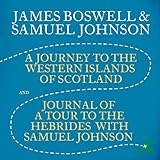
- Audible Audiobook
- Samuel Johnson (Author) - Ben Allen, Robin Laing (Narrators)
- English (Publication Language)
- 09/11/2025 (Publication Date) - SNR Audio (Publisher)
The Journals Of James Boswell by James Boswell: Strengths and Limitations
Strengths
- Unfiltered Authenticity: The journals provide an unparalleled, raw look into the mind and daily life of James Boswell. Unlike his polished biographies, these entries capture his immediate thoughts, anxieties, and observations without the filter of later revision. For instance, his detailed accounts of his interactions with Samuel Johnson, filled with stumbles and candid remarks, offer a stark contrast to the more composed portrait in The Life of Samuel Johnson. This authenticity is a significant strength for anyone seeking to understand Boswell as a man and a writer.
- Rich Historical Tapestry: Boswell was a keen observer of his environment, and his journals are a vibrant chronicle of 18th-century society. His descriptions of London coffee houses, social gatherings, legal proceedings, and the general atmosphere of the era offer invaluable insights for historians and literary scholars. The sheer density of detail, from fashion to political gossip, makes the period come alive.
- Development of Literary Technique: For those interested in the craft of writing, Boswell’s journals serve as a fascinating case study. One can trace his evolving skills in observation, dialogue capture, and character sketching, which he later refined in his published works. The evolution of his narrative voice and his experiments with recording conversations offer concrete examples of a writer honing his tools.
Limitations
- Episodic and Disjointed Nature: The journals are not a narrative in the traditional sense. They are a collection of daily entries, often brief and sometimes repetitive, reflecting the stream-of-consciousness of their author. This can make sustained reading challenging for those accustomed to linear storytelling. For example, a reader might find multiple entries detailing minor social slights or personal anxieties without a clear progression.
- Subjectivity and Self-Absorption: Boswell was famously preoccupied with his own feelings, social standing, and amorous pursuits. While this provides psychological depth, it can also lead to a sense of claustrophobia or tedium for readers less interested in his internal landscape. His frequent lamentations over his own perceived failings, while revealing, can become monotonous without the broader narrative arc of a novel or a more structured biography.
- Requires Significant Contextual Knowledge: While the journals offer a wealth of detail, their full import is often lost without an understanding of the historical figures, social customs, and political climate of the 18th century. An entry referencing a minor parliamentary debate or a specific social etiquette might be opaque to a modern reader unfamiliar with the era. This necessitates a willingness to engage in supplementary research, which can interrupt the reading flow.
The Journals Of James Boswell by James Boswell: A Critical Perspective
The value of The Journals Of James Boswell by James Boswell lies not in its polished prose or seamless narrative, but in its raw, unadulterated reflection of a complex individual and his era. Boswell’s decision to meticulously record his daily life, including his insecurities, his intellectual pursuits, and his social interactions, was a pioneering act that laid groundwork for modern biographical and autobiographical writing. However, this very rawness presents a significant hurdle for many readers.
A contrarian view might argue that the journals are often more valuable to scholars and historians than to the general reader seeking literary pleasure. The sheer volume, the repetitive nature of certain anxieties (particularly concerning his sexual encounters and perceived social blunders), and the dense allusions to an unfamiliar world demand a specific kind of reader. Unlike his biography of Johnson, which is structured around the life of a singular, towering figure, the journals are centered on Boswell himself, whose internal world, while fascinating, can be overwhelming.
The decision criterion for recommending The Journals Of James Boswell by James Boswell hinges on the reader’s tolerance for unvarnished reality versus their desire for narrative cohesion. If the goal is an immediate, unfiltered immersion into the mind of an 18th-century observer, and if one possesses the patience for detailed, often meandering entries, then these journals are invaluable. If, however, the expectation is a curated, flowing narrative or a straightforward historical account, then this work may prove more challenging than rewarding.
BLOCKQUOTE_0
Common Myths About The Journals Of James Boswell
- Myth: Boswell’s journals are simply a rough draft of his famous biography of Samuel Johnson.
- Why it matters: This misconception diminishes the journals’ independent literary and historical value.
- Fix: Recognize that while the journals inform his biography, they are a distinct entity. They offer a broader, more personal, and often less coherent picture of Boswell’s life and times, encompassing far not only his interactions with Johnson. They are a chronicle of his entire existence, not solely a preparatory document.
- Myth: The journals are consistently witty and insightful, reflecting the polished prose of Boswell’s published works.
- Why it matters: This sets unrealistic expectations and can lead to disappointment.
- Fix: Understand that the journals are spontaneous and unedited. They contain mundane observations, repetitive anxieties, and fleeting thoughts alongside moments of brilliance. The wit and insight are present but often buried within a much larger, less refined body of work.
Expert Tips for Reading Boswell’s Journals
- Tip 1: Focus on Boswell’s Dialogue Transcription:
- Action: Pay close attention to how Boswell records conversations. Note his use of direct speech, his attempts to capture accents or speech patterns, and his reflections on the dynamics of the exchange.
- Mistake to Avoid: Glancing over dialogue as mere filler; failing to recognize it as a precursor to modern journalistic interviewing and character development through speech.
- Tip 2: Track Boswell’s Self-Consciousness:
- Action: Identify instances where Boswell
Quick Comparison
| Option | Best for | Pros | Watch out |
|---|---|---|---|
| Quick Answer | General use | The Journals Of James Boswell by James Boswell offers an unvarnished, immed… | Mistake to Avoid: Glancing over dialogue as mere filler; failing to recognize… |
| Who This Is For | General use | This work is essential for readers interested in literary biography, historic… | Mistake to Avoid: Glancing over dialogue as mere filler; failing to recognize… |
| What to Check First | General use | Individuals seeking a polished, fictional narrative or a strictly chronologic… | Mistake to Avoid: Glancing over dialogue as mere filler; failing to recognize… |
| Step-by-Step Plan for Engaging with The Journals Of James Boswell by James Boswell | General use | Scholars and enthusiasts of 18th-century literature and history who value pri… | Mistake to Avoid: Glancing over dialogue as mere filler; failing to recognize… |
Decision Rules
- If reliability is your top priority for The Journals Of James Boswell by James Boswell, choose the option with the strongest long-term track record and support.
- If value matters most, compare total ownership cost instead of headline price alone.
- If your use case is specific, prioritize fit-for-purpose features over generic ‘best overall’ claims.