Jacques-Bénigne Bossuet’s Funeral Orations
Quick Answer
- Oraisons funèbres by Jacques-Bénigne Bossuet offers profound theological arguments and masterful rhetoric, serving as pivotal religious and political discourse within the context of 17th-century French absolutism.
- This collection is most suitable for academic readers, students of history, literature, and theology, and those specifically interested in the evolution of rhetoric and sermonizing during the Ancien Régime.
- Readers expecting secular philosophical exploration, personal memoirs, or contemporary political analysis may find the dense theological content and formal, courtly style to be a mismatch for their interests.
Who This Is For
- Scholars and students specializing in 17th-century French literature, history, theology, and the development of oratory.
- Individuals keen on understanding the intersection of religious discourse, political power, and rhetorical artistry during the era of French absolutism.
What to Check First
- Historical Context: Bossuet served as Bishop of Meaux and preacher to the court of Louis XIV. Understanding his position and the political climate of the Ancien Régime is essential for interpreting the Oraisons funèbres.
- Rhetorical Tradition: Familiarize yourself with classical and 17th-century French rhetorical conventions. Bossuet’s eloquence, while renowned, is a product of this specific tradition and can be demanding for the uninitiated.
- Theological Framework: The sermons are deeply embedded in Catholic doctrine, particularly concepts of divine providence, human fallenness, and the divine right of kings. A basic grasp of these tenets will enhance comprehension.
- Translation: If reading a translation, research the translator’s expertise and approach. Capturing the nuances of Bossuet’s complex syntax and elevated language is a significant challenge.
Step-by-Step Plan for Engaging with Oraisons funèbres by Jacques-Bénigne Bossuet
Engaging with Bossuet’s Oraisons funèbres requires a methodical approach to appreciate their historical weight and rhetorical sophistication.
1. Select a Representative Oration: Begin with a well-known example, such as the funeral oration for Henrietta Anne of England (1670).
- Action: Read the introduction and a key section of the chosen oration.
- What to Look For: Identify the central figure, the primary themes Bossuet introduces, and the intended audience.
- Mistake to Avoid: Attempting to read the entire collection sequentially without prior contextualization, which can lead to reader fatigue and a superficial understanding.
2. Establish the Occasion and Audience: Note the deceased and the specific circumstances of the funeral.
- Action: Research the historical figure and the socio-political environment of the time.
- What to Look For: How Bossuet calibrates his message to resonate with the mourners and the broader courtly or religious assembly.
- Mistake to Avoid: Treating the orations as purely biographical narratives, neglecting their function as persuasive instruments within a specific ceremonial and political context.
3. Deconstruct the Rhetorical Architecture: Analyze the structure and persuasive techniques employed by Bossuet.
- Action: Examine a significant passage, identifying its rhetorical components (e.g., exordium, narratio, argumentatio, peroratio).
- What to Look For: The application of classical devices like anaphora, antithesis, and apostrophe, and their contribution to the overall impact.
- Mistake to Avoid: Focusing solely on the content and overlooking the deliberate construction of the prose, thereby missing the artistry of Bossuet’s delivery.
4. Trace the Theological Underpinnings: Follow Bossuet’s exposition of Christian doctrines as they relate to the deceased’s life and death.
- Action: Highlight instances where Bossuet discusses divine providence, human mortality, or the afterlife.
- What to Look For: The consistency of his theological arguments and how they serve to reinforce established order or provide spiritual solace.
- Mistake to Avoid: Dismissing the theological content as mere religious dogma, failing to recognize its integral role in Bossuet’s worldview and persuasive strategy.
5. Examine the Political Ramifications: Consider how the orations support and legitimize the monarchical system of Louis XIV.
- Action: Identify passages that praise the king, the state, or the concept of divine right.
- What to Look For: The subtle or overt ways Bossuet uses funeral oratory to uphold political authority and social hierarchy.
- Mistake to Avoid: Reading the Oraisons funèbres solely as literary texts, neglecting their function as instruments of state ideology and reinforcement.
6. Compare Across Orations: Read a second oration on a different figure or from a different period.
- Action: Compare the themes, rhetorical strategies, and political undertones of the two orations.
- What to Look For: Shifts in emphasis or style, and how Bossuet adapts his approach to different individuals and circumstances while maintaining his core message.
- Mistake to Avoid: Assuming a uniform approach across all orations; recognizing Bossuet’s adaptability within his consistent framework is essential.
For those seeking a foundational understanding of Bossuet’s seminal work, the collection Oraisons funèbres by Jacques-Bénigne Bossuet is an essential starting point. This volume provides the core texts for appreciating his rhetorical genius and theological depth.
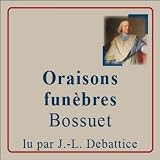
- Audible Audiobook
- Jacques-Bénigne Bossuet (Author) - Jean-Luc Debattice (Narrator)
- French (Publication Language)
- 02/17/2005 (Publication Date) - Le Livre qui parle (Publisher)
7. Consult Scholarly Interpretations: Seek out critical analyses of Bossuet’s work.
- Action: Find academic articles or book chapters discussing the historical reception and literary significance of the Oraisons funèbres.
- What to Look For: Expert insights into the theological depth, rhetorical mastery, and historical impact of these sermons.
- Mistake to Avoid: Relying solely on personal interpretation without benefiting from established scholarly discourse on Bossuet’s complex legacy.
Understanding the Nuances of Oraisons funèbres by Jacques-Bénigne Bossuet
Bossuet’s Oraisons funèbres are not mere eulogies; they are meticulously crafted sermons designed to articulate a specific worldview, blending theological doctrine with political ideology through unparalleled rhetorical skill. Their enduring power lies in their articulation of timeless themes of mortality, faith, and the nature of human existence, framed within the context of 17th-century French absolutism.
A significant failure mode readers encounter with Oraisons funèbres is misinterpreting their function as secular biography or modern political commentary. This occurs when readers approach the texts expecting a focus on individual psychological depth or a critique of power structures, rather than recognizing them as sermons designed to demonstrate God’s providence through exemplary lives, console believers, and legitimize the divine right of the French monarchy.
Detection: Early signs of this misinterpretation include a reader repeatedly questioning why Bossuet dedicates extensive passages to theology and divine will rather than focusing on the personal life of the deceased, or feeling that the political pronouncements are incongruous within a funeral context. If the reader feels disconnected from the individual being mourned or finds the political pronouncements jarring, it indicates a misaligned expectation.
Correction: To mitigate this, readers should actively seek information on Bossuet’s role as Bishop and court preacher. Understanding that these are not personal memoirs but carefully constructed sermons intended for a specific religious and political audience is paramount. Engaging with secondary scholarship that contextualizes the Oraisons funèbres within the framework of French absolutism and Baroque sermonizing can illuminate Bossuet’s methods and aims, transforming potential frustration into a deeper appreciation of his rhetorical mastery and historical significance.
Common Myths
- Myth 1: Bossuet’s Oraisons funèbres are objective historical accounts of the lives of the deceased.
- Why it Matters: This misconception leads to an inaccurate understanding of the texts’ primary purpose. They are not intended as neutral biographies but as theological and political sermons.
- Fix: Approach the Oraisons funèbres as works of rhetoric and theology, where the lives of individuals are presented as exemplars illustrating divine will and the order of the universe, particularly as it pertains to the monarchy.
- Myth 2: The eloquence of Bossuet’s Oraisons funèbres is solely about beautiful language and emotional appeal.
- Why it Matters: This overlooks the rigorous intellectual and theological scaffolding that supports his rhetorical flourishes. The beauty of his prose is a vehicle for profound theological and political arguments.
- Fix: Analyze the logical structure and theological underpinnings of his sermons. Recognize that his appeals to emotion are often rooted in shared religious beliefs and a specific worldview, not simply gratuitous sentiment.
- Myth 3: Bossuet’s work is irrelevant to modern readers due to its theological and political context.
- Why it Matters: This dismisses the enduring power of Bossuet’s rhetorical artistry and his clear insights into human mortality, faith, and the nature of power, which remain relevant themes.
- Fix: Focus on Bossuet’s mastery of language, his exploration of universal human experiences like grief and the contemplation of eternity, and his historical significance as a representative of a pivotal era in Western thought and governance.
Expert Tips
- Tip 1: Focus on the “Universal Truths” within the specific context.
- Actionable Step: When reading about a specific noble or royal, identify the broader Christian doctrines Bossuet uses to frame their life and death (e.g., the vanity of earthly glory, the certainty of judgment, the solace of faith).
- Common Mistake to Avoid: Getting bogged down in the details of the deceased’s life and missing the overarching theological and philosophical points Bossuet is making.
- Tip 2: Treat each oration as a case study in rhetoric and ideology.
- Actionable Step: For any given oration, jot down the primary rhetorical devices Bossuet employs (e.g., repetition, contrasts, direct address) and note how these devices serve to reinforce the political and religious message.
- Common Mistake to Avoid: Reading passively without actively dissecting the persuasive techniques, thus failing to appreciate the artistry and strategic intent behind the sermon.
- Tip 3: Cross-reference with contemporary historical accounts.
- Actionable Step: After
Quick Comparison
| Option | Best for | Pros | Watch out |
|---|---|---|---|
| Quick Answer | General use | Oraisons funèbres by Jacques-Bénigne Bossuet offers profound theological ar… | Mistake to Avoid: Attempting to read the entire collection sequentially witho… |
| Who This Is For | General use | This collection is most suitable for academic readers, students of history, l… | Mistake to Avoid: Treating the orations as purely biographical narratives, ne… |
| What to Check First | General use | Readers expecting secular philosophical exploration, personal memoirs, or con… | Mistake to Avoid: Focusing solely on the content and overlooking the delibera… |
| Step-by-Step Plan for Engaging with Oraisons funèbres by Jacques-Bénigne Bossuet | General use | Scholars and students specializing in 17th-century French literature, history… | Mistake to Avoid: Dismissing the theological content as mere religious dogma,… |
Decision Rules
- If reliability is your top priority for Oraisons funèbres by Jacques-Bénigne Bossuet, choose the option with the strongest long-term track record and support.
- If value matters most, compare total ownership cost instead of headline price alone.
- If your use case is specific, prioritize fit-for-purpose features over generic ‘best overall’ claims.