Jacqueline Wilson’s The Story Of Tracy Beaker
The Story of Tracy Beaker by Jacqueline Wilson: Quick Answer
- The Story of Tracy Beaker by Jacqueline Wilson offers a raw, character-driven narrative from the perspective of a resilient child in a residential care setting.
- Its strength lies in its authentic voice and unflinching portrayal of complex emotions and systemic realities for children in care.
- Readers seeking lighthearted stories or simple plot resolutions may find its directness and thematic focus challenging.
Who This Is For
- Readers aged 9 and up interested in realistic fiction that explores themes of belonging, identity, and the challenges of growing up within the foster care system.
- Young individuals grappling with feelings of anger, loneliness, or a desire for agency, who may find Tracy’s voice relatable and validating.
What to Check First
- Narrative Voice: Tracy’s first-person perspective is the book’s foundation. Assess your comfort with her direct, often defiant, and emotionally charged language.
- Thematic Focus: The novel centers on abandonment, the search for family, and life within residential care. Consider your engagement with these potentially sensitive topics.
- Realistic Portrayal: Jacqueline Wilson avoids sanitizing the experiences of children in care. The narrative presents emotional turmoil and systemic challenges with considerable honesty.
- Character-Centric Approach: The story prioritizes Tracy’s internal world and relationships over a complex external plot. Understand that character development and emotional resonance are the main drivers.
Step-by-Step Plan for Understanding The Story of Tracy Beaker
1. Immerse Yourself in Tracy’s Perspective:
- Action: Read the initial chapters, focusing on Tracy’s immediate thoughts and reactions to her surroundings at the Dolphin residential home.
- What to Look For: Her vivid imagination, her defensive strategies, and the underlying vulnerability that fuels her actions.
- Mistake: Dismissing Tracy’s voice as simply “difficult” or “unpleasant” without recognizing it as a carefully crafted tool to convey her experiences.
2. Analyze Key Relationships:
- Action: Pay close attention to Tracy’s interactions with other children, such as Louise and Justine, and the care staff, like Cam.
- What to Look For: The dynamics of friendship, rivalry, and the impact of adult figures on Tracy’s emotional state and behavior.
- Mistake: Viewing these relationships as secondary. They are crucial for illustrating Tracy’s need for connection and her struggle to form stable bonds.
3. Examine the Setting as a Character:
- Action: Observe how the Dolphin residential home is depicted—its rules, routines, and the atmosphere it creates.
- What to Look For: The ways the home attempts to provide structure versus the feelings of transience and institutionalization it can foster.
- Mistake: Assuming the setting is merely a backdrop. Wilson uses the environment to highlight the constraints and unique social dynamics of children’s homes.
For those looking to dive into this classic, you can find Jacqueline Wilson’s ‘The Story of Tracy Beaker’ readily available.
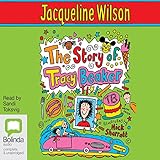
- Audible Audiobook
- Jacqueline Wilson (Author) - Sandi Toksvig (Narrator)
- English (Publication Language)
- 02/12/2008 (Publication Date) - Bolinda audio (Publisher)
4. Track the Quest for Her Mother:
- Action: Follow Tracy’s persistent and often fantastical efforts to connect with her birth mother.
- What to Look For: The emotional weight of this quest, her idealized vision of her mother, and the impact of each hope and disappointment.
- Mistake: Underestimating the centrality of this search; it is the primary engine of Tracy’s hopes and her motivation for many of her actions.
5. Evaluate the Impact of External Scrutiny:
- Action: Consider the narrative arc surrounding the television interview and Tracy’s attempt to present herself and her situation.
- What to Look For: Tracy’s strategic thinking, her desire for recognition, and the potential consequences of her carefully constructed persona.
- Mistake: Treating the interview as a simple plot device. It serves as a critical moment where Tracy navigates external perception and her own self-worth.
6. Process the Unresolved Ending:
- Action: Reflect on the book’s conclusion and what it signifies for Tracy’s future.
- What to Look For: The absence of a definitive resolution, the lingering questions, and the underlying sense of Tracy’s continued resilience.
- Mistake: Expecting a traditional, tidy conclusion. The book’s strength lies in its realistic portrayal of an ongoing life journey, not a fairy-tale ending.
The Story of Tracy Beaker by Jacqueline Wilson: Addressing Misconceptions
Jacqueline Wilson’s work, particularly The Story of Tracy Beaker by Jacqueline Wilson, often invites strong reactions and can be subject to common misunderstandings. Examining these helps to appreciate the novel’s depth.
Common Myths
- Myth 1: Tracy’s anger and defiance are simply attention-seeking.
- Why it matters: This interpretation overlooks the psychological underpinnings of her behavior, reducing complex emotional responses to superficial actions.
- Correction: Tracy’s outward aggression is frequently a defense mechanism against profound feelings of abandonment, insecurity, and a desperate need for control in a chaotic environment. Her anger is a shield for vulnerability.
- Myth 2: The book is only relevant to children who have experienced life in care.
- Why it matters: This view limits the book’s universal appeal and its capacity to foster empathy and understanding among a broader readership.
- Correction: While particularly resonant for children in similar situations, the book’s exploration of universal themes—such as the desire for belonging, the formation of identity, and the complexities of friendship—makes it valuable for any young reader navigating social and emotional challenges.
- Myth 3: The narrative offers a simplistic “good versus evil” dichotomy among characters.
- Why it matters: This perspective fails to recognize Wilson’s nuanced character development, which reflects the complexities of human behavior.
- Correction: Wilson presents characters with layers of motivation and behavior. Even those who clash with Tracy often have their own struggles and complexities, reflecting a more realistic portrayal of social dynamics.
Expert Tips for Engaging with The Story of Tracy Beaker
To gain a deeper appreciation of The Story of Tracy Beaker by Jacqueline Wilson, consider these practical approaches to its literary and thematic elements.
1. Analyze Tracy’s Internal Monologue for Emotional Nuance:
- Actionable Step: Actively track Tracy’s private thoughts and fantasies, paying attention to how they contrast with her spoken words or outward actions. Note specific instances where her bravado masks fear or loneliness.
- Common Mistake to Avoid: Focusing solely on Tracy’s dialogue and external behavior. Her internal voice is the primary vehicle for understanding her emotional landscape and the true drivers of her actions.
2. Recognize the Social Realism as Subtext:
- Actionable Step: Observe how the author subtly embeds commentary on the social systems affecting the children. Note the routines, rules, and limitations of the residential home as they impact individual characters.
- Common Mistake to Avoid: Expecting explicit social critique or didactic pronouncements. Wilson’s commentary is woven into the fabric of the narrative through the characters’ lived experiences and the realistic depiction of their environment.
3. Embrace Ambiguity in Character Motivations:
- Actionable Step: Resist the urge to categorize characters into simple archetypes. Instead, explore the potential contradictions and evolving dynamics in their relationships with Tracy and each other.
- Common Mistake to Avoid: Forming quick judgments about characters like Justine or Cam. Wilson’s writing often reveals multiple facets of their personalities and motivations, particularly as they interact with Tracy.
BLOCKQUOTE_0
Frequently Asked Questions About The Story of Tracy Beaker
Q1: What age group is “The Story of Tracy Beaker” best suited for?
A1: The book is generally recommended for readers aged 9 and up. While the protagonist is a child, the themes of abandonment, institutional life, and complex emotional struggles require a degree of maturity to fully process.
Q2: How does Tracy’s character evolve throughout the novel?
A2: Tracy begins as a fiercely independent and somewhat rebellious child, driven by her deep-seated desire to find her mother. As the story progresses, her experiences, particularly her interactions with others, lead to moments of vulnerability, a growing understanding of friendship, and a complex internal shift, though her core resilience remains a defining trait.
Q3: What is distinctive about Jacqueline Wilson’s writing style in this book?
A3: Wilson’s signature style is her authentic, direct, and energetic first-person narration. She employs accessible language and a voice that accurately captures the perspective and emotional intensity of a child, making difficult subject matter immediately relatable to the reader.
Q4: Does the book provide definitive solutions to the issues faced by children in care?
A4: No, the book does not offer simple solutions or a prescriptive guide. Its primary aim is to provide a realistic and empathetic portrayal of the emotional landscape and daily realities of children living in a residential care setting, highlighting their resilience and their search for connection.
| Aspect | Strength | Limitation | Recommendation |
|---|---|---|---|
| Narrative Voice | Tracy’s raw, authentic, and energetic first-person perspective is highly engaging. | Can be perceived as overly confrontational or self-absorbed by some readers. | Focus on her internal thoughts to grasp the underlying vulnerability and motivations. |
| Thematic Depth | Explores complex themes of abandonment, identity, and belonging with nuance. | The directness of these themes may be confronting for some younger |
Decision Rules
- If reliability is your top priority for The Story of Tracy Beaker by Jacqueline Wilson, choose the option with the strongest long-term track record and support.
- If value matters most, compare total ownership cost instead of headline price alone.
- If your use case is specific, prioritize fit-for-purpose features over generic ‘best overall’ claims.