Jacqueline Wilson’s Novel: Girls In Tears
Girls In Tears by Jacqueline Wilson: A Focused Assessment
- Girls In Tears by Jacqueline Wilson offers a poignant, unflinching look at adolescent emotional distress, centering on themes of friendship, family breakdown, and the search for self-worth.
- Its primary strength lies in its authentic portrayal of complex feelings, providing a voice for young readers experiencing similar turmoil.
- The novel’s intense emotional focus may be overwhelming for some readers; a critical assessment of the reader’s emotional readiness is essential.
Who Should Read Girls In Tears
- Young readers, typically aged 10-14, who are navigating challenging emotional experiences such as parental separation, friendship conflicts, or feelings of inadequacy.
- Readers who appreciate literature that tackles difficult subjects with honesty and empathy, offering validation for their own emotional landscapes.
Key Considerations Before Reading
- Emotional Maturity Assessment: The novel directly addresses themes of divorce, bullying, and profound sadness. It is crucial to gauge whether the intended reader possesses the emotional maturity to process these sensitive topics constructively.
- Identification of Specific Sensitivities: Determine if the reader has particular sensitivities related to parental discord, social exclusion, or personal feelings of not being good enough. The book confronts these issues directly.
- Authorial Style Familiarity: Prior reading of Jacqueline Wilson’s works can offer insight into her consistent approach to depicting adolescent challenges, preparing a reader for the emotional depth encountered in Girls In Tears.
- Availability of Support Systems: Consider whether a trusted adult is available to engage in post-reading discussions. The book’s emotional weight may prompt questions or require reassurance and guidance.
Step-by-Step Plan for Engaging with Girls In Tears
This structured approach facilitates a thorough understanding of the novel’s emotional narrative and thematic underpinnings.
1. Establish Character and Setting Context:
- Action: Read the opening chapters, focusing on Ellie, her immediate friends (Magda and Nadine), and her home environment. Note initial emotional states and observed interactions.
- What to Look For: Identify the foundational dynamics within the friend group and the initial signs of emotional strain in Ellie’s family life. Observe any subtle indicators of underlying anxieties.
- Mistake: Dismissing early emotional cues as trivial or assuming character dynamics are static, which can lead to misinterpreting later developments.
2. Identify and Analyze Emotional Catalysts:
- Action: Track the specific events that precipitate significant emotional distress or “tears” for the main characters.
- What to Look For: Pinpoint incidents directly related to Ellie’s parents’ separation, peer conflicts, and social pressures that escalate sadness or anger.
- Mistake: Focusing solely on the external triggers without connecting them to the internal emotional responses they evoke within the characters.
3. Deconstruct Friendship Dynamics Under Duress:
- Action: Closely examine the interactions between Ellie, Magda, and Nadine as their relationships face strain.
- What to Look For: Note instances of misunderstanding, jealousy, shifts in loyalty, and the impact of external pressures on their bonds. Assess their communication patterns.
- Mistake: Oversimplifying teenage friendships by failing to recognize the complex interplay of insecurity, competition, and genuine affection that characterizes these relationships.
4. Evaluate the Impact of Adult Influence:
- Action: Observe the role of parents and other adult figures, particularly in relation to Ellie’s family situation.
- What to Look For: Assess how adult actions, conflicts, and attempts at intervention affect the children’s emotional security and self-perception.
- Mistake: Underestimating the profound influence of adult relationship dynamics on adolescent emotional well-being and decision-making.
5. Chart Emotional Arcs and Coping Mechanisms:
- Action: Follow Ellie’s and her friends’ emotional journeys, noting their responses to distress.
- What to Look For: Identify moments of intense sadness, anger, confusion, and any emerging signs of resilience or attempts at coping, however imperfect.
- Mistake: Expecting characters to process emotions in an adult manner; failing to recognize that their coping mechanisms may be age-appropriate but potentially maladaptive.
For readers seeking to understand the emotional depth of adolescent struggles, Jacqueline Wilson’s ‘Girls In Tears’ is a powerful choice. This novel authentically captures the turmoil of friendship and family breakdown.
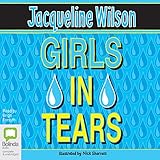
- Audible Audiobook
- Jacqueline Wilson (Author) - Brigit Forsyth (Narrator)
- English (Publication Language)
- 09/02/2005 (Publication Date) - Bolinda audio (Publisher)
6. Synthesize Thematic Elements and Reader Takeaways:
- Action: Reflect on the recurring themes and messages as the narrative concludes.
- What to Look For: Identify core ideas such as the pain of growing up, the challenges of empathy, the struggle for self-acceptance, and the nature of resilience.
- Mistake: Concluding the reading without considering the broader implications, thus missing the author’s commentary on adolescent life and its emotional complexities.
Common Mistakes When Approaching Girls In Tears
- Misinterpreting Emotional Intensity as Melodrama — Why it matters: Jacqueline Wilson is adept at capturing the authentic, often heightened, emotional reality of adolescence. What might seem exaggerated to an adult can be a precise reflection of a young person’s experience. — Fix: Approach the narrative with the understanding that adolescent emotions can be intense and that Wilson portrays them realistically, not hyperbolically.
- Overlooking the Nuance of Friendship Dynamics — Why it matters: Teenage friendships are complex and often fraught with insecurity, competition, and shifting loyalties. Reducing these interactions to simple dichotomies misses the book’s intricate social commentary. — Fix: Analyze the subtle shifts in relationships, recognizing that friendships can be simultaneously supportive and challenging, often due to external pressures.
- Focusing Solely on Plot Resolution — Why it matters: The primary impact of Girls In Tears stems from the emotional journey and character development, not necessarily a neat, happy ending. Prioritizing a tidy resolution over the process of emotional navigation diminishes the novel’s core message. — Fix: Appreciate the developmental process and the characters’ navigation of their feelings as the central takeaway, rather than solely focusing on the final outcome.
- Underestimating the Impact of Adult Conflict — Why it matters: The novel clearly demonstrates how parental issues significantly affect children. Dismissing this connection leads to a superficial understanding of the characters’ distress. — Fix: Recognize that the children’s emotional states are directly influenced by the adult world around them, especially by parental discord.
Girls In Tears by Jacqueline Wilson: A Contrarian Perspective
Jacqueline Wilson’s Girls In Tears is frequently praised for its unvarnished depiction of adolescent emotional struggles. However, a contrarian viewpoint suggests that while the book’s authenticity is a notable strength, its relentless focus on sadness and conflict may not be universally beneficial for young readers, particularly those already susceptible to anxiety or melancholy. The novel’s title itself serves as a significant indicator, signaling a narrative that prioritizes distress. While this can be validating for some, constant immersion in negative emotional states might inadvertently reinforce a sense of hopelessness rather than foster pathways toward resilience.
The most critical decision criterion for recommending Girls In Tears is the reader’s current emotional landscape and existing coping mechanisms. If a young reader is actively experiencing significant emotional distress, such as parental divorce or severe bullying, and possesses a robust support system or a naturally resilient disposition, this book might offer a cathartic experience and a sense of shared understanding. It validates their feelings and demonstrates that such challenges are not unique. Conversely, for a reader who is already prone to anxiety, depression, or who lacks adequate emotional support, immersing themselves in a narrative saturated with tears and conflict could exacerbate their distress. In such scenarios, a book offering more hope, lighter themes, or a clearer path to resolution might prove more beneficial. The book’s significance lies in its potential for validation; however, this validation can become detrimental if it overwhelms rather than empowers.
BLOCKQUOTE_0
This quote precisely articulates the profound isolation that often accompanies adolescent emotional pain. Wilson excels at conveying this internal experience, which is central to the novel’s impact. However, the persistent exploration of this feeling, without consistent narrative counterbalances of hope or external support, is where the contrarian critique finds its grounding.
Thematic Resonance and Potential Pitfalls
- Thematic Strength: The novel’s primary thematic strength is its validation of adolescent emotional pain. It communicates that feeling sad, confused, or angry is a normal part of growing up, especially when faced with difficult circumstances.
- Potential Pitfall: The constant emphasis on “tears” and distress, while realistic, risks normalizing or even romanticizing sadness for some readers, potentially discouraging proactive coping strategies in favor of passive suffering. This is a key consideration when assessing audience fit.
| Character | Core Conflict | Narrative Function | Potential Reader Takeaway (Contrarian View) |
|---|---|---|---|
| Ellie | Parental divorce, friendship loss | Embodies the direct emotional impact of family breakdown and social exclusion. | May reinforce feelings of victimhood if not balanced with agency or support. |
| Magda | Peer pressure, insecurity | Represents the struggle for acceptance and the compromises made to fit in. | Could normalize unhealthy conformity or jealousy as inherent to friendship. |
| Nadine | Family expectations, loneliness | Highlights the pressure to maintain appearances while hiding inner turmoil. | Might encourage masking true feelings rather than seeking genuine connection. |
Expert Tips for Reading Girls In Tears
These practical tips are designed to help readers engage with the novel’s challenging themes constructively.
1. Engage Actively with Discussion:
- Action: If reading with a parent, teacher, or older sibling, set aside time to discuss specific scenes or characters’ feelings.
- Common Mistake to Avoid: Reading the book in isolation without any opportunity to process the emotional content, which can lead to internalizing difficult feelings without external perspective.
2. Journal Emotional Responses:
- Action: Encourage the reader to keep a private journal to jot down their thoughts and feelings
Decision Rules
- If reliability is your top priority for Girls In Tears by Jacqueline Wilson, choose the option with the strongest long-term track record and support.
- If value matters most, compare total ownership cost instead of headline price alone.
- If your use case is specific, prioritize fit-for-purpose features over generic ‘best overall’ claims.