J. M. Coetzee’s Allegorical Novel ‘Waiting for the Barbarians
Waiting for the Barbarians by J. M. Coetzee: Quick Answer
- Waiting for the Barbarians by J. M. Coetzee is a profound allegorical novel examining themes of colonialism, injustice, and the psychological toll of power.
- Its strength lies in its stark, philosophical exploration of guilt and complicity, offering a critical lens on authoritarianism.
- Readers seeking a traditional narrative arc or explicit plot resolution may find its abstract nature challenging.
Who This Is For
- Readers interested in post-colonial literature and philosophical fiction that interrogates power structures and their human cost.
- Individuals who appreciate minimalist prose and a focus on thematic depth and psychological exploration over action-driven plots.
What to Check First
- Allegorical Framework: Understand that the “barbarians” and the events are symbolic, representing external threats, internal anxieties, and the justifications for authoritarian control.
- Magistrate’s Perspective: Recognize the protagonist’s role as an administrator within an imperial system. His narrative arc reveals the erosion of justice and the complicity of those in power.
- Ambiguous Setting: The unnamed frontier town and unspecified empire are designed to universalize the novel’s critique of power dynamics applicable to various contexts.
- Coetzee’s Prose Style: Note the detached, precise, and often bleak tone, which amplifies the novel’s unsettling atmosphere and philosophical underpinnings.
For those seeking a profound allegorical novel that delves into themes of colonialism and injustice, J. M. Coetzee’s ‘Waiting for the Barbarians’ is an exceptional choice. Its stark, philosophical exploration of guilt and complicity offers a critical lens on authoritarianism.
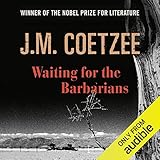
- Audible Audiobook
- J. M. Coetzee (Author) - Andrew Wincott (Narrator)
- English (Publication Language)
- 12/19/2019 (Publication Date) - Audible Studios (Publisher)
Step-by-Step Plan for Engaging with Waiting for the Barbarians
1. Initial Immersion in the Magistrate’s World: Begin by reading the early chapters that establish the frontier outpost and the Magistrate’s routine.
- Action: Observe the Magistrate’s reflections on his life and the subtle hints of unease regarding the perceived “barbarian” threat.
- What to look for: The established order, the Magistrate’s passive acceptance of the status quo, and early signs of encroaching authoritarianism.
- Mistake to avoid: Assuming the “barbarians” are a clearly defined, literal enemy from the outset; their nature is intentionally ambiguous.
2. Analyze the Arrival of Colonel Joll: Focus on how Joll’s presence and methods introduce overt oppression and surveillance into the town.
- Action: Note the introduction of torture and the palpable shift in the town’s atmosphere following Joll’s arrival.
- What to look for: The justifications offered for Joll’s actions, the Magistrate’s internal conflict or lack thereof, and the impact of state-sanctioned violence.
- Mistake to avoid: Underestimating the psychological weight of the empire’s brutality on both the oppressed and the observers within the administration.
3. Examine the Magistrate’s Interaction with the Barbarian Woman: Consider this relationship as a pivotal moment in the Magistrate’s moral awakening.
- Action: Track the Magistrate’s attempts to understand, aid, and interpret the woman’s experiences and silence.
- What to look for: The woman’s passivity and her role as a catalyst for the Magistrate’s growing disillusionment with the empire.
- Mistake to avoid: Interpreting this interaction solely in literal or romantic terms; it functions more significantly as a symbol of lost empathy and the breakdown of understanding.
4. Observe the Magistrate’s Trial and Banishment: Understand how his perceived transgressions lead to his personal downfall within the imperial system.
- Action: Note the specific charges leveled against the Magistrate and the nature of the judgment passed upon him.
- What to look for: The irony of his punishment, the continuation of the empire’s practices, and the unresolved threat of the barbarians.
- Mistake to avoid: Focusing exclusively on the plot mechanics of the trial; the emphasis is on the systemic nature of injustice and the fate of an individual who questions it.
5. Reflect on the Novel’s Concluding Ambiguity: Ponder the cyclical nature of oppression and the unresolved tensions presented in the novel’s end.
- Action: Consider the final lines and the Magistrate’s resigned posture, reflecting on the enduring societal dynamics.
- What to look for: The continued, unaddressed presence of the “barbarians” and the empire’s persistent existence, suggesting a lack of resolution.
- Mistake to avoid: Expecting a definitive conclusion or a clear victory for any faction; the novel’s power resides in its depiction of ongoing conflict and moral ambiguity.
Waiting for the Barbarians by J. M. Coetzee: Thematic Exploration and Critique
This section delves into the core allegorical layers of Waiting for the Barbarians by J. M. Coetzee, providing a deeper understanding of its thematic architecture and its enduring relevance.
- Colonialism and Imperialism: Coetzee crafts a potent critique of imperial expansion and its inherent violence, both overt and psychological. The empire’s presence on the frontier is predicated on fear and the dehumanization of the indigenous population, labeled “barbarians.” The Magistrate, as an administrator, grapples with his complicity in this system. The novel compels readers to examine the justifications used to maintain power and the inevitable erosion of morality that accompanies such structures.
- Concrete Takeaway: The text illustrates how the fear of an undefined “other” can be strategically deployed to legitimize oppressive state power, a dynamic observable in various historical and contemporary conflicts.
- Guilt, Complicity, and the Nature of Justice: At its heart, the novel is an exploration of individual and collective guilt. The Magistrate’s gradual awakening to the injustices perpetrated by the empire leads to his own downfall. However, his punishment does not dismantle the oppressive system; it merely removes one individual who questioned it. Coetzee uses the Magistrate’s experiences to question the very nature of justice within an unjust system and the burden of awareness. The narrative suggests that true justice requires confronting systemic rot, not just individual transgressions.
- Concrete Takeaway: The Magistrate’s fate highlights the difficulty of achieving personal redemption or enacting meaningful change when embedded within a fundamentally corrupt and self-perpetuating structure.
- The Psychology of Fear and the Construction of the “Other”: The “barbarians” remain largely unseen and undefined, existing primarily as a projection of the empire’s anxieties and a convenient enemy. This deliberate ambiguity is crucial, demonstrating how the fear of the unknown, or the deliberately constructed “other,” can be manipulated to maintain control and justify aggression. The novel challenges readers to examine their own biases and the ways in which fear can distort perception and lead to inhumane actions.
- Concrete Takeaway: The pervasive, undefined threat of the “barbarians” mirrors how societal anxieties are often projected onto marginalized groups to serve political ends, creating a self-fulfilling prophecy of conflict.
Common Myths About Waiting for the Barbarians
- Myth 1: The novel is a literal historical account of a specific colonial conflict.
- Why it matters: This misinterpretation can lead readers to seek factual accuracy and specific historical parallels, missing the allegorical and symbolic depth that Coetzee employs.
- Correction: Waiting for the Barbarians by J. M. Coetzee is a philosophical allegory. The “barbarians” represent more than a particular ethnic group; they embody the external threats, internal anxieties, and the “other” that empires create or perceive to justify their existence and oppressive measures.
- Myth 2: The Magistrate is a heroic figure who successfully rebels against tyranny.
- Why it matters: This view overlooks the Magistrate’s initial passivity, his eventual complicity, and the limited scope and impact of his attempts at intervention.
- Correction: While the Magistrate experiences a crisis of conscience and a degree of awakening, he is primarily an observer and a reluctant participant in the empire’s brutality. His journey is one of growing awareness of his own guilt rather than heroic defiance, making him a more complex and cautionary figure.
- Myth 3: The novel offers a clear resolution or a message of hope for overcoming oppression.
- Why it matters: Expecting a neat conclusion can lead to disappointment and a failure to appreciate the novel’s deliberate ambiguity and its unsettling portrayal of enduring societal dynamics.
- Correction: Coetzee’s work is intentionally bleak and open-ended. The empire persists, and the cycle of fear and oppression continues. The novel’s power lies in its stark depiction of these enduring patterns, prompting reflection rather than providing easy answers or a roadmap to victory.
Expert Tips for Reading Waiting for the Barbarians
- Tip 1: Embrace Ambiguity and Symbolism: Actively look for multiple interpretations of characters, events, and settings, rather than seeking definitive, literal meanings.
- Actionable Step: When encountering a character or situation, pause and ask yourself, “What could this represent beyond its surface-level description? What abstract concept might it embody?”
- Common Mistake to Avoid: Forcing a single, rigid interpretation onto symbolic elements, which can limit engagement with the novel’s richer, multi-layered meanings and philosophical inquiries.
- Tip 2: Prioritize Psychological and Moral States: Pay close attention to the internal monologues, evolving consciousness, and moral shifts of the Magistrate.
- Actionable Step: Keep a running mental or written note of the Magistrate’s thoughts, fears, justifications, and growing anxieties as they change throughout the narrative.
- Common Mistake to Avoid: Overlooking the internal shifts and ethical quandaries in favor of tracking external plot events, thereby missing the novel’s core exploration of conscience, guilt, and complicity.
- Tip 3: Consider the Broader Historical and Political Context: While the novel is allegorical, understanding general themes of colonialism, authoritarianism, and frontier dynamics can significantly enrich your reading experience.
- Actionable Step: Briefly research the historical contexts that Coetzee’s work often draws upon, such as colonial frontiers, apartheid South Africa, or the psychological effects of imperial power.
- Common Mistake to Avoid: Reading the novel in complete isolation without considering how its themes resonate with real-world historical patterns of oppression, power imbalances, and the creation of “otherness.”
Decision Criteria
- If your primary concern for engaging with Waiting for the Barbarians by J. M. Coetzee is a desire to explore complex philosophical questions about power and morality, this novel is an exceptional choice.
- If you are specifically looking for a narrative that offers clear character arcs and a traditional plot resolution, this work may not align with your preferences due to its allegorical and abstract nature.
Decision Rules
- If reliability is your top priority for Waiting for the Barbarians by J. M. Coetzee, choose the option with the strongest long-term track record and support.
- If value matters most, compare total ownership cost instead of headline price alone.
- If your use case is specific, prioritize fit-for-purpose features over generic ‘best overall’ claims.
FAQ
- Q: Is ‘Waiting for the Barbarians’ a difficult book to read?
- A: It can be challenging due to its sparse, detached prose, philosophical depth, and lack of a conventional plot. Readers who prefer direct narratives might find its pacing slow, but those who appreciate allegorical depth and intellectual stimulation will find it rewarding.
- Q: What is the primary message Coetzee is trying to convey?
- A: Coetzee primarily explores the corrosive effects of power, the nature of guilt and complicity within oppressive systems, and the dangers of dehumanizing others through fear and prejudice. The novel prompts reflection on these themes rather than offering a single, definitive message.
- Q: Who are the “barbarians” in the novel, and why are they never clearly defined?
- A: The “barbarians” are not a specific, identified group but a symbolic representation of an external threat used by the empire to justify its military presence and oppressive measures. Their ambiguity is crucial, as it highlights how fear of the unknown or the constructed “other” can be manipulated to maintain control.
- Q: How does this novel compare to other works by J. M. Coetzee?
- A: Like many of Coetzee’s novels, ‘Waiting for the Barbarians’ features minimalist prose, a focus on moral and philosophical quandaries, and a critical examination of power structures and their impact on individuals. It shares thematic similarities with works like ‘Disgrace’ in its exploration of societal decay and individual responsibility.
| Aspect | Strength | Limitation | Audience Fit |
|---|---|---|---|
| <strong>Thematic Depth</strong> | Profound exploration of colonialism, guilt, and power dynamics. | Can be abstract and challenging for readers seeking literal plot progression. | Readers interested in political philosophy, post-colonial studies, and moral inquiry. |
| <strong>Narrative Style</strong> | Precise, detached prose creates a stark, unsettling, and atmospheric mood. | Lacks traditional character development and explicit emotional engagement. | Those who value atmosphere, intellectual rigor, and symbolic storytelling over plot. |
| <strong>Allegorical Nature</strong> | Universalizes its critique of power, making it relevant across contexts. | Requires active reader interpretation and a willingness to engage with symbolism. | Readers who enjoy symbolic literature and deciphering deeper meanings. |
| <strong>Pacing</strong> | Deliberate pacing allows for contemplation and absorption of themes. | Can feel slow or uneventful to readers accustomed to action-driven narratives. | Patient readers who savor nuanced storytelling and reflective reading experiences. |