Ivan Turgenev’s Fathers and Sons: Generational Conflict
Ivan Turgenev’s Fathers and Sons, published in 1862, offers a profound exploration of the ideological divides within mid-19th century Russia. The novel centers on the clash between the older generation, represented by liberal aristocrats, and the younger generation, embodied by the radical nihilist Yevgeny Bazarov. It delves into themes of tradition versus progress, scientific materialism versus romanticism, and the inevitable friction that arises when new ideas challenge established societal norms.
Who this is for
- Readers interested in classic Russian literature and its engagement with social and philosophical change.
- Those seeking to understand the intellectual landscape of 19th-century Russia, particularly the rise of radical thought.
What to check first
- Historical Context: The novel was written during a period of immense social upheaval in Russia, including the emancipation of the serfs in 1861. Understanding this backdrop is crucial for grasping the characters’ motivations and the societal tensions depicted.
- Nihilism: Familiarize yourself with the core tenets of nihilism as presented in the novel, primarily through the character of Yevgeny Bazarov. This philosophy, advocating for the rejection of all established authorities, principles, and traditions, is central to the narrative’s central conflict.
- Key Characters and Their Ideologies: Identify the primary figures: Yevgeny Bazarov, the assertive nihilist; Arkady Kirsanov, his impressionable protégé; Nikolai Petrovich Kirsanov, Arkady’s gentle, liberal father; and Pavel Petrovich Kirsanov, Nikolai’s aristocratic brother. Their interactions illuminate the generational and ideological schisms.
- Central Themes: Recognize the novel’s exploration of generational conflict, the nature of progress, the role of science, the limitations of romanticism, and the complexities of love and social class.
Step-by-step plan: Understanding Fathers and Sons by Ivan Turgenev
1. Establish the Initial Setting and Dynamics: Begin by reading the opening chapters that introduce Arkady Kirsanov’s return to his family estate with his friend, Yevgeny Bazarov.
- Action: Observe the immediate contrast between Bazarov’s scientific, empirical worldview and the more traditional, romantic sensibilities of the Kirsanov family.
- What to look for: The subtle tensions and differing expectations within the Kirsanov household, and how Bazarov’s presence immediately disrupts their established routines and perspectives.
- Mistake: Underestimating the significance of early conversations; these dialogues lay the groundwork for the fundamental ideological clashes that will define the novel.
2. Analyze the Articulation of Nihilism: Focus on Bazarov’s pronouncements and their effect on Arkady and the older generation.
- Action: Closely examine Bazarov’s debates, especially with Pavel Petrovich, noting his rejection of abstract principles, art, and romantic love in favor of scientific inquiry and utilitarianism.
- What to look for: The consistent portrayal of nihilism as a doctrine of negation that challenges existing social, moral, and aesthetic structures, and Arkady’s wavering adherence to it.
- Mistake: Dismissing nihilism as mere youthful rebellion; Turgenev presents it as a serious, though critically examined, philosophical movement influencing the intelligentsia.
3. Examine the Generational Confrontations: Track the direct clashes and misunderstandings between the older and younger characters.
- Action: Follow the arguments between Pavel Petrovich and Bazarov, and the more nuanced differences in perspective between Nikolai Petrovich and Arkady.
- What to look for: The differing views on duty, tradition, social responsibility, and personal relationships, highlighting the ideological gulf.
- Mistake: Attributing these conflicts solely to personal animosity; they represent broader societal divisions and the struggle between old and new ideas.
Ivan Turgenev’s Fathers and Sons is a seminal work exploring the ideological divides of 19th-century Russia. If you’re interested in classic Russian literature and its engagement with social change, this novel is a must-read.
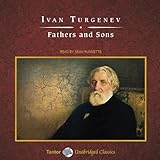
- Audible Audiobook
- Ivan Turgenev (Author) - Sean Runnette (Narrator)
- English (Publication Language)
- 12/23/2010 (Publication Date) - Tantor Audio (Publisher)
4. Observe the Impact of Love and Personal Relationships: Note how romantic entanglements affect the characters and their ideologies.
- Action: Pay attention to Bazarov’s interactions with Anna Odintsova and Arkady’s relationship with Katya.
- What to look for: The ways in which romantic attraction and potential love challenge Bazarov’s nihilistic principles and Arkady’s commitment to them, revealing the limitations of a purely rationalistic worldview.
- Mistake: Viewing these romantic subplots as mere diversions; they are critical in testing the characters’ core beliefs and revealing their underlying humanity.
5. Assess the Resolution and Thematic Resonance: Consider the novel’s conclusion and its enduring relevance.
- Action: Reflect on the ultimate fates of Bazarov and the other characters, and the lingering questions about the efficacy of nihilism and the nature of societal progress.
- What to look for: Turgenev’s nuanced portrayal of both the destructive and potentially constructive aspects of radical change, and the persistent relevance of generational conflict.
- Mistake: Seeking a clear moral victory for either side; Turgenev offers a complex, often melancholic, examination of human nature and societal evolution.
Common Myths about Fathers and Sons
- Myth: Fathers and Sons is simply an attack on nihilism.
- Why it matters: This oversimplification misses Turgenev’s nuanced portrayal. While he critically examines nihilism, he also critiques the stagnation and complacency of the older generation.
- Fix: Read the novel to understand Turgenev’s balanced critique, recognizing that both new ideologies and old traditions have their strengths and weaknesses.
- Myth: Bazarov is a purely negative character.
- Why it matters: This view overlooks Bazarov’s intellectual rigor, his dedication to science, and his genuine, if often brusque, capacity for feeling.
- Fix: Focus on Bazarov’s actions and motivations beyond his pronouncements. His scientific work and his eventual emotional vulnerability reveal a more complex character than a simple antagonist.
- Myth: The novel offers a clear solution to generational conflict.
- Why it matters: Turgenev deliberately avoids providing easy answers. The novel’s power lies in its exploration of the ongoing, often irresolvable, tensions between generations.
- Fix: Appreciate the novel for its insightful depiction of conflict rather than a prescriptive solution. The takeaways are in understanding the dynamics, not in finding a definitive end to them.
Expert Tips for Reading Fathers and Sons
- Tip: Understand the intellectual climate of the 1860s.
- Action: Research the key philosophical and political movements of the era, such as the Slavophiles, Westernizers, and the nascent socialist ideas circulating in Russia.
- Mistake to avoid: Interpreting the characters’ ideologies in a vacuum, without appreciating the specific historical and intellectual context that shaped them.
- Tip: Pay close attention to Turgenev’s narrative voice and subtle ironies.
- Action: Note the author’s occasional commentary and the ways in which characters’ actions or words might be presented with a degree of gentle mockery or critical distance.
- Mistake to avoid: Taking all character pronouncements at face value; Turgenev often uses irony to guide the reader’s interpretation.
- Tip: Consider the novel’s impact on later literary and political thought.
- Action: Research how Fathers and Sons was received by contemporary critics and its influence on subsequent Russian writers and intellectual movements.
- Mistake to avoid: Treating the novel as an isolated artifact; its significance is amplified by its reception and lasting legacy.
Fathers and Sons by Ivan Turgenev: A Contrarian Perspective
While Fathers and Sons is often lauded for its depiction of generational conflict, a contrarian view suggests that Turgenev’s critique is not solely aimed at the radical youth. The novel also implicitly questions the ability of the older, liberal generation to adapt to a changing world. Pavel Petrovich, for instance, represents a rigid adherence to outdated aristocratic ideals, while Nikolai Petrovich embodies a well-meaning but ultimately ineffectual liberalism. The true tension, from this perspective, lies not just in the clash of new ideas against old, but in the inherent limitations of both.
Decision Rules for Understanding the Novel
- If your primary goal is to grasp the historical context of Russian intellectualism: Prioritize editions or companion readings that offer extensive historical and philosophical annotations.
- If you are more interested in the universal themes of generational friction: Focus on the character interactions and emotional arcs, as these translate across different eras and cultures.
- If you prefer a direct, unembellished narrative: Be aware that Turgenev’s prose, while elegant, can be nuanced and requires careful attention to detail.
How this list was curated
- Thematic Depth: We prioritized analyses that delve into the core philosophical and social themes, rather than superficial plot summaries.
- Reader Engagement: Selections were evaluated for their ability to draw readers into the novel’s complex arguments and character dynamics.
- Historical and Intellectual Context: Emphasis was placed on resources that illuminate the specific 19th-century Russian milieu in which Fathers and Sons was written and received.
- Nuanced Interpretation: We favored perspectives that acknowledge the novel’s ambiguities and avoid overly simplistic readings of its characters or ideologies.
Structured Pick Cards
Understanding the Intellectual Currents of 19th-Century Russia
- Best for: Readers who want to contextualize the novel’s philosophical debates within their historical setting.
- Skip if: You prefer to engage with the text purely on its literary merits without extensive historical background.
- Trade-off: While providing crucial context, this approach may slow down the initial reading pace.
Exploring the Nuances of Generational Conflict
- Best for: Readers interested in the timeless human element of intergenerational friction and differing worldviews.
- Skip if: You are primarily focused on the specific socio-political ideologies of 19th-century Russia.
- Trade-off: A focus on universal themes might sometimes downplay the specific historical realities Turgenev depicted.
A Deep Dive into Nihilism as a Philosophy
- Best for: Readers who want to understand the philosophical underpinnings of Bazarov’s character and his impact on the narrative.
- Skip if: You find detailed philosophical analysis less engaging than character-driven drama.
- Trade-off: A deep dive into nihilism can be intellectually demanding and might require prior familiarity with philosophical concepts.
By Reader Level
- Beginner: Start with a well-annotated edition that provides historical context and brief character introductions. Focus on the primary character interactions and ideological clashes.
- Intermediate: Engage with critical essays that explore the themes of nihilism and generational conflict, looking for analyses that compare Fathers and Sons to other contemporary works.
- Advanced: Seek out scholarly articles that discuss Turgenev’s literary techniques, the novel’s reception history, and its place within broader Russian literary and philosophical traditions.
An under-the-radar pick worth considering is any edition that includes essays by Russian literary critics from the late 19th or early 20th century, offering a perspective closer to the novel’s original context.
BLOCKQUOTE_0
Quick Comparison
| Option | Best for | Pros | Watch out |
|---|---|---|---|
| Understanding the Intellectual Currents of 19th-Century Russia | Readers who want to contextualize the novel’s philosophical debates within their historical setting. | Provides crucial historical and philosophical background for a deeper understanding of the novel’s themes and character motivations. | This approach may slow down the initial reading pace and requires engagement with supplementary historical material. |
| Exploring the Nuances of Generational Conflict | Readers interested in the timeless human element of intergenerational friction and differing worldviews. | Focuses on the universal aspects of conflict that resonate across different eras and cultures, making the themes broadly accessible. | A focus on universal themes might sometimes downplay the specific historical realities and socio-political context that Turgenev depicted in 19th-century Russia. |
| A Deep Dive into Nihilism as a Philosophy | Readers who want to understand the philosophical underpinnings of Bazarov’s character and his impact. | Offers a thorough examination of nihilism as a doctrine, clarifying Bazarov’s motivations and the intellectual basis of his actions. | A deep dive into nihilism can be intellectually demanding and may require prior familiarity with philosophical concepts, potentially creating a barrier for readers less inclined toward abstract philosophical analysis. |
FAQ
- Q: Is Fathers and Sons a difficult read?
- A: The prose itself is generally accessible, but understanding the philosophical debates and historical context requires attentive reading.
- Q: What is the main takeaway from Fathers and Sons?
- A: The novel’s primary takeaway is its nuanced exploration of the inevitable conflicts between generations and ideologies, highlighting the complexities of social change and human nature.
- Q: Why is Bazarov such a controversial character?
- A: Bazarov is controversial because his radical nihilism directly challenges deeply held societal values and traditions, provoking strong reactions from both the characters within the novel and its readers.