Ian McEwan’s The Child In Time: A Novel Study
This study offers a precise examination of Ian McEwan’s The Child in Time, focusing on its thematic depth, narrative structure, and psychological exploration. It is designed for readers seeking a structured understanding of how the novel addresses paternal grief, the subjective nature of time, and human resilience.
Who This Is For
- Readers seeking a detailed examination of literary fiction that explores profound emotional landscapes and philosophical questions.
- Individuals interested in a nuanced portrayal of trauma’s impact on identity and perception, as crafted by Ian McEwan.
What to Check First
- Protagonist’s Core Trauma: Stephen Lewis’s immediate and enduring grief following the abduction of his daughter, Kate.
- Narrative Chronology: The novel’s deliberate manipulation of linear time, mirroring Stephen’s fragmented psychological state.
- Thematic Elements: Recurring motifs such as childhood innocence, the fallibility of memory, and the search for connection.
- Authorial Style: McEwan’s characteristic precision and emotional restraint, which amplify Stephen’s internal distress.
- Societal Context: The late 20th-century anxieties surrounding child abduction and evolving psychological understanding of loss.
Step-by-Step Plan for Understanding The Child in Time by Ian McEwan
1. Initial Reading for Emotional Immersion: Complete the novel in its entirety to grasp the primary emotional arc and the immediate impact of Kate’s disappearance on Stephen.
- Action: Focus on Stephen’s initial shock and disorientation after Kate’s abduction, and the subsequent dissolution of his life.
- Look for: The visceral depiction of sudden, inexplicable loss and its immediate psychological consequences.
- Mistake: Analyzing individual plot points or stylistic elements during the first read, which can impede emotional engagement with the narrative.
2. Thematic Annotation and Identification: Undertake a second reading to specifically identify and mark key themes and recurring symbols.
- Action: Highlight passages related to time, memory, fatherhood, childhood, and the nature of reality.
- Look for: McEwan’s use of symbolic imagery (e.g., the tin soldier, the white house) and their contribution to the novel’s thematic resonance.
- Mistake: Overlooking subtle, understated recurring elements that collectively build the novel’s profound thematic depth.
3. Character Analysis: Stephen Lewis’s Psychological Trajectory: Dedicate focused attention to analyzing Stephen’s psychological journey and motivations throughout the narrative.
- Action: Trace his emotional and intellectual development from the moment of loss through his involvement with the “Children’s Directorate” to his eventual adaptation.
- Look for: Internal shifts, moments of denial, attempts at rationalization, and the non-linear process of acceptance.
- Mistake: Judging Stephen’s actions based on external logic or conventional grief models, rather than understanding his subjective experience.
4. Deconstructing Narrative Structure: Analyze how McEwan manipulates time and perspective to enhance the novel’s thematic impact and emotional weight.
- Action: Pay close attention to shifts in chronology, flashbacks, and fragmented memory sequences.
- Look for: How the non-linear structure mirrors Stephen’s fractured perception of reality and his struggle with the passage of time.
- Mistake: Assuming a straightforward chronological progression, which the author deliberately subverts to reflect the protagonist’s internal state.
5. Contextualizing The Child in Time: Investigate the historical, social, and psychological contexts that may have influenced McEwan’s writing.
- Action: Research late 20th-century societal anxieties regarding child abduction and the evolving understanding of trauma and grief.
- Look for: Connections between the novel’s narrative elements and broader societal concerns or psychological theories prevalent at the time of its writing.
- Mistake: Reading the novel in isolation, without considering its dialogue with the intellectual and cultural currents of its era.
6. Engaging with Critical Interpretations: Seek out and consider reputable critical analyses and academic interpretations of the novel.
- Action: Read scholarly articles or well-regarded reviews that offer diverse perspectives on the novel’s meaning and McEwan’s craft.
- Look for: Varied interpretations of key scenes, character motivations, and thematic elements, particularly regarding the novel’s nuanced resolution.
- Mistake: Relying exclusively on a single interpretation, which can limit appreciation for the novel’s inherent complexity and ambiguity.
Common Mistakes in Analyzing The Child in Time
- Focusing Solely on Plot Resolution: Mistake — Expecting a neat, cathartic resolution where the lost child is found, overlooking the novel’s primary focus on psychological exploration. — Why it matters — This misinterprets the novel’s central concern, which is the internal experience of grief and adaptation, not a traditional mystery plot. — Fix — Emphasize the emotional and philosophical journey of the protagonist over the external resolution of the initial event.
- Underestimating the Metaphorical Weight of the “Children’s Directorate”: Mistake — Dismissing the “Children’s Directorate” as a mere plot device or literal governmental body. — Why it matters — This ignores its significant role as a metaphor for societal attempts to manage, control, and rationalize profound human loss and trauma. — Fix — Consider these elements as symbolic representations of order, bureaucracy, and the human impulse to impose logic onto irrational suffering.
- Treating Memory as Objective Record: Mistake — Assuming memory functions as a reliable, static archive of past events. — Why it matters — McEwan highlights memory’s subjective, fluid, and often unreliable nature, shaped by emotion and time. — Fix — Acknowledge how memory is portrayed as malleable, influenced by present emotional states, and prone to distortion or reconstruction.
- Interpreting Stephen’s Grief as Linear: Mistake — Expecting Stephen to follow a standard, predictable model of grief progression. — Why it matters — McEwan depicts a far more complex, cyclical, and often stagnant process of emotional recovery. — Fix — Recognize the ebb and flow of Stephen’s emotional state, including periods of regression, stagnation, and unexpected resilience.
If you are comparing options here, The Child in Time by Ian McEwan is a relevant choice worth checking.
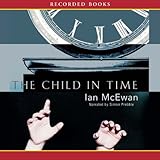
- Audible Audiobook
- Ian McEwan (Author) - Simon Prebble (Narrator)
- English (Publication Language)
- 10/23/2008 (Publication Date) - Recorded Books (Publisher)
The Child in Time by Ian McEwan: Counter-Intuitive Insights
A significant counter-intuitive element within The Child in Time is its resolution, which does not involve the recovery of the lost child, Kate. Instead, Stephen Lewis finds a form of peace and purpose not through regaining what was lost, but through adapting to an irrevocably altered reality and forging new paternal connections. This challenges the conventional reader expectation of a cathartic reunion, proposing instead that healing can manifest as a profound internal shift and the ability to create meaning within loss. The novel suggests that our perception of “time” is not a fixed, linear progression but a deeply subjective experience, intrinsically linked to memory, emotion, and our ongoing narrative of self.
BLOCKQUOTE_0
Expert Tips for Deeper Engagement
- Tip 1: Analyze Stephen’s Internal Monologue for Psychological Nuance.
- Action: Pay meticulous attention to Stephen Lewis’s internal thoughts, reflections, and stream of consciousness.
- Common Mistake: Skimming over these internal dialogues, which are the primary vehicle for understanding his psychological state, the novel’s thematic concerns, and McEwan’s exploration of consciousness.
- Tip 2: Deconstruct McEwan’s Prose for Emotional Subtlety.
- Action: Observe the precision of McEwan’s language, sentence structure, and descriptive detail, noting how these elements shape mood and pacing.
- Common Mistake: Failing to recognize how the clarity and elegance of the prose often serve to amplify the profound emotional turmoil and existential questions faced by the characters.
- Tip 3: Evaluate the Ambiguity of the Novel’s Conclusion.
- Action: Reflect critically on the implications of Stephen’s final decisions and the path he chooses for his future.
- Common Mistake: Seeking a definitive, unambiguous “right” answer or a clear-cut happy ending, which the novel deliberately avoids, instead offering a more complex and reflective conclusion.
Frequently Asked Questions
- Q: Does Stephen Lewis find his daughter Kate in The Child in Time?
A: No, Stephen does not find his daughter Kate. The novel’s focus is on his psychological journey through grief, his adaptation to loss, and his evolving understanding of time and paternal love, rather than a literal reunion.
- Q: What is the thematic significance of the “Children’s Directorate” in the novel?
A: The “Children’s Directorate” functions as a complex metaphor for societal attempts to manage, rationalize, and control the profound chaos and emotional devastation caused by lost or displaced children. It represents a structured, yet ultimately inadequate, response to an inherently unmanageable human tragedy, serving as a crucible for Stephen’s own internal transformation.
- Q: Is The Child in Time a conventional mystery or thriller?
A: No, The Child in Time is a literary novel that uses the premise of a lost child as a catalyst for exploring deep psychological themes, the nature of time, and the complexities of grief and memory. It prioritizes emotional resonance and philosophical inquiry over plot-driven suspense.
- Q: How does the novel portray the concept of time?
A: The novel presents time not as a linear, objective constant, but as a subjective, fluid experience deeply intertwined with memory, emotion, and individual perception. Stephen’s internal state dictates his experience of time, which is further explored in a detailed The Child in Time by Ian McEwan review.
Quick Comparison
| Aspect | Focus | Strengths | Potential Pitfalls |
Quick Comparison
| Option | Best for | Pros | Watch out |
|---|---|---|---|
| Who This Is For | General use | Readers seeking a detailed examination of literary fiction that explores prof… | Mistake: Analyzing individual plot points or stylistic elements during the fi… |
| What to Check First | General use | Individuals interested in a nuanced portrayal of trauma’s impact on identity… | Mistake: Overlooking subtle, understated recurring elements that collectively… |
| Step-by-Step Plan for Understanding The Child in Time by Ian McEwan | General use | Protagonist’s Core Trauma: Stephen Lewis’s immediate and enduring grief follo… | Mistake: Judging Stephen’s actions based on external logic or conventional gr… |
| Common Mistakes in Analyzing The Child in Time | General use | Narrative Chronology: The novel’s deliberate manipulation of linear time, mir… | Mistake: Assuming a straightforward chronological progression, which the auth… |
Decision Rules
- If reliability is your top priority for The Child in Time by Ian McEwan, choose the option with the strongest long-term track record and support.
- If value matters most, compare total ownership cost instead of headline price alone.
- If your use case is specific, prioritize fit-for-purpose features over generic ‘best overall’ claims.