How Metaphors Shape Our Lives: George Lakoff’s Ideas
Metaphors We Live By George Lakoff: A Foundational Analysis
- George Lakoff’s seminal work, “Metaphors We Live By,” posits that abstract human thought is fundamentally structured by conceptual metaphors, not merely linguistic devices.
- These metaphors, such as ARGUMENT IS WAR, are ingrained cognitive frameworks that shape our perception, reasoning, and actions.
- Understanding these pervasive metaphorical systems is crucial for critical thinking and for recognizing how realities are constructed through language.
Who This Is For
- Individuals interested in cognitive linguistics, philosophy of language, and how thought processes are influenced by language.
- Readers seeking to develop a more critical lens for analyzing persuasive communication, societal narratives, and everyday discourse.
To truly grasp the foundational ideas of conceptual metaphor theory, diving into George Lakoff’s seminal work is essential. ‘Metaphors We Live By’ is the cornerstone text that explains how these cognitive frameworks shape our perception and reasoning.
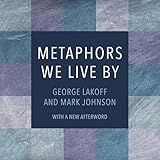
- Audible Audiobook
- George Lakoff (Author) - Sean Pratt (Narrator)
- English (Publication Language)
- 11/12/2025 (Publication Date) - Echo Point Books & Media, LLC (Publisher)
What to Check First
- Conceptual Metaphor Theory: Lakoff and Johnson’s core idea is that abstract concepts are understood via mappings from more concrete experiences (e.g., understanding “ARGUMENT” through the lens of “WAR”).
- Ubiquity in Language: Recognize that everyday speech is saturated with these conceptual metaphors, often so deeply embedded they are perceived as literal.
- Systematicity: Understand that these are not isolated figures of speech but systematic sets of correspondences between a source domain (e.g., WAR) and a target domain (e.g., ARGUMENT).
- Behavioral Implications: Consider how these metaphors influence our actions and decisions by framing situations in specific, often unconscious, ways. For example, TIME IS MONEY encourages viewing time as a quantifiable, spendable commodity.
Step-by-Step Plan: Deconstructing Metaphors We Live By
1. Identify the Target Domain: Pinpoint the abstract concept being discussed or understood.
- Action: Analyze language used to describe intangible concepts such as emotions, relationships, or societal issues.
- What to look for: Recurring patterns of description that draw from more tangible, concrete experiences.
- Mistake: Treating metaphorical descriptions as literal facts, rather than as conceptual frameworks.
2. Determine the Source Domain: Ascertain the concrete domain from which the metaphorical language is borrowed.
- Action: Trace the descriptive terms back to their literal origins in physical experiences or common objects.
- What to look for: Common source domains include physical combat (WAR), travel (JOURNEY), construction (BUILDING), and resource management (MONEY).
- Mistake: Focusing only on individual words without understanding the broader system of mapping from the source to the target.
3. Analyze the Metaphorical Mapping: Detail how elements of the source domain systematically correspond to elements of the target domain.
- Action: Map out the specific correspondences. For ARGUMENT IS WAR: participants are combatants, ideas are ammunition, winning is the objective.
- What to look for: The structured relationships and entailments that the metaphor creates.
- Mistake: Overlooking the systematic nature of the mapping, viewing it as a loose analogy rather than a coherent cognitive structure.
4. Examine What is Highlighted and Hidden: Consider the consequences of viewing the target domain through the source domain’s lens.
- Action: Evaluate what aspects of the abstract concept are emphasized and what aspects are obscured by the metaphor.
- What to look for: The WAR metaphor highlights conflict and strategy but hides opportunities for collaboration or consensus-building.
- Mistake: Failing to recognize that all metaphors are partial, selectively highlighting certain features while downplaying others.
5. Identify Alternative Metaphors: Seek out or construct contrasting metaphorical frameworks for the same target domain.
- Action: Brainstorm or research alternative conceptualizations. For ARGUMENT, consider ARGUMENT IS A DANCE (emphasizing coordination) or ARGUMENT IS A JOURNEY (emphasizing shared exploration).
- What to look for: Different source domains that offer alternative perspectives and implications.
- Mistake: Believing that the dominant metaphor is the only possible or valid way to conceptualize a topic.
6. Apply to Real-World Contexts: Observe how these conceptual metaphors shape public discourse, policy decisions, and interpersonal interactions.
- Action: Analyze political speeches, media coverage, or everyday conversations for embedded metaphors.
- What to look for: How metaphors like “THE WAR ON DRUGS” or “HEALTH IS WEALTH” influence policy and public perception.
- Mistake: Limiting metaphor analysis to academic exercises, rather than applying it as a tool for understanding contemporary issues.
Metaphors We Live By George Lakoff: Core Principles
George Lakoff, in collaboration with Mark Johnson, fundamentally shifted the understanding of metaphor from a stylistic embellishment to a cornerstone of human cognition. Their book, “Metaphors We Live By,” argues that our comprehension of abstract concepts is not innate but constructed through systematic mappings from concrete experiences. For instance, the metaphor LOVE IS A JOURNEY structures our understanding of relationships, leading us to speak of paths, obstacles, and destinations within romantic partnerships. This cognitive framing influences not only our language but also our expectations, behaviors, and emotional responses. The theory provides a powerful explanation for the systematicity of metaphorical language and its profound, often unnoticed, impact on our worldview.
Understanding Conceptual Metaphors: The Engine of Thought
The central thesis of Lakoff’s work is that conceptual metaphors are coherent, systematic cognitive structures that underlie much of our abstract thought. They are not arbitrary linguistic choices but deeply ingrained patterns of understanding. The metaphor ARGUMENT IS WAR, for example, entails a rich set of entailments:
- Participants in an argument are viewed as combatants.
- Statements made are considered ammunition or weapons.
- The objective is to win, and the opponent is to be defeated.
- Taking a position is akin to occupying territory.
This metaphorical framework shapes how individuals engage in discourse, often leading to adversarial interactions even when cooperation might be more beneficial. Recognizing these mappings reveals how our conceptualization of complex social phenomena is deeply influenced by these underlying, often unconscious, cognitive structures.
BLOCKQUOTE_0
The Contrarian View: Metaphors as Cognitive Constraints
While Lakoff’s framework illuminates the pervasive influence of conceptual metaphors, a contrarian perspective suggests that these very metaphors can act as significant cognitive constraints. By consistently framing abstract thought through concrete mappings, we may inadvertently limit our capacity to conceive of alternative possibilities or to grasp nuances that fall outside the established metaphorical boundaries. For example, the prevalent metaphor POLITICAL CAMPAIGNING IS A RACE can overemphasize competition, speed, and the pursuit of victory, potentially obscuring the importance of thoughtful deliberation, policy substance, or collaborative governance. This viewpoint does not dispute the existence or importance of conceptual metaphors but cautions against their uncritical acceptance. It posits that an over-reliance on dominant metaphorical frames can stifle creativity, hinder comprehensive understanding, and perpetuate narrow perspectives. The challenge lies in cultivating an awareness of these dominant frames and actively seeking out alternative metaphors to foster a more balanced and nuanced comprehension.
Common Myths About Metaphors
- Myth 1: Metaphors are merely decorative linguistic devices used for stylistic flair.
- Correction: Lakoff argues that conceptual metaphors are fundamental cognitive structures that actively shape our understanding of reality, not just ornaments of language.
- Myth 2: Metaphorical meanings are arbitrary and vary randomly between individuals.
- Correction: Lakoff emphasizes that conceptual metaphors are systematic, culturally shared, and deeply ingrained, forming coherent systems of thought that influence collective understanding.
- Myth 3: Once a metaphor is recognized, its cognitive influence is neutralized.
- Correction: While awareness can mitigate automatic reactions, deeply embedded conceptual metaphors continue to structure perception and behavior even when consciously identified, as they form the very basis of how we conceptualize.
Expert Tips for Navigating Metaphorical Landscapes
- Tip 1: Deconstruct Political Rhetoric.
- Actionable Step: Actively identify and analyze the dominant metaphors used in political discourse (e.g., “War on Terror,” “Building a Strong Economy”).
- Common Mistake to Avoid: Accepting these metaphors at face value without questioning what they highlight (e.g., conflict, construction) and what they obscure (e.g., underlying causes, alternative solutions). The “War on Poverty” metaphor, for instance, frames the issue as a battle, potentially overlooking systemic economic and social factors.
- Tip 2: Analyze Personal Relationships Through Metaphorical Lenses.
- Actionable Step: Reflect on the language used to describe your own relationships. Do you often use metaphors like LOVE IS A JOURNEY, RELATIONSHIP IS A TEAM SPORT, or MARRIAGE IS A BUSINESS VENTURE?
- Common Mistake to Avoid: Uncritically adhering to a single relationship metaphor, which can lead to rigid expectations and an inability to adapt. For example, an overemphasis on “LOVE IS A JOURNEY” might create anxiety during periods of stability, missing the value of sustained partnership.
- Tip 3: Practice Metaphorical Awareness in Problem-Solving.
- Actionable Step: When facing a challenge, consciously reframe the problem using different metaphors. If you initially perceive “THE PROJECT IS A BURDEN,” try conceptualizing it as “THE PROJECT IS AN OPPORTUNITY FOR GROWTH” or “THE PROJECT IS A PUZZLE TO SOLVE.”
- Common Mistake to Avoid: Sticking with the first metaphor that comes to mind, which often reflects ingrained assumptions. Actively exploring and applying alternative metaphors can unlock novel perspectives and potential solutions.
Key Metaphors and Their Implications
| Conceptual Metaphor | Source Domain | Target Domain | Highlights | Obscures |
|---|---|---|---|---|
| ARGUMENT IS WAR | Physical Combat | Abstract Debate | Adversarial aspects, strategy, winning/losing outcomes | Cooperation, exploration, mutual understanding, consensus-building |
| TIME IS MONEY | Commerce | Temporal Experience | Quantifiable value, efficiency, loss/gain, |
Decision Rules
- If reliability is your top priority for Metaphors We Live by George Lakoff, choose the option with the strongest long-term track record and support.
- If value matters most, compare total ownership cost instead of headline price alone.
- If your use case is specific, prioritize fit-for-purpose features over generic ‘best overall’ claims.