Hollywood Satire: David Mamet’s Speed the Plow
Quick Answer
- Speed the Plow by David Mamet offers a sharp, cynical critique of Hollywood ambition, morality, and the corrosive effects of power.
- The play focuses on the compromises individuals make to achieve success within a cutthroat industry, challenging conventional notions of right and wrong.
- Its dialogue is a signature element, characterized by rhythmic, often profane, and subtext-laden exchanges that reveal character and motivation.
Who This Is For
- Individuals interested in contemporary American drama that dissects the entertainment industry with a critical lens.
- Readers who appreciate plays that provoke thought on themes of ambition, ethics, and the multifaceted nature of success.
What to Check First
- Mamet’s Distinctive Dialogue: Familiarize yourself with David Mamet’s characteristic sharp, rhythmic, and often profane language. This is essential for grasping the play’s unique voice and subtext.
- Thematic Focus: Understand that the play prioritizes the exploration of moral ambiguity and the psychological landscape of its characters over a complex plot.
- Setting and Character Dynamics: Recognize the play’s confined setting (a Hollywood producer’s office) and limited cast, which intensifies the psychological drama and character interactions.
- Critical Context: Be aware that Speed the Plow has historically elicited strong and often divided critical responses, indicating its provocative and challenging nature.
Step-by-Step Plan: Understanding Speed The Plow by David Mamet
This plan provides a structured approach to analyzing and appreciating Speed the Plow by David Mamet, focusing on its key elements and thematic depth.
1. Deconstruct the Dialogue:
- Action: Read the play aloud, paying close attention to the rhythm, repetition, and implied meanings within the dialogue.
- What to Look For: Mamet’s signature staccato speech, the strategic use of profanity, and how characters communicate indirectly or talk past one another.
- Mistake: Treating the dialogue as casual conversation, which risks missing its deliberate construction, subtext, and the aggressive undertones that reveal character.
2. Identify the Core Conflict:
- Action: Pinpoint the central struggle between the characters, particularly Bobby Gould and Charlie Fox, regarding a potentially lucrative film project.
- What to Look For: The tension between pragmatic, profit-driven ambition and any semblance of ethical consideration, even if that consideration is itself a tactic.
- Mistake: Focusing solely on the superficial plot of developing a movie, overlooking the underlying moral and psychological power plays.
3. Analyze Karen’s Role:
- Action: Examine Karen’s impact on the dynamic between Bobby and Charlie and how she influences their plans and perspectives.
- What to Look For: Karen as a catalyst, a symbol of the industry’s allure or its predatory nature, and her agency within the male-dominated environment.
- Mistake: Viewing Karen as a simple plot device or love interest, rather than a complex character who actively shapes the play’s trajectory and thematic exploration.
For a direct dive into Mamet’s sharp critique of Hollywood, you can’t go wrong with the original text. Reading Speed the Plow by David Mamet offers an unfiltered look at ambition and morality.
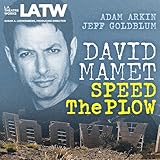
- Audible Audiobook
- David Mamet (Author) - Adam Arkin, Jeff Goldblum, Dina Waters (Narrators)
- English (Publication Language)
- 07/05/2006 (Publication Date) - L.A. Theatre Works (Publisher)
4. Interpret the “Plow” Metaphor:
- Action: Consider the title’s symbolic meaning and its connection to the characters’ actions and the play’s overarching themes.
- What to Look For: The concept of relentless, potentially destructive, forward momentum driven by ambition and the pursuit of success.
- Mistake: Taking the title literally or superficially, failing to grasp its metaphorical implications for progress, ambition, and moral compromise in Hollywood.
5. Evaluate Character Motivations:
- Action: Assess the underlying desires and fears driving Bobby, Charlie, and Karen.
- What to Look For: The pursuit of power, wealth, and status, and the compromises made to achieve these ends. Determine if any character acts from purely altruistic motives.
- Mistake: Assigning simplistic good or evil labels to characters; Mamet excels at portraying morally complex individuals driven by flawed humanity.
6. Examine the Play’s Cynicism:
- Action: Reflect on the play’s unflinching portrayal of the darker aspects of the entertainment industry.
- What to Look For: Themes of greed, manipulation, the commodification of art, and the superficiality of success.
- Mistake: Expecting a redemptive arc or a clear moral lesson. Speed the Plow is designed to be unsettling and provoke thought, not to provide comfort.
7. Analyze the Resolution:
- Action: Examine the play’s ending and its implications for the characters and the audience’s understanding of the themes.
- What to Look For: The final state of the characters’ relationships and moral standings, and how the conclusion reinforces the play’s central ideas.
- Mistake: Seeking a neat, conventionally happy ending. The play’s power often derives from its ambiguous or bleak conclusions.
Common Mistakes
- Mistake: Treating the dialogue as naturalistic speech.
- Why it matters: Mamet’s dialogue is highly stylized, rhythmic, and uses repetition and fragmentation to reveal character and subtext, not to mimic everyday conversation.
- Fix: Focus on the patterns, the aggression, and the emotional currents within the blunt language to understand its true function.
- Mistake: Overemphasizing the plot over thematic exploration.
- Why it matters: While a film project drives the narrative, the play’s substance lies in its examination of ambition, morality, and the corrupting influence of power in Hollywood.
- Fix: Prioritize understanding the “why” behind characters’ actions and their moral dilemmas over the mechanics of their business dealings.
- Mistake: Expecting clear heroes and villains.
- Why it matters: Mamet intentionally blurs moral lines. Characters are complex, driven by a mix of ambition, insecurity, and the desire for success, making them neither purely good nor evil.
- Fix: Embrace the moral ambiguity. Analyze characters’ flawed humanity and the compromises they make, recognizing the complexity of their motivations.
- Mistake: Underestimating Karen’s character.
- Why it matters: Karen is often interpreted as a crucial catalyst who exposes the characters’ true natures and challenges their established power dynamics; she is more than a foil.
- Fix: Analyze Karen’s agency and her impact on the male characters’ perceptions and decisions, considering her integral role in the play’s thematic development.
Expert Tips
- Tip: Pay close attention to the pauses and silences in the dialogue.
- Actionable Step: When reading, consciously note where characters stop speaking or hesitate. These moments often carry significant unspoken meaning.
- Common Mistake to Avoid: Rushing through the text and focusing only on the spoken words, thereby missing the weight and implication of what is not said.
- Tip: Identify the power dynamics at play between the characters.
- Actionable Step: Track who is trying to influence whom, who holds leverage, and how these dynamics shift throughout the play.
- Common Mistake to Avoid: Assuming characters are on equal footing; Mamet’s plays often depict a stark hierarchy of power, especially in business contexts.
- Tip: Consider the play’s setting as a character in itself.
- Actionable Step: Analyze how the producer’s office, with its implied wealth and status, influences the characters’ behavior and decisions.
- Common Mistake to Avoid: Treating the setting as a mere backdrop; for Mamet, the environment often reflects and amplifies the characters’ internal states and the industry’s pressures.
Understanding Speed The Plow by David Mamet: A Contrarian Perspective
While Speed the Plow is widely seen as a condemnation of Hollywood, a contrarian interpretation suggests the play is less about indicting the industry itself and more about exposing the universal human susceptibility to ambition and the seductive nature of power. The play probes the inherent flaws within individuals that drive them to compromise their ethics, irrespective of their professional field. It critiques the fundamental human desire for more and the ethical tightrope walked to achieve it, making its observations applicable beyond the confines of the film world.
The Performance of Morality
A counter-intuitive angle on Speed the Plow is to view the characters’ supposed moral struggles not as genuine dilemmas, but as calculated performances designed to justify pre-existing desires. Bobby Gould and Charlie Fox are presented not as good men tempted by evil, but as ambitious individuals seeking the path of least ethical resistance to achieve their goals. Karen, in this light, is not solely a force of corruption or redemption but an externalization of the industry’s pervasive pressures and temptations. She compels the men to confront the hollowness of their own aspirations. The play’s brilliance lies in its ability to make the audience question whether any character possesses genuine moral capacity, or if they are all merely playing a game with shifting rules and self-serving objectives.
Character Archetypes and Industry Pressures
| Character | Primary Motivation | Manifestation of Industry Pressure | Potential Moral Compromise |
|---|---|---|---|
| Bobby | Career advancement, wealth | Systemic greed, competition | Betrayal of principles for a lucrative deal |
| Charlie | Financial security, status | Fear of failure, obsolescence | Sacrificing integrity for perceived career advancement |
| Karen | Ambition, survival | Objectification, power dynamics | Strategic use of perceived weaknesses to navigate the system |
BLOCKQUOTE_0
Common Myths About Speed The Plow by David Mamet
- Myth: Speed the Plow is a straightforward cautionary tale about Hollywood’s corrupting influence.
- Rebuttal: While the play critiques Hollywood, its deeper examination lies in the universal human capacity for ambition
Decision Rules
- If reliability is your top priority for Speed The Plow by David Mamet, choose the option with the strongest long-term track record and support.
- If value matters most, compare total ownership cost instead of headline price alone.
- If your use case is specific, prioritize fit-for-purpose features over generic ‘best overall’ claims.