Henry Louis Gates Jr.’s The Black Box: Unpacking Complex Issues
This guide examines Henry Louis Gates Jr.’s seminal work, The Black Box, focusing on its critical analysis of how scientific and philosophical ideas have historically constructed and perpetuated racial categories. It is intended for readers seeking a deeper understanding of the intellectual underpinnings of race and racism, particularly those who appreciate rigorous historical and theoretical engagement.
Who this is for
- Readers interested in the intellectual history of race and the construction of racial categories.
- Students and scholars of African American studies, literary criticism, and the history of science.
What to check first
- Familiarity with Enlightenment Thought: Gates extensively engages with Enlightenment philosophers and scientists. A basic understanding of figures like Kant, Hume, and Linnaeus will enhance comprehension.
- Academic Context: This is not a casual read. Be prepared for dense prose, complex arguments, and extensive citations typical of academic scholarship.
- Gates’s Previous Work: While The Black Box stands alone, familiarity with Gates’s earlier works, such as The Signifying Monkey or Loose Canons, can provide a richer appreciation of his evolving intellectual project.
- Scope of the Argument: Understand that Gates is primarily focused on the discourse surrounding race—how ideas and texts created and solidified racial hierarchies—rather than solely on the lived experiences of racism, though the two are intrinsically linked.
Step-by-step plan to understand The Black Box by Henry Louis Gates Jr.
1. Engage with the Introduction:
- Action: Read the introduction carefully.
- What to look for: Gates’s thesis statement, his definition of “the black box” in this context (the hidden, often unexamined, intellectual scaffolding that supports racial thinking), and the historical period he primarily covers.
- Mistake: Skimming the introduction, missing the foundational argument and the author’s specific framing of the “black box.”
2. Trace the Enlightenment Origins:
- Action: Focus on the chapters detailing the Enlightenment thinkers.
- What to look for: How figures like Kant and Hume, despite their other philosophical contributions, articulated ideas that inadvertently or intentionally laid groundwork for racial classification and hierarchy. Note specific quotes or concepts Gates highlights.
- Mistake: Treating these historical figures in isolation, failing to see how their ideas were synthesized and applied to create racial typologies.
3. Analyze Scientific Classification Systems:
- Action: Examine Gates’s discussion of early naturalists and anthropologists.
- What to look for: The methods and criteria used by figures like Carl Linnaeus or Johann Friedrich Blumenbach to categorize human beings. Pay attention to the language they used and the implicit assumptions embedded in their systems.
- Mistake: Assuming these classifications were purely objective, overlooking the cultural and social biases that shaped them.
4. Connect Discourse to Power:
- Action: Identify how Gates links the intellectual discourse on race to its practical implications.
- What to look for: Examples of how these academic and scientific ideas were used to justify slavery, colonialism, and other forms of oppression. Observe the causal chain Gates draws.
- Mistake: Separating the “ideas” from their “effects,” failing to see the direct line from abstract thought to concrete social structures.
5. Understand the Role of “Difference”:
- Action: Analyze Gates’s exploration of how “difference” became racialized.
- What to look for: The specific ways in which perceived biological, cultural, or intellectual differences were attributed to discrete racial groups and used to establish a hierarchy.
- Mistake: Focusing only on obvious biological differences, missing the subtler, often intellectual, distinctions that were constructed as inherently racial.
6. Consider the Counter-Narratives (or lack thereof):
- Action: Note when Gates discusses attempts to resist or critique these racializing discourses.
- What to look for: The arguments and figures that challenged the prevailing racial science and philosophy of the time, and the extent to which they were marginalized or co-opted.
- Mistake: Assuming the dominant discourse was unchallenged; recognizing the often-silenced voices is crucial for a complete picture.
7. Synthesize the “Black Box” Metaphor:
- Action: Reflect on how the various elements discussed—Enlightenment philosophy, scientific classification, the construction of difference—collectively form Gates’s “black box.”
- What to look for: The recurring patterns and underlying assumptions that Gates reveals as the hidden machinery of racial thought.
- Mistake: Viewing each chapter or thinker as an isolated unit, rather than seeing how they interlock to form the larger structure Gates critiques.
The Black Box by Henry Louis Gates Jr.: Expert Insights and Cautions
BLOCKQUOTE_0
This quote encapsulates Gates’s core argument: race is not a natural phenomenon but a human invention, built upon layers of intellectual justification. Understanding this construction requires detailed engagement with the historical discourse.
To truly grasp the intricate arguments within Henry Louis Gates Jr.’s exploration of race, starting with the book itself is essential. This seminal work lays the foundation for understanding his deconstruction of racial categories.
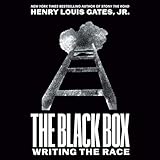
- Audible Audiobook
- Henry Louis Gates Jr. (Author) - Dominic Hoffman (Narrator)
- English (Publication Language)
- 03/19/2024 (Publication Date) - Penguin Audio (Publisher)
Common Myths about The Black Box by Henry Louis Gates Jr.
- Myth 1: The book argues that race is entirely a social construct with no biological basis whatsoever.
- Why it matters: This is an oversimplification. Gates focuses on how racial categories and hierarchies were constructed through discourse, acknowledging that perceived biological differences were often the raw material, but emphasizing that the meaning and significance assigned to these differences were intellectual and social.
- Fix: Recognize that Gates’s critique is directed at the ideology of race and its scientific/philosophical underpinnings, not a denial of human biological variation. The “black box” is the system of meaning-making.
- Myth 2: Gates’s work is primarily about the transatlantic slave trade and its immediate aftermath.
- Why it matters: While the legacy of slavery is a crucial context, The Black Box delves much deeper into the pre-Enlightenment and Enlightenment intellectual foundations that made such systems of oppression seem rational or natural. The book’s chronological scope often precedes the peak of the slave trade, focusing on the conceptualization of race itself.
- Fix: Understand that the book’s primary innovation is tracing the intellectual genealogy of race, pushing the origins of racial thinking further back than commonly understood.
- Myth 3: The book is purely descriptive, detailing historical ideas without offering a critical judgment.
- Why it matters: Gates’s meticulous historical analysis is inherently critical. By exposing the often-unacknowledged assumptions, biases, and logical leaps in the discourse of race, he implicitly (and often explicitly) critiques the validity and ethical implications of these constructions.
- Fix: Look for Gates’s analytical frameworks and the connections he draws between ideas and power structures. His method of deconstruction serves as a powerful critique.
The Black Box by Henry Louis Gates Jr.: A Thematic Breakdown
The central theme of The Black Box revolves around the intellectual architecture that underpins the concept of race. Gates meticulously unpacks how Enlightenment thinkers, in their pursuit of classifying and understanding the world, inadvertently or intentionally created a framework for racial categorization that has had profound and lasting consequences.
One of the key counter-intuitive angles of The Black Box is its focus on the very specific intellectual tools—philosophical arguments, scientific taxonomies, and linguistic practices—that were deployed to construct race. Most contemporary discussions of race tend to focus on its social manifestations or its biological inaccuracies. Gates, however, insists on digging into the discursive origins, arguing that the intellectual edifice of race was built with particular conceptual bricks and mortar, often by figures celebrated for their contributions to other fields. His work suggests that understanding the how of racial conceptualization is as crucial as understanding the what of racism.
The Enlightenment’s Role in Racial Construction
Gates dedicates significant attention to the Enlightenment period, a time often lauded for its emphasis on reason and universalism. However, he reveals how this era also birthed the systematic intellectual categorization of humanity along racial lines. Figures like Immanuel Kant, while a champion of reason, also articulated views that contributed to a hierarchical understanding of human races. Gates highlights Kant’s essays on race, such as “On the Different Races of Man,” where he attempts to establish a biological basis for racial difference and assign distinct character traits to each.
BLOCKQUOTE_1
This passage underscores the paradox Gates explores: the very intellectual tools that promised liberation and universal understanding were also used to create systems of exclusion and subjugation. Gates demonstrates how the desire to fit humanity into neat, rational categories led to the creation of “race” as a primary organizing principle, often based on superficial observations and deeply ingrained prejudices.
Scientific Taxonomy and the Codification of Race
The development of scientific taxonomy during this period is another critical element Gates dissects. Carl Linnaeus’s Systema Naturae, while revolutionary in its classification of the natural world, also included a classification of humans (Homo sapiens) into varieties based on geography and perceived physical and temperamental characteristics. Gates points out that Linnaeus’s categories, such as Europaeus albus (white European) and Afer niger (black African), were not merely descriptive but carried implicit value judgments and associations.
Similarly, Johann Friedrich Blumenbach’s work, which introduced the five-race model (Caucasian, Mongolian, Malayan, Ethiopian, and American), is analyzed not just for its taxonomic scheme but for the subtle biases embedded within it. Gates argues that the very concept of a “Caucasian” race, which Blumenbach considered the original and most beautiful, was an invention that served to elevate European peoples and establish a hierarchy with them at the apex.
Quick Comparison
| Option | Best for | Pros | Watch out |
|---|---|---|---|
| Who this is for | General use | Readers interested in the intellectual history of race and the construction o… | Mistake: Skimming the introduction, missing the foundational argument and the… |
| What to check first | General use | Students and scholars of African American studies, literary criticism, and th… | Mistake: Treating these historical figures in isolation, failing to see how t… |
| Step-by-step plan to understand The Black Box by Henry Louis Gates Jr | General use | Familiarity with Enlightenment Thought: Gates extensively engages with Enligh… | Mistake: Assuming these classifications were purely objective, overlooking th… |
| The Black Box by Henry Louis Gates Jr Expert Insights and Cautions | General use | Academic Context: This is not a casual read. Be prepared for dense prose, com… | Mistake: Separating the “ideas” from their “effects,” failing to see the dire… |
Decision Rules
- If reliability is your top priority for The Black Box by Henry Louis Gates Jr., choose the option with the strongest long-term track record and support.
- If value matters most, compare total ownership cost instead of headline price alone.
- If your use case is specific, prioritize fit-for-purpose features over generic ‘best overall’ claims.