Halldor Laxness’s Novel, Salka Valka
Salka Valka by Halldor Laxness: Quick Answer
- Salka Valka is a foundational 20th-century Icelandic novel by Nobel laureate Halldor Laxness, detailing the struggles for independence and community development in a remote fishing village.
- It is recommended for readers who appreciate character-driven narratives, atmospheric settings, and explorations of societal evolution, rather than those seeking fast-paced plots.
- The novel’s strengths include its vivid portrayal of the Icelandic landscape and its deep examination of the psychological resilience of its characters, particularly the titular protagonist.
Who This Is For
- Readers interested in literary fiction that examines the intersection of individual will and societal forces within a specific historical context.
- Individuals who value richly drawn characters and a nuanced depiction of community life, especially within challenging environments.
What to Check First
- Narrative Pace: Determine your comfort with a deliberate, character-focused narrative that unfolds gradually, rather than a plot-heavy, action-oriented story.
- Thematic Focus: Assess your interest in themes of social inequality, the fight for autonomy, and the impact of environment on human lives.
- Laxness’s Style: Prepare for prose that is both lyrical and stark, reflecting the often-harsh realities of early 20th-century Icelandic life.
- Character Depth vs. Plot: Understand that the novel prioritizes the internal lives and development of its characters and community over a conventional, external plot arc.
Step-by-Step Plan for Engaging with Salka Valka
1. Establish the Setting: Begin by understanding the isolated, resource-scarce environment of the Icelandic fishing village.
- Action: Note how the physical harshness of the landscape (sea, weather, terrain) directly influences the characters’ daily lives and livelihoods.
- What to Look For: Descriptions of the environment as a palpable force.
- Mistake: Treating the setting as mere background; Laxness uses it as a powerful force shaping character and plot.
2. Identify Core Conflicts: Recognize that the central struggles are societal and economic, not necessarily personified by a single antagonist.
- Action: Identify tensions between tradition and modernization, the fight for fair labor practices, and the quest for community self-sufficiency.
- What to Look For: Systemic challenges and environmental opposition.
- Mistake: Expecting a conventional hero-villain dynamic; the opposition is often systemic or environmental.
3. Trace Salka Valka’s Development: Focus on the evolution of the protagonist from a young woman to a significant community figure.
- Action: Observe her assertiveness, growing sense of responsibility, and navigation of a patriarchal society.
- What to Look For: Salka’s agency and internal complexities.
- Mistake: Overlooking Salka’s internal complexities or dismissing her actions as mere stubbornness; her agency is key.
4. Analyze Community Dynamics: Observe the interplay between the villagers, their shared challenges, and their developing social consciousness.
- Action: Note the formation of collective action, the impact of economic fluctuations on social strata, and the emergence of leadership.
- What to Look For: The broader social tapestry Laxness constructs.
- Mistake: Isolating individual character arcs and neglecting the broader social tapestry Laxness meticulously constructs.
5. Appreciate the Prose: Engage with Laxness’s distinctive literary style, which blends poetic observation with unflinching realism.
- Action: Pay attention to evocative descriptions of nature, nuanced dialogue, and the author’s subtle commentary on human behavior.
- What to Look For: The lyrical and stark qualities of the prose.
- Mistake: Skimming lengthy descriptive passages; these often contain crucial thematic and atmospheric elements vital to understanding the narrative.
6. Consider Thematic Relevance: Reflect on the novel’s enduring themes beyond its specific historical setting.
- Action: Identify parallels to contemporary struggles for social justice, economic fairness, and individual dignity.
- What to Look For: Timeless commentary on human behavior and societal issues.
- Mistake: Reading the novel solely as a historical artifact, thus missing its timeless commentary on the human behavior.
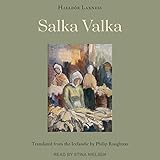
- Audible Audiobook
- Halldor Laxness (Author) - Stina Nielsen (Narrator)
- English (Publication Language)
- 06/14/2022 (Publication Date) - Tantor Audio (Publisher)
Salka Valka by Halldor Laxness: A Deeper Examination
Halldor Laxness, a recipient of the Nobel Prize in Literature, masterfully crafts a world in “Salka Valka” that mirrors the formidable Icelandic landscape it depicts. First published in the 1930s, the novel is divided into two distinct parts, charting the fortunes of the inhabitants of a remote fishing village in northern Iceland. This is not a work for those seeking light entertainment; it is a profound exploration of human endurance, social change, and the often-brutal fight for dignity. The narrative centers on Salka Valka, a spirited and independent young woman who navigates a world dominated by harsh economic realities and rigid social structures. Her journey, alongside that of the broader community, forms the heart of the novel, revealing the complexities of progress and the inherent cost of survival.
The primary strength of Salka Valka by Halldor Laxness lies in its deeply realized characters and its unflinching portrayal of a society in transition. Laxness possesses a unique ability to imbue even the most challenging circumstances with a sense of epic sweep. The stark beauty of the Icelandic fjords is not merely a backdrop but an active force, shaping the lives and destinies of its people. The novel delves into themes of class struggle, the nascent labor movement, and the enduring quest for individual autonomy in the face of overwhelming odds. It stands as a testament to the human spirit, showcasing how individuals, particularly women like Salka Valka, can forge their own paths and influence their communities even within restrictive environments. For a comprehensive review of this work, consider this analysis of Halldor Laxness’s Novel, Salka Valka, Reviewed.
Common Misconceptions About Salka Valka
- Myth: Salka Valka is a straightforward feminist tract.
- Why it Matters: While Salka is a powerful, independent female protagonist, the novel’s exploration of gender is more nuanced. It depicts societal constraints on women but also their capacity for resilience and agency within those limitations, rather than presenting a simple ideological argument.
- Fix: Approach Salka Valka as a complex character study within a specific historical and social context. Appreciate her strength as an individual’s response to her environment, rather than a generalized political statement.
- Myth: The novel is purely historical with little contemporary relevance.
- Why it Matters: The themes of social inequality, the struggle for fair labor practices, and the human drive for self-determination are timeless. Laxness’s depiction of a community striving for a better future against economic hardship offers enduring insights into persistent human concerns.
- Fix: Connect the novel’s portrayal of community organizing and individual resilience to contemporary social and economic challenges. Recognize how the fight for dignity and fair treatment remains a persistent human concern.
- Myth: The book is slow and lacks significant plot development.
- Why it Matters: While the pace is deliberate, focusing on character and atmosphere, the novel does contain significant plot developments, particularly concerning the economic and social evolution of the village and Salka’s role in it.
- Fix: Read with an appreciation for character-driven narratives. Focus on the subtle shifts in relationships, the gradual building of community infrastructure, and Salka’s evolving influence as markers of plot progression.
Expert Tips for Reading Salka Valka
- Tip: Immerse yourself in the atmosphere by reading descriptive passages aloud.
- Actionable Step: When encountering descriptions of the sea, the weather, or the village, pause and read the sentences that evoke these elements slowly and deliberately.
- Common Mistake to Avoid: Rushing through descriptive passages, missing the way Laxness uses the environment to mirror the characters’ internal states and the village’s struggles.
- Tip: Keep a running log of key characters and their relationships.
- Actionable Step: Jot down the names of characters as they appear, along with a brief note on their role or relationship to Salka and the community. This is especially helpful given the novel’s scope.
- Common Mistake to Avoid: Getting lost in the large cast of characters and their interconnections, which can obscure the central narrative threads.
- Tip: Consider the novel’s two-part structure as distinct phases of development.
- Actionable Step: Recognize that the first part of the novel often focuses on establishing the setting and characters, while the second part typically explores the consequences of their actions and the village’s growth or transformation.
- Common Mistake to Avoid: Expecting a uniform pace or thematic focus throughout the entire novel; the structural division often signifies a shift in narrative momentum and thematic emphasis.
BLOCKQUOTE_0
This observation, while not a direct quote from Salka Valka, encapsulates the spirit of the novel’s exploration of social injustice and the precarious existence of its characters. It serves as a crucial lens through which to view the systemic disadvantages faced by the villagers and to understand their struggles within a broader context of societal inequality.
Key Elements of Salka Valka
| Element | Description | Significance |
|---|---|---|
| Setting: Northern Iceland | Remote, harsh, and beautiful fishing village. | Shapes characters’ lives, livelihoods, and resilience; acts as a powerful force. |
| Protagonist: Salka Valka | Spirited, independent young woman. | Embodies the struggle for autonomy and leadership within a patriarchal society. |
| Themes | Social justice, economic struggle, community development, individual dignity, human endurance. |
Decision Rules
- If reliability is your top priority for Salka Valka by Halldor Laxness, choose the option with the strongest long-term track record and support.
- If value matters most, compare total ownership cost instead of headline price alone.
- If your use case is specific, prioritize fit-for-purpose features over generic ‘best overall’ claims.