Georges Simenon’s Dirty Snow: A Detective Novel Analysis
This analysis examines Georges Simenon’s “Dirty Snow” (original title: La Neige était sale), a novel often considered a departure from his more procedural Inspector Maigret series. It delves into the psychological complexity and moral ambiguity that define this particular work, offering a nuanced perspective for readers interested in Simenon’s broader literary output.
Dirty Snow by Georges Simenon: Quick Answer
- “Dirty Snow” is a psychologically driven crime novel that explores the dark underbelly of human nature, focusing on character motivations over plot mechanics.
- It is best suited for readers who appreciate character studies and moral complexity within a crime fiction framework, rather than those seeking traditional detective procedural elements.
- The novel’s strength lies in its atmospheric portrayal of a decaying world and its unflinching look at guilt and redemption, though its bleakness may not appeal to all.
Who This Is For
- Readers interested in Georges Simenon beyond the Inspector Maigret series, particularly those drawn to his more introspective and morally complex works.
- Individuals who appreciate crime fiction that prioritizes character psychology, atmosphere, and thematic depth over intricate plotting or puzzle-solving.
What to Check First
- Author’s Stylistic Range: Confirm your familiarity with Simenon’s varied output. “Dirty Snow” is less a procedural and more a character-driven psychological drama, distinct from many of his Maigret novels.
- Thematic Expectations: Assess your tolerance for bleak themes. The novel confronts guilt, alienation, and the consequences of past actions with a stark realism.
- Pacing and Plot: Understand that the narrative unfolds slowly, focusing on internal states and environmental atmosphere rather than rapid plot developments.
- Translator and Edition: Verify the translation quality. While many translations are good, some can affect the nuanced tone of Simenon’s prose.
Step-by-Step Plan for Analyzing “Dirty Snow”
1. Initial Read-Through: Read the novel from start to finish to grasp the overall narrative and character arcs.
- Action: Focus on the protagonist, Francis.
- What to Look For: His initial detachment and the pervasive sense of stagnation in his environment.
- Mistake to Avoid: Rushing through the early chapters, missing the subtle establishment of Francis’s internal state and the setting’s oppressive atmosphere.
2. Character Motivation Deep Dive: Re-examine Francis’s actions and decisions, seeking the underlying psychological drivers.
- Action: Analyze Francis’s interactions with other characters, particularly Mina and the figures from his past.
- What to Look For: The interplay of guilt, self-deception, and a desperate search for meaning or absolution.
- Mistake to Avoid: Judging Francis solely on his outward actions without considering the internal turmoil Simenon meticulously details.
3. Atmospheric Analysis: Pay close attention to how the setting contributes to the novel’s mood and themes.
- Action: Note descriptions of the snow, the cold, and the decaying urban landscape of Lausanne.
- What to Look For: The metaphorical connection between the external environment and Francis’s internal decay and moral compromise.
- Mistake to Avoid: Treating the setting as mere backdrop, rather than an integral element shaping the narrative and character psychology.
4. Thematic Identification: Identify the central themes explored by Simenon.
- Action: List recurring ideas or concepts such as guilt, isolation, the burden of the past, and the possibility of redemption.
- What to Look For: How these themes are woven into the plot and character development, particularly in Francis’s journey.
- Mistake to Avoid: Overlooking the thematic resonance by focusing solely on the crime element; the ‘why’ is more significant than the ‘how’ here.
5. Narrative Structure and Pacing: Evaluate Simenon’s structural choices and their impact on the reader’s experience.
- Action: Consider the novel’s non-linear elements or shifts in perspective, if any.
- What to Look For: How the pacing, often deliberate and slow, builds tension and emphasizes psychological states.
- Mistake to Avoid: Expecting a fast-paced thriller; the deliberate pacing is a tool for immersion in Francis’s psychological landscape.
6. Moral Ambiguity Assessment: Analyze the ethical complexities presented in the novel.
- Action: Reflect on the characters’ moral choices and the lack of clear-cut villains or heroes.
- What to Look For: Simenon’s refusal to offer easy answers or moral judgments, forcing the reader to confront uncomfortable truths.
- Mistake to Avoid: Seeking a definitive moral lesson; the novel’s power lies in its exploration of shades of gray.
7. Comparison to Other Works: Place “Dirty Snow” within Simenon’s broader oeuvre or the genre.
- Action: Contrast its psychological depth with more plot-driven detective fiction or even other Simenon novels.
- What to Look For: What makes this novel a distinctive entry in Simenon’s work and what it reveals about his range as a writer.
- Mistake to Avoid: Assuming all of Simenon’s work is stylistically similar; this novel showcases a different facet of his talent.
For those looking to dive directly into Simenon’s darker, more introspective works, ‘Dirty Snow’ is a compelling choice. You can find this acclaimed novel easily.
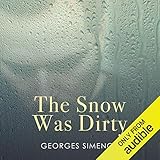
- Audible Audiobook
- Georges Simenon (Author) - Joe Jameson (Narrator)
- English (Publication Language)
- 11/03/2016 (Publication Date) - Audible Studios (Publisher)
Dirty Snow by Georges Simenon: A Closer Examination
This section delves into the specific qualities that distinguish “Dirty Snow” within Simenon’s extensive bibliography. It focuses on the elements that make it a compelling, albeit challenging, read for those seeking a deeper exploration of character and atmosphere.
- Psychological Realism: Simenon excels at portraying the internal lives of his characters, and “Dirty Snow” is a prime example. The narrative is less about solving a crime and more about understanding the criminal’s psyche. The bleak, snow-laden setting of Lausanne mirrors the protagonist Francis’s internal state of moral decay and isolation. This atmospheric connection is a key strength, immersing the reader in Francis’s psychological landscape.
- Thematic Depth: The novel grapples with themes of guilt, alienation, and the inescapable weight of the past. Francis is not a sympathetic protagonist, but his struggles with his conscience and his desperate, often misguided, attempts at absolution make him a compelling figure. The narrative forces readers to confront uncomfortable questions about human nature and the consequences of our choices.
- Departure from Convention: For readers accustomed to the more structured investigations of Inspector Maigret, “Dirty Snow” can be a surprising experience. The focus is on the internal collapse and moral quandaries of the characters, rather than the meticulous piecing together of clues. This makes it a powerful character study but may be a departure from what some readers expect from a detective novel.
BLOCKQUOTE_0
This quote encapsulates the novel’s central metaphor and its thematic core. The external environment is not merely a setting but a reflection of the protagonist’s inner turmoil and moral degradation. Simenon masterfully uses this device to create a palpable sense of unease and to underscore the inescapable nature of Francis’s predicament.
Common Myths
- Myth 1: “Dirty Snow” is a straightforward detective story with a clear-cut mystery to solve.
- Why it Matters: This misconception can lead to disappointment for readers expecting a traditional procedural. The novel’s strength lies elsewhere.
- Fix: Approach “Dirty Snow” as a psychological character study set within a crime fiction framework. Focus on the internal motivations and moral complexities of the characters rather than the mechanics of a typical investigation.
- Myth 2: Francis, the protagonist, is a typical Simenon anti-hero.
- Why it Matters: While Francis exhibits anti-heroic traits, his specific brand of self-destruction and his desperate, albeit flawed, search for redemption set him apart.
- Fix: Recognize Francis as a unique exploration of a character burdened by his past and trapped in a cycle of self-inflicted misery. His journey is less about a grand moral failing and more about a pervasive existential dread.
Expert Tips
- Tip 1: Embrace the Atmosphere.
- Action: Pay close attention to Simenon’s descriptions of the setting, particularly the persistent snow and cold.
- Common Mistake to Avoid: Skimming over descriptive passages. These are crucial for understanding the protagonist’s internal state and the novel’s pervasive mood.
- Tip 2: Prioritize Character Psychology Over Plot.
- Action: Focus on why characters act the way they do, rather than solely on what they do.
- Common Mistake to Avoid: Trying to piece together a traditional mystery plot. The narrative is driven by internal conflict and character revelation.
- Tip 3: Understand the Novel’s Context.
- Action: Read “Dirty Snow” with an awareness of Simenon’s broader literary output, noting its divergence from his more procedural works.
- Common Mistake to Avoid: Assuming all Simenon novels follow the same structure or focus. This novel showcases his versatility in psychological realism.
Quick Comparison
| Option | Best for | Pros | Watch out |
|---|---|---|---|
| Quick Answer | General use | “Dirty Snow” is a psychologically driven crime novel that explores the dark u… | Mistake to Avoid: Rushing through the early chapters, missing the subtle esta… |
| Who This Is For | General use | It is best suited for readers who appreciate character studies and moral comp… | Mistake to Avoid: Judging Francis solely on his outward actions without consi… |
| What to Check First | General use | The novel’s strength lies in its atmospheric portrayal of a decaying world an… | Mistake to Avoid: Treating the setting as mere backdrop, rather than an integ… |
| Step-by-Step Plan for Analyzing Dirty Snow | General use | Readers interested in Georges Simenon beyond the Inspector Maigret series, pa… | Mistake to Avoid: Overlooking the thematic resonance by focusing solely on th… |
Decision Rules
- If reliability is your top priority for Dirty Snow by Georges Simenon, choose the option with the strongest long-term track record and support.
- If value matters most, compare total ownership cost instead of headline price alone.
- If your use case is specific, prioritize fit-for-purpose features over generic ‘best overall’ claims.
FAQ
- Q: Is “Dirty Snow” a good starting point for readers new to Georges Simenon?
- A: Not necessarily. While a powerful novel, its bleakness and psychological intensity might be better appreciated after experiencing some of Simenon’s more accessible Maigret novels.
- Q: How does “Dirty Snow” compare to Simenon’s Inspector Maigret series?
- A: “Dirty Snow” is significantly less focused on police procedure and more on the internal lives and moral struggles of its characters. It’s a character-driven psychological drama rather than a classic detective mystery.
- Q: What is the significance of the snow in the novel?
- A: