George Eliot’s Romola: A Historical Perspective
George Eliot’s Romola is a sweeping historical novel set in Renaissance Florence, exploring themes of faith, free will, and the complex moral landscape of a turbulent era. This epic tale delves into the life of a young Florentine scholar and his wife, Romola, as they navigate political intrigue, religious upheaval, and personal crises. For readers seeking a deeply researched and philosophically rich immersion into 15th-century Italy, Romola offers a profound literary experience.
Who This Is For
- Dedicated Readers: Those who appreciate meticulously researched historical settings and complex character development will find Romola rewarding.
- Students of History and Philosophy: The novel provides a vivid portrayal of Renaissance Florence and engages with significant ethical and theological questions.
What to Check First
Before diving into Romola, consider the following:
- Historical Context: Familiarize yourself with the political climate of Florence during the late 15th century, particularly the influence of figures like Savonarola. This will enhance your understanding of the novel’s conflicts.
- Eliot’s Style: George Eliot’s prose is dense and intellectual. Be prepared for detailed descriptions and extensive internal monologues.
- Character Motivations: The characters in Romola are driven by intricate moral and philosophical considerations. Pay close attention to their internal struggles and evolving beliefs.
- Pacing: The novel is substantial in length and scope. Approach it with the expectation of a deliberate pace, allowing the narrative and thematic development to unfold gradually.
Step-by-Step Plan for Engaging with Romola
1. Read Chapter 1: Understand the introduction of Tito Melema and Baldassarre.
- Action: Begin reading the novel from the start.
- What to Look For: Tito’s charm and the initial mystery surrounding his past. Baldassarre’s arrival and his immediate impact.
- Mistake: Skipping the opening chapters, which lay crucial groundwork for character relationships and plot points.
2. Map Florentine Politics: Track the key political factions and figures.
- Action: Keep a running list or mental note of prominent families (e.g., Medici) and religious leaders (e.g., Savonarola).
- What to Look For: How political shifts influence the characters’ lives and decisions. The rise and fall of Savonarola’s influence.
- Mistake: Ignoring the historical backdrop, leading to a superficial understanding of the narrative’s driving forces.
3. Analyze Romola’s Moral Development: Observe her journey from obedience to self-determination.
- Action: Focus on Romola’s internal monologues and her interactions with Tito and other characters.
- What to Look For: Moments of doubt, questioning, and eventual assertion of her own moral compass. Her struggle with duty versus personal conviction.
- Mistake: Viewing Romola solely as a passive victim, rather than an active agent in her own moral and spiritual growth.
4. Examine Tito’s Compromises: Trace the consequences of his choices.
- Action: Pay attention to Tito’s rationalizations and the gradual erosion of his principles.
- What to Look For: The instances where he prioritizes convenience or self-preservation over integrity. The impact of his actions on those around him.
- Mistake: Underestimating the insidious nature of gradual moral decay, failing to see how small compromises lead to significant ethical failings.
5. Consider Savonarola’s Influence: Assess the impact of his sermons and reforms.
- Action: Note the reactions of different characters to Savonarola’s fiery pronouncements.
- What to Look For: The fervor he inspires, the fear he instills, and the societal changes he attempts to enact.
- Mistake: Dismissing Savonarola as a mere historical figure, rather than a powerful force shaping the novel’s moral and social landscape.
6. Engage with the Philosophical Debates: Identify the key ethical and theological questions.
- Action: Reflect on the discussions about free will, predestination, and the nature of good and evil.
- What to Look For: How characters grapple with these concepts in their personal lives. Eliot’s own philosophical underpinnings.
- Mistake: Reading the novel purely as a plot-driven narrative, missing the deeper intellectual and philosophical currents.
7. Appreciate the Setting: Immerse yourself in the descriptions of Florence.
- Action: Visualize the streets, buildings, and atmosphere of Renaissance Florence as described by Eliot.
- What to Look For: The sensory details that bring the city to life. The contrast between its beauty and its political turmoil.
- Mistake: Skimming over descriptive passages, thus losing the rich texture and historical authenticity of the novel.
Common Myths about Romola by George Eliot
- Myth: Romola is a straightforward love story.
- Why it Matters: This misconception overlooks the novel’s profound engagement with philosophical and moral dilemmas that far transcend romantic entanglements.
- Fix: Recognize that while love is a significant element, it serves as a catalyst for exploring deeper themes of duty, faith, and individual responsibility within a complex historical context.
For readers seeking a deeply researched and philosophically rich immersion into 15th-century Italy, George Eliot’s Romola offers a profound literary experience. This classic novel is a must-read for anyone interested in Renaissance Florence.
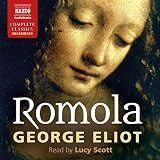
- Audible Audiobook
- George Eliot (Author) - Lucy Scott (Narrator)
- English (Publication Language)
- 08/05/2020 (Publication Date) - Naxos AudioBooks (Publisher)
- Myth: The novel is overly didactic and preachy.
- Why it Matters: This perspective can deter readers who might otherwise appreciate Eliot’s intellectual depth and nuanced exploration of human nature.
- Fix: Understand that Eliot’s moral explorations are woven into the narrative and character development, rather than presented as overt sermons. The “didactic” elements are integral to the novel’s philosophical inquiry.
- Myth: The historical setting is merely a backdrop.
- Why it Matters: This view diminishes the crucial role the Florentine Renaissance plays in shaping the characters’ actions, beliefs, and the novel’s central conflicts.
- Fix: Actively engage with the historical details and political events, as they are intrinsically linked to the characters’ motivations and the unfolding plot.
Expert Tips for Reading Romola
- Tip 1: Pace Yourself.
- Action: Dedicate specific, uninterrupted reading times to allow for full immersion.
- Common Mistake to Avoid: Trying to rush through chapters, leading to missed nuances in character development and thematic depth.
- Tip 2: Consult a Glossary or Historical Notes.
- Action: Keep a reference handy for unfamiliar historical terms, names, or customs. Many editions include helpful appendices.
- Common Mistake to Avoid: Getting bogged down by unfamiliar vocabulary or historical references, which can disrupt the reading flow and comprehension.
- Tip 3: Focus on Character Arcs.
- Action: Track the evolution of Romola and Tito, noting their key decisions and their consequences.
- Common Mistake to Avoid: Overlooking the subtle shifts in character motivation, leading to a less insightful understanding of their ultimate fates.
Romola by George Eliot: A Deeper Dive
George Eliot’s Romola stands as a monumental achievement in historical fiction, meticulously recreating the vibrant yet volatile atmosphere of 15th-century Florence. The novel is a profound exploration of spiritual and moral awakening, set against a backdrop of political intrigue and the fervent preaching of Girolamo Savonarola. It is a work that demands attention, rewarding the dedicated reader with its intellectual rigor and psychological depth.
Key Thematic Elements
- Faith and Doubt: The novel grapples with the nature of true faith, contrasting fervent religious conviction with intellectual skepticism and personal moral struggle. Savonarola’s rise and fall serve as a central axis for these explorations.
- Free Will vs. Determinism: Eliot delves into the age-old philosophical debate of whether individuals shape their destinies or are merely pawns of fate and circumstance. Tito’s choices often highlight this tension.
- The Individual vs. Society: Romola examines the pressures individuals face from their social and political environments, and the courage required to forge an independent moral path.
A Comparative Perspective
While authors like Walter Scott and Alexandre Dumas also penned vivid historical novels, Eliot’s approach in Romola is distinguished by its intense focus on the internal lives of her characters and its deep philosophical underpinnings. Unlike more action-driven historical narratives, Romola prioritizes psychological realism and ethical inquiry, making it a more contemplative read.
BLOCKQUOTE_0
This quote encapsulates a central theme: the paralyzing effect of fear and the necessity of courageous action, even in the face of potential error.
How This List Was Curated
This review of Romola by George Eliot was curated with the following criteria:
- Depth of Thematic Exploration: Prioritizing the novel’s engagement with significant philosophical and moral questions relevant to its historical context.
- Character Complexity: Assessing the richness and psychological realism of the characters, particularly Romola and Tito.
- Historical Authenticity: Evaluating the novel’s success in recreating the atmosphere and socio-political landscape of Renaissance Florence.
- Reader Accessibility: Balancing the intellectual demands of the text with practical advice for approaching Eliot’s dense prose.
- Nuanced Judgment: Moving beyond generic praise to offer specific insights into the novel’s strengths and potential challenges for readers.
Reading Romola by George Eliot: A Segmentation
For the Dedicated Scholar
- Best for: Readers seeking a profound intellectual and historical immersion.
- Skip if: You prefer fast-paced plots or lighter thematic material.
- Trade-off: Offers immense intellectual reward but requires significant time and focused attention.
For the Historical Fiction Enthusiast
- Best for: Those who appreciate meticulously researched settings and character-driven narratives within a historical framework.
*
Quick Comparison
| Option | Best for | Pros | Watch out |
|---|---|---|---|
| Who This Is For | General use | Dedicated Readers: Those who appreciate meticulously researched historical se… | Mistake: Skipping the opening chapters, which lay crucial groundwork for char… |
| What to Check First | General use | Students of History and Philosophy: The novel provides a vivid portrayal of R… | Mistake: Ignoring the historical backdrop, leading to a superficial understan… |
| Step-by-Step Plan for Engaging with Romola | General use | Historical Context: Familiarize yourself with the political climate of Floren… | Mistake: Viewing Romola solely as a passive victim, rather than an active age… |
| Common Myths about Romola by George Eliot | General use | Eliot’s Style: George Eliot’s prose is dense and intellectual. Be prepared fo… | Mistake: Underestimating the insidious nature of gradual moral decay, failing… |
Decision Rules
- If reliability is your top priority for Romola by George Eliot, choose the option with the strongest long-term track record and support.
- If value matters most, compare total ownership cost instead of headline price alone.
- If your use case is specific, prioritize fit-for-purpose features over generic ‘best overall’ claims.
Structured Pick Cards
Key Thematic Elements
- Best for: readers who want practical takeaways and clear progression.
- Skip if: you need only advanced theory with little implementation guidance.
- Trade-off: stronger depth can mean a slower pace in some chapters.
A Comparative Perspective
- Best for: readers who want practical takeaways and clear progression.
- Skip if: you need only advanced theory with little implementation guidance.
- Trade-off: stronger depth can mean a slower pace in some chapters.
By Reader Level
- Beginner: start with one fundamentals pick and one habit-building pick.
- Intermediate: prioritize books with frameworks you can apply weekly.
- Advanced: choose deeper titles focused on systems and decision quality.
An under-the-radar pick worth considering is a less mainstream title that explains decision quality with unusually clear examples.
FAQ
Q: Where should I start?
A: Start with the clearest foundational pick, then add one practical framework-focused title.
Q: How many books should I read first?
A: Begin with 2–3 complementary books and apply one core idea from each before adding more.