Gail Sheehy’s Groundbreaking Work: Passages
Quick Answer
- Passages by Gail Sheehy provides a framework for understanding predictable life crises and developmental stages, offering a lens for self-reflection.
- Its generalizations, based on 1970s research, may not universally apply and require critical evaluation for contemporary relevance.
- Readers seeking structured insights into adult development and life changes will find value, provided they approach the material with a discerning eye.
Who This Is For
- Individuals undergoing significant life changes or questioning their current developmental stage.
- Those interested in psychological and sociological perspectives on adult life transitions.
What To Check First
- Author’s Core Premise: Gail Sheehy posits that adulthood is marked by predictable “passages” or crises, not just linear progression.
- Identified Life Stages: The book outlines specific age ranges and their associated developmental tasks and potential challenges, such as the “Midlife Squeeze.”
- Research Context: The foundational research for Passages primarily involved middle-class, white women in the 1970s. Consider how this demographic specificity might impact the universality of its findings today.
- Descriptive vs. Prescriptive Nature: Understand that the book uses narrative case studies to illustrate its concepts. While influential, it describes patterns rather than dictating a rigid life path.
Step-by-Step Plan for Engaging with Passages by Gail Sheehy
This plan outlines a methodical approach to reading and applying the insights from Passages by Gail Sheehy.
1. Understand the Foundational Concepts:
- Action: Read the introduction and early chapters to grasp Sheehy’s definition of “passages” and the theory of predictable adult crises.
- What to Look For: The underlying rationale for identifying specific life stages and the nature of the transitions within them.
- Mistake to Avoid: Assuming that every described passage will manifest in your life at the exact age range provided.
2. Map Your Personal Experiences:
- Action: Review the descriptions of various life stages and their associated challenges presented in the book.
- What to Look For: Which passages resonate most closely with your current feelings, circumstances, and internal conflicts.
- Mistake to Avoid: Forcing your experiences into a specific category if it feels inauthentic; the framework is a guide, not a definitive label.
3. Analyze the Dynamics of Your Passage:
- Action: Reflect on the specific challenges, fears, and potential opportunities Sheehy associates with the passages you’ve identified.
- What to Look For: Concrete examples from your life that mirror the themes discussed, such as re-evaluating career paths or relationships.
- Mistake to Avoid: Attributing all your difficulties solely to external factors without examining your internal responses to the transition.
4. Explore the “Why” Behind the Transition:
- Action: Consider the developmental tasks or internal shifts that Sheehy suggests are central to navigating each passage.
- What to Look For: The psychological or social underpinnings of the transition, such as the need for greater autonomy or a search for new meaning.
- Mistake to Avoid: Focusing exclusively on the negative aspects of a passage without acknowledging its potential for personal growth or future opportunities.
5. Develop Actionable Strategies:
- Action: Brainstorm concrete steps you can take to navigate your current passage more constructively.
- What to Look For: Practical approaches for addressing anxieties, making informed decisions, or seeking appropriate support systems.
- Mistake to Avoid: Becoming overwhelmed by the analysis and entering a state of inaction; the aim is empowerment, not analysis paralysis.
For those seeking a foundational understanding of adult development, Gail Sheehy’s seminal work, Passages, offers a compelling framework. It’s a classic for a reason, providing insights into predictable life crises.
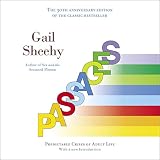
- Audible Audiobook
- Gail Sheehy (Author) - Carrington MacDuffie, Gail Sheehy (Narrators)
- English (Publication Language)
- 01/07/2020 (Publication Date) - Brilliance Audio (Publisher)
6. Incorporate Critical Perspectives:
- Action: Seek out discussions or critiques that address the limitations of Passages, particularly regarding its original research context.
- What to Look For: Insights into how societal changes and diverse demographics might alter the applicability of Sheehy’s theories.
- Mistake to Avoid: Accepting the book’s framework as universally true without considering alternative viewpoints or modern interpretations.
7. Engage in Ongoing Reflection:
- Action: Periodically revisit your understanding of your life stages and transitions as you move through them.
- What to Look For: How your evolving experiences confirm, challenge, or expand upon the concepts presented in Passages.
- Mistake to Avoid: Believing that a single reading provides a complete and static understanding; life passages are dynamic and require continuous self-assessment.
Common Myths and Misconceptions
- Myth: The age ranges in Passages are rigid, prescriptive timelines for everyone.
- Correction: Sheehy’s age ranges are general indicators of common patterns observed in her research cohort. Life transitions are highly individual, and individuals may experience passages at different ages or in a different order. For example, the “Catch-30” described for the early thirties might occur later or earlier for many.
- Myth: Passages dictates a specific path for overcoming life crises.
- Correction: The book is primarily descriptive, offering a framework for understanding common challenges. While it provides examples of how individuals navigated these transitions, it does not offer a one-size-fits-all solution. The goal is to foster awareness, not to provide a prescriptive manual.
- Myth: The book’s findings are universally applicable across all demographics.
- Correction: The original research for Passages was conducted in the 1970s and focused on a specific demographic. Societal norms, economic conditions, and individual life paths have evolved. Readers should critically assess the relevance of the book’s generalizations to their own diverse experiences and contemporary contexts.
Expert Tips for Navigating Life’s Passages
- Tip: Use the book as a diagnostic tool, not a definitive diagnosis.
- Action: Identify recurring themes or feelings in your life that align with Sheehy’s descriptions of passages, but do not feel confined by them.
- Mistake to Avoid: Self-diagnosing a “crisis” solely based on the book’s label without deeper personal introspection or consultation.
- Tip: Focus on the developmental tasks, not just the age markers.
- Action: When reading about a passage, concentrate on the underlying psychological or social tasks (e.g., establishing independence, re-evaluating commitments) rather than solely on the age range.
- Mistake to Avoid: Dismissing a passage if your age doesn’t match the book’s timeline, thereby missing potential insights into your current developmental needs.
- Tip: Seek out diverse perspectives on adult development.
- Action: Supplement your reading of Passages with other works on adult psychology, sociology, or personal growth that may offer different theoretical frameworks or reflect broader societal changes.
- Mistake to Avoid: Relying on Passages as the sole source of information on adult development, which could lead to an incomplete or biased understanding.
Passages by Gail Sheehy: Understanding Life’s Predictable Crises
Gail Sheehy’s Passages: Predictable Crises of Adult Life, first published in 1976, remains a seminal work in popular psychology, offering a structured way to conceptualize the developmental shifts and potential upheavals of adulthood. Sheehy’s central thesis is that adult life is not a smooth, linear progression but a series of predictable “passages”—periods of transition and challenge that most individuals encounter. Based on extensive interviews, the book maps out these stages, identifying common themes and tasks associated with specific age ranges, such as the “Trying Twenties,” the “Catch-30,” and the “Midlife Squeeze” in the forties.
The long-term relevance of Passages lies in its ability to normalize experiences that can otherwise feel isolating. By framing life changes as predictable developmental events, Sheehy provides readers with a sense of shared human experience and a vocabulary to articulate their own transitions. The narrative-driven approach, rich with case studies, makes complex psychological concepts accessible and relatable. For instance, the description of the “Midlife Squeeze”—the feeling of being caught between the demands of aging parents and growing children—resonates deeply with many, validating their sense of pressure and reorientation during this phase. This descriptive power can foster self-awareness and encourage proactive engagement with life’s evolving demands.
However, a contrarian perspective is essential when engaging with Passages. The primary critique centers on the book’s research methodology and demographic limitations. Sheehy’s original interviews were predominantly with middle-class, white women in the United States during the 1970s. This specific cohort means that the “predictable” patterns described may not accurately represent the experiences of individuals from different socioeconomic backgrounds, cultural contexts, genders, or life circumstances. For example, the timing and nature of career passages or family responsibilities can vary significantly based on these intersecting factors. A reader outside this demographic might find the book’s generalizations less applicable or even misleading.
Thematic Strengths and Limitations of Passages
The core strength of Passages lies in its articulation of predictable developmental challenges.
- Strength: Normalization of Life Transitions. By identifying common difficulties at different life stages, the book validates individual experiences, reducing feelings of isolation and abnormality. For example, the discussion of the “Catch-30” passage helps readers understand that feelings of reevaluation and potential dissatisfaction in one’s early thirties are common.
- Limitation: Demographic Specificity and Relevance. The research underpinning Passages has been noted for its narrow scope. This means the universality of the identified passages is debatable. A reader who does not fit the profile of the original interviewees may find the book less applicable. For instance, the description of the “Terminal Decline” stage in the 50s might not align with the diverse realities of aging today.
BLOCKQUOTE_0
Quick Comparison
| Option | Best for | Pros | Watch out |
|---|---|---|---|
| Quick Answer | General use | Passages by Gail Sheehy provides a framework for understanding predictable… | Mistake to Avoid: Assuming that every described passage will manifest in your… |
| Who This Is For | General use | Its generalizations, based on 1970s research, may not universally apply and r… | Mistake to Avoid: Forcing your experiences into a specific category if it fee… |
| What To Check First | General use | Readers seeking structured insights into adult development and life changes w… | Mistake to Avoid: Attributing all your difficulties solely to external factor… |
| Step-by-Step Plan for Engaging with Passages by Gail Sheehy | General use | Individuals undergoing significant life changes or questioning their current… | Mistake to Avoid: Focusing exclusively on the negative aspects of a passage w… |
Decision Rules
- If reliability is your top priority for Passages by Gail Sheehy, choose the option with the strongest long-term track record and support.
- If value matters most, compare total ownership cost instead of headline price alone.
- If your use case is specific, prioritize fit-for-purpose features over generic ‘best overall’ claims.