Fritz Leiber’s Swords Against Death: Fantasy
Swords Against Death by Fritz Leiber: Quick Answer
- Swords Against Death by Fritz Leiber is a foundational collection in the sword and sorcery genre, offering gritty, morally complex adventures set in the vividly realized city of Lankhmar.
- Readers expecting clear-cut heroes, simplistic plots, or high-fantasy quests may find the collection’s darker tone and anti-heroic protagonists challenging.
- This work is essential for understanding the evolution of fantasy literature and Leiber’s significant influence on the genre’s development.
Who This Is For
- Readers interested in the historical roots and significant works of the sword and sorcery subgenre.
- Individuals who appreciate nuanced characterization, atmospheric world-building, and thematic exploration beyond straightforward heroic narratives.
What to Check First
- Genre Conventions: Swords Against Death is a prime example of sword and sorcery, a subgenre that often features protagonists who are self-interested, morally ambiguous, and operate within dangerous, urban environments. This contrasts with the more idealized figures found in high fantasy.
- Leiber’s Stylistic Approach: Fritz Leiber’s prose is known for its density, evocative descriptions, and focus on psychological realism. Be prepared for a literary style that prioritizes atmosphere and character interiority.
- Narrative Structure: This is a collection of interconnected short stories, not a single, continuous novel. While Fafhrd and the Gray Mouser are recurring characters, each story presents a distinct adventure.
- Thematic Undercurrents: Leiber frequently delves into themes of urban decay, the nature of evil, and the human struggle for survival in chaotic settings. Recognizing these thematic elements will enrich the reading experience.
Swords Against Death by Fritz Leiber: A Step-by-Step Engagement Plan
1. Contextualize the Subgenre: Begin by understanding the emergence of sword and sorcery in the mid-20th century. This subgenre often departs from heroic fantasy by focusing on flawed protagonists and more grounded, often urban, settings. This context is vital for appreciating Swords Against Death by Fritz Leiber.
- Action: Research the historical development of sword and sorcery, noting its pulp magazine origins and its characteristic tone.
- What to Look For: The prevalence of morally gray characters, the focus on personal stakes over grand quests, and the grittier, often cynical, worldview.
- Mistake: Approaching the stories with expectations derived solely from modern high fantasy, which can lead to misinterpreting the protagonists’ motivations and the genre’s core tenets.
2. Analyze the Protagonists’ Morality: Engage with Fafhrd and the Gray Mouser, observing their complex dynamic. Note their self-serving tendencies, their capacity for violence, and their often-reluctant alliances.
- Action: Track the characters’ decisions and motivations across several stories, noting instances of both questionable and admirable behavior.
- What to Look For: Evidence of their anti-heroic nature, their pragmatic approach to survival, and the evolution of their partnership.
- Mistake: Expecting these characters to embody traditional heroic virtues; their flaws and self-interest are central to their appeal and the genre’s realism.
For those looking to dive into the foundational works of sword and sorcery, Fritz Leiber’s Swords Against Death is an absolute must-read. This collection perfectly captures the gritty, morally complex adventures that define the genre.
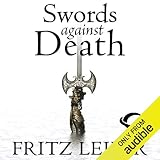
- Audible Audiobook
- Fritz Leiber (Author) - Jonathan Davis, Neil Gaiman (introduction) (Narrators)
- English (Publication Language)
- 08/12/2008 (Publication Date) - Audible Studios (Publisher)
3. Examine the Role of Lankhmar: Pay close attention to the city of Lankhmar, recognizing its significance as more than just a backdrop. Leiber imbues the city with a palpable atmosphere of corruption, danger, and decay.
- Action: Note descriptive passages detailing Lankhmar’s streets, inhabitants, and social structures.
- What to Look For: How the city’s environment influences the characters’ actions, the types of conflicts that arise within its walls, and its overall thematic resonance.
- Mistake: Underestimating Lankhmar’s impact; its detailed portrayal is crucial to the stories’ immersive quality and thematic depth.
4. Identify Thematic Explorations: Look for recurring themes that Leiber explores, such as the nature of magic, the clash between order and chaos, and the existential struggles of individuals.
- Action: Make notes on recurring motifs or philosophical questions that arise from the plots and character interactions.
- What to Look For: Discussions or depictions of fate, free will, the corrupting influence of power, and the blurred lines between good and evil.
- Mistake: Focusing solely on the plot mechanics of each story, thereby missing the deeper intellectual and philosophical layers Leiber embeds within his narratives.
5. Appreciate the Prose and Atmosphere: Immerse yourself in Leiber’s descriptive language. His vivid imagery and sensory details are key to building the distinctive atmosphere of his stories.
- Action: Read descriptive passages carefully, noting the specific words and phrases Leiber uses to evoke mood and setting.
- What to Look For: The use of sensory details (sight, sound, smell, touch) to create a tangible sense of place and atmosphere, particularly the feeling of danger and intrigue.
- Mistake: Skimming over descriptive sections, which are integral to the storytelling and contribute significantly to the reader’s experience.
6. Consider the Collection’s Legacy: Reflect on the impact Swords Against Death has had on the fantasy genre and subsequent authors.
- Action: Research critical reception and literary analysis of Leiber’s work and its place in fantasy history.
- What to Look For: How Leiber’s innovations in characterization, setting, and thematic complexity influenced later sword and sorcery and darker fantasy narratives.
- Mistake: Viewing the collection in isolation, without acknowledging its historical importance and its role in shaping genre expectations.
Common Myths and Corrections
- Myth: Swords Against Death is a collection of simple, action-packed adventure stories for escapism.
- Correction: While action is present, the collection is characterized by its literary depth, psychological complexity, and exploration of darker, more philosophical themes. The protagonists are often driven by self-interest and operate in morally ambiguous circumstances, making the stories less about straightforward escapism and more about a gritty, realistic portrayal of survival.
- Evidence: Stories like “The Seven Black Priests” and “The Sunken City” delve into themes of betrayal, the corrupting nature of power, and existential dread, far beyond simple action.
- Myth: Fafhrd and the Gray Mouser are typical fantasy heroes.
- Correction: Fafhrd and the Gray Mouser are deliberately crafted as anti-heroes. Their motivations are often rooted in personal gain, survival, or immediate desires rather than altruism or a commitment to justice. This departure from traditional heroic archetypes was a significant innovation.
- Evidence: Their willingness to engage in thievery, their occasional ruthlessness, and their often-cynical outlook on the world are consistently demonstrated throughout the collection, as seen in their interactions with various factions and magical entities.
Expert Tips
- Tip: Understand that Leiber’s portrayal of magic is often cautionary; it is rarely a simple solution and frequently carries significant, often dangerous, consequences.
- Actionable Step: When magic appears in a story, actively note its source, its immediate effects, and any subsequent repercussions for the characters or the environment.
- Common Mistake to Avoid: Treating magical elements as mere plot devices without considering the risks and inherent dangers Leiber associates with their use, which often reflects a darker, more unpredictable cosmic order.
- Tip: Recognize the significance of urban decay and corruption as thematic elements, particularly in the depiction of Lankhmar.
- Actionable Step: Pay close attention to the sensory details and social commentary embedded in descriptions of Lankhmar, noting how the city itself acts as an antagonist or a catalyst for conflict.
- Common Mistake to Avoid: Overlooking the detailed world-building and social critique, focusing solely on the individual adventures and missing the broader commentary on civilization and its discontents.
- Tip: Consider Swords Against Death as a crucial bridge between earlier pulp adventure and the development of modern fantasy literature.
- Actionable Step: Research the publication history of the stories and their initial reception to understand their groundbreaking nature for the time.
- Common Mistake to Avoid: Judging the work solely by contemporary fantasy standards without acknowledging its historical context and its role in establishing new conventions for the genre.
A Comparative Table of Engagement Strategies
| Strategy Focus | Core Principle | Key Action | Potential Pitfall | Example Textual Element |
|---|---|---|---|---|
| Genre Awareness | Understand foundational tropes. | Read about sword and sorcery’s history and characteristics. | Misapplying high fantasy expectations. | The focus on urban grit over pastoral settings. |
| Character Analysis | Deconstruct anti-heroic archetypes. | Track Fafhrd and Gray Mouser’s motivations and actions. | Idealizing protagonists. | Their pragmatic, often self-serving, decision-making. |
| Setting Immersion | Recognize setting as character. | Analyze descriptions of Lankhmar’s atmosphere and society. | Treating the city as mere backdrop. | The pervasive sense of danger and moral ambiguity in Lankhmar’s streets. |
| Thematic Interpretation | Uncover deeper meanings. | Identify recurring motifs and philosophical questions. | Focusing only on plot. | The exploration of the corrupting influence of magic and power. |
| Stylistic Appreciation | Absorb Leiber’s prose. | Engage with descriptive passages and sensory details. | Skimming for plot. | The vivid, often dark, imagery used to create atmosphere. |
BLOCKQUOTE_0
Decision Rules
- If reliability is your top priority for Swords Against Death by Fritz Leiber, choose the option with the strongest long-term track record and support.
- If value matters most, compare total ownership cost instead of headline price alone.
- If your use case is specific, prioritize fit-for-purpose features over generic ‘best overall’ claims.