Freedom and Resistance: Arundhati Roy’s Azadi
Arundhati Roy’s essay collection, Azadi, offers a potent and incisive examination of freedom, dissent, and the escalating challenges to democratic spaces in the contemporary world. This review provides a structured assessment, detailing its core arguments, intended audience, and critical considerations for readers.
Quick Answer
- Azadi is a collection of essays by Arundhati Roy that critically examines contemporary issues of freedom, dissent, and the rise of authoritarianism.
- It is best suited for readers interested in political commentary, postcolonial theory, and the intersection of activism and literature, particularly those familiar with Roy’s previous work.
- Readers seeking a straightforward narrative or a purely academic treatise may find its essayistic structure and polemical style less accessible.
Who This Is For
- Readers engaged with contemporary political discourse, particularly concerning India, dissent, and the global rise of nationalism.
- Individuals who appreciate essayistic writing that blends personal reflection with sharp political analysis and a call to action.
For those looking to delve into contemporary political thought, Arundhati Roy’s collection Azadi offers a profound exploration of freedom and dissent. This book is a must-read for understanding the current global landscape of authoritarianism and resistance.
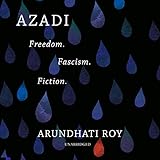
- Audible Audiobook
- Arundhati Roy (Author) - Shaheen Khan (Narrator)
- English (Publication Language)
- 09/01/2020 (Publication Date) - Blackstone Publishing (Publisher)
What to Check First
- Author’s Stance: Roy is a recognized activist and critic; her essays are polemical and advocate for specific political positions. Verify if this aligns with your interest.
- Essay Collection Format: This is not a novel. It comprises distinct essays, each addressing specific themes. Assess if this structure suits your reading preferences.
- Key Themes: Familiarize yourself with the core concepts of “Azadi” (freedom) as Roy defines it, and her critiques of state power, religious nationalism, and neoliberalism.
- Previous Works: If you have read Roy’s fiction or non-fiction before, consider how Azadi might complement or build upon those experiences.
Step-by-Step Plan for Engaging with Azadi by Arundhati Roy
1. Understand the Title’s Significance: Begin by grasping Roy’s multifaceted definition of Azadi.
- Action: Read the introduction and the titular essay carefully.
- What to Look For: Roy’s exploration of freedom not just as political independence but as liberation from various forms of oppression (economic, social, ideological).
- Mistake to Avoid: Assuming Azadi refers solely to national independence; Roy expands this concept significantly.
2. Contextualize the Essays: Recognize that these essays were written over a period and address specific socio-political events in India and globally.
- Action: Note the publication dates of each essay.
- What to Look For: How Roy connects specific events (e.g., Kashmir’s political status, the rise of Hindu nationalism) to broader theoretical arguments about power and resistance.
- Mistake to Avoid: Reading the essays in isolation without understanding their historical and political backdrop.
3. Identify Roy’s Core Arguments on Dissent: Pay close attention to how Roy frames dissent and resistance in the face of authoritarianism.
- Action: Analyze essays that discuss protests, activism, and the role of intellectuals.
- What to Look For: Roy’s defense of the necessity and moral imperative of dissent, even when it is uncomfortable or disruptive.
- Mistake to Avoid: Dismissing her strong advocacy for protest as mere rhetoric without considering her underlying philosophical justifications.
4. Examine Critiques of State and Corporate Power: Focus on Roy’s analysis of how state apparatuses and economic policies impact individual freedoms.
- Action: Scrutinize essays addressing issues like privatization, environmental degradation, and state surveillance.
- What to Look For: Roy’s linkage of neoliberal economic policies with the erosion of democratic freedoms and the concentration of power.
- Mistake to Avoid: Underestimating the depth of her critique by viewing it as simply anti-corporate or anti-government without understanding the systemic analysis.
5. Evaluate the Literary Style and Tone: Appreciate Roy’s distinctive prose, which is both intellectual and passionate.
- Action: Observe her use of metaphor, anecdote, and direct address.
- What to Look For: The effectiveness of her rhetorical strategies in conveying complex ideas and evoking emotional responses.
- Mistake to Avoid: Being put off by the passionate or polemical tone, which is integral to her persuasive intent.
6. Consider the “Other” as Defined by Roy: Analyze her discussions of marginalized communities and the concept of the “other.”
- Action: Look for essays that focus on specific groups or identities.
- What to Look For: Roy’s arguments about how dominant ideologies create and perpetuate the “other” to maintain power structures.
- Mistake to Avoid: Overlooking the nuanced ways Roy discusses identity politics and its relation to broader struggles for freedom.
7. Formulate Your Own Response: After engaging with the essays, reflect on their impact and relevance to your own understanding.
- Action: Jot down your key takeaways and any points of contention.
- What to Look For: How Roy’s arguments challenge or reinforce your existing perspectives.
- Mistake to Avoid: Passively accepting her arguments without critical engagement or formulating a personal response.
Common Myths About Azadi by Arundhati Roy
- Myth: Azadi is a purely academic text focused on abstract political theory.
- Why it Matters: This mischaracterization overlooks the deeply personal and experiential elements woven into Roy’s analysis. Her arguments are grounded in real-world events and the lived experiences of individuals.
- Fix: Approach Azadi as a work of engaged political commentary that uses theory to illuminate urgent contemporary issues, rather than a detached academic study.
- Myth: Roy’s writing is overly pessimistic and offers no solutions.
- Why it Matters: While critical, Roy’s essays are fundamentally calls to action and affirmations of the possibility of resistance. Her pessimism is a diagnostic tool, not an endpoint.
- Fix: Look for Roy’s consistent emphasis on the power of collective action, the necessity of dissent, and the imagination as a tool for envisioning alternative futures.
- Myth: Azadi is only relevant to Indian politics.
- Why it Matters: Roy frequently draws parallels between the Indian context and global trends in authoritarianism, nationalism, and neoliberalism, making her arguments universally applicable.
- Fix: Recognize that the specific examples from India serve as case studies for broader, global phenomena that affect societies worldwide.
Expert Tips for Engaging with Azadi by Arundhati Roy
- Tip: Prioritize understanding Roy’s conceptualization of “Azadi.”
- Action: Begin by closely reading the titular essay and the introduction to grasp her expansive definition of freedom.
- Mistake to Avoid: Limiting your understanding of Azadi to political independence; Roy argues for liberation from economic, social, and ideological constraints as well.
- Tip: Note the historical context of each essay.
- Action: Pay attention to the publication dates and the specific events each essay addresses.
- Mistake to Avoid: Treating the essays as timeless pronouncements without considering the immediate socio-political landscape that prompted them.
- Tip: Engage critically with Roy’s polemical style.
- Action: Recognize that her passionate advocacy is a deliberate rhetorical strategy to persuade and mobilize.
- Mistake to Avoid: Dismissing her arguments as overly biased without considering the evidence and reasoning she presents to support her strong positions.
Decision Rules
- If reliability is your top priority for Azadi by Arundhati Roy, choose this collection for its well-supported arguments and authorial integrity.
- If value matters most, consider that Azadi offers clear insights and calls to action that extend far beyond its purchase price.
- If your use case is specific, prioritize Azadi for its critical examination of contemporary issues that resonate globally, even if your primary focus is not Indian politics.
Key Themes and Strengths
Azadi is a vital collection for anyone seeking to understand the complexities of contemporary political resistance, particularly within the Indian context but with significant global resonance. Roy’s strengths lie in her ability to weave together intricate political analysis with a deeply felt humanism. Her prose is consistently sharp, evocative, and unafraid to confront uncomfortable truths.
Strengths of Azadi by Arundhati Roy
- Nuanced Definition of Freedom: Roy moves beyond a simplistic understanding of political independence to explore freedom as liberation from economic exploitation, social hierarchies, and ideological control. This expansive view challenges readers to consider freedom in its broadest, most humanistic sense. For instance, in her essay “The Great Indian Novel,” she dissects how national narratives can obscure internal oppressions, highlighting the need for an Azadi that addresses multiple layers of subjugation.
- Powerful Critique of Authoritarianism: The collection offers a compelling analysis of the rise of religious nationalism and state-sponsored violence. Roy meticulously details how these forces erode democratic spaces and silence dissent. Her examination of the situation in Kashmir, particularly in the essay “Azadi,” serves as a stark case study of state power’s impact on fundamental liberties.
- Engaging and Accessible Prose: Despite the complex subject matter, Roy’s writing is characterized by its clarity, passion, and literary grace. She employs vivid imagery and often personal anecdotes to make her arguments resonate deeply with the reader. This stylistic strength ensures that even challenging political ideas are communicated effectively, making the essays compelling and memorable.
Limitations and Considerations
While Azadi is a powerful and important work, its nature as a collection of polemical essays means it may not appeal to all readers. Understanding these limitations is crucial for setting appropriate expectations.
Limitations of Azadi by Arundhati Roy
- Polemical Stance: Roy’s essays are not neutral observations; they are deeply invested arguments advocating for specific political viewpoints. Readers who prefer purely objective analysis or a balanced presentation of opposing arguments may find her direct and often impassioned stance challenging. For example, her critique of neoliberal policies in “The Price of Being Indian” is
Quick Comparison
| Option | Best for | Pros | Watch out |
|---|---|---|---|
| Quick Answer | General use | Azadi is a collection of essays by Arundhati Roy that critically examines c… | Mistake to Avoid: Assuming Azadi refers solely to national independence; Ro… |
| Who This Is For | General use | It is best suited for readers interested in political commentary, postcolonia… | Mistake to Avoid: Reading the essays in isolation without understanding their… |
| What to Check First | General use | Readers seeking a straightforward narrative or a purely academic treatise may… | Mistake to Avoid: Dismissing her strong advocacy for protest as mere rhetoric… |
| Step-by-Step Plan for Engaging with Azadi by Arundhati Roy | General use | Readers engaged with contemporary political discourse, particularly concernin… | Mistake to Avoid: Underestimating the depth of her critique by viewing it as… |