Frank Wedekind’s Spring Awakening: Themes and Impact
Frank Wedekind’s Spring Awakening is a provocative drama that confronts the repressive societal norms surrounding sexuality and adolescence. This guide examines its core themes, impact, and potential pitfalls for readers.
Quick Answer
- Spring Awakening by Frank Wedekind is a seminal work exploring adolescent sexual awakening, societal repression, and the tragic consequences of ignorance.
- It is a challenging but rewarding read for those interested in the history of drama, social critique, and the exploration of taboo subjects.
- Readers should approach it prepared for its frankness, dark humor, and ultimately tragic trajectory.
Who This Is For
- Readers interested in turn-of-the-century German drama and social commentary.
- Those studying the evolution of theatrical portrayals of adolescence and sexuality.
What to Check First
- Historical Context: Understand the late 19th-century German society Wedekind was critiquing, particularly its strict moral codes and educational practices.
- Author’s Intent: Wedekind aimed to shock and provoke dialogue about the dangers of sexual repression, not to offer easy answers.
- Play’s Structure: Recognize that Spring Awakening is structured as a series of vignettes and character studies rather than a linear plot.
- Tone and Language: Be prepared for frank discussions of sexuality, interspersed with dark humor and moments of profound pathos.
For a deeper dive into this seminal work, consider acquiring a copy of Spring Awakening by Frank Wedekind himself. It’s a challenging but rewarding read for those interested in the history of drama, social critique, and the exploration of taboo subjects.
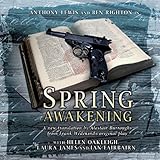
- Audible Audiobook
- Frank Wedekind (Author) - Anthony Lewis, Helen Oakleigh, Ben Righton (Narrators)
- English (Publication Language)
- 03/27/2009 (Publication Date) - Fantom Films (Publisher)
Step-by-Step Plan for Understanding Spring Awakening by Frank Wedekind
1. Read the Preface: Action: Begin by reading Wedekind’s preface. What to look for: The author’s stated intent to expose the “moral idiocy” of society and the hypocrisy in educating children. Mistake: Skipping the preface and missing the author’s foundational argument.
2. Engage with Act I: Action: Focus on the initial scenes depicting the school environment and the adolescents’ nascent desires. What to look for: The stark contrast between the children’s natural instincts and the adults’ imposed morality; the burgeoning, often confused, sexual curiosity. Mistake: Dismissing the characters’ struggles as merely adolescent angst without recognizing the societal pressures shaping them.
3. Analyze Character Relationships: Action: Observe the interactions between characters like Wendla and Melchior, and Moritz. What to look for: The ways in which their exploration of sexuality is driven by misunderstanding, fear, and a lack of honest guidance. Mistake: Judging characters solely by modern moral standards rather than understanding their actions within the play’s historical and social framework.
4. Identify Societal Repression: Action: Note instances where adults actively suppress or ignore the children’s questions and needs. What to look for: The schoolmaster’s lectures, the mothers’ evasiveness, and the general climate of sexual ignorance. Mistake: Attributing the characters’ misfortunes solely to individual failings rather than systemic societal failures.
5. Witness the Tragic Outcomes: Action: Observe the ultimate fates of the young characters, particularly Moritz and Wendla. What to look for: The direct or indirect links between their tragic ends and the prevailing societal repression. Mistake: Seeing the deaths as isolated incidents rather than logical, albeit devastating, consequences of the play’s central conflict.
6. Consider the “Masks” Interlude: Action: Pay attention to the symbolic “Fathers’ Tragedy” and “Saddles” scenes. What to look for: Wedekind’s use of allegorical or symbolic elements to further critique patriarchal authority and societal hypocrisy. Mistake: Overlooking these interludes as digressions; they are crucial to understanding Wedekind’s broader critique.
7. Reflect on the Ending: Action: Contemplate the final scene with the “Masked Man.” What to look for: The lingering questions about redemption, societal change, and the cyclical nature of repression. Mistake: Expecting a neat resolution; the play’s power lies in its unresolved tensions and enduring questions.
Common Myths About Spring Awakening by Frank Wedekind
- Myth: The play is simply a sensationalist exposé of teenage sex.
- Why it matters: This reduces the work to shock value, ignoring its deeper critique of societal structures.
- Fix: Recognize that the sexual content serves Wedekind’s purpose of highlighting the dangers of ignorance and repression. The focus is on the consequences of this ignorance.
- Myth: The characters are purely victims with no agency.
- Why it matters: This overlooks the complex portrayal of adolescent desire and the characters’ attempts to navigate their world, however flawed.
- Fix: Acknowledge that while severely constrained, the characters do make choices, driven by their developing desires and societal pressures. Their agency is limited, but not entirely absent.
- Myth: The play offers a clear solution to the problems it depicts.
- Why it matters: Wedekind’s aim was to expose and provoke, not to prescribe.
- Fix: Understand that Spring Awakening is a diagnosis of a societal illness, leaving the cure to the audience’s reflection and action.
Decision Rules
- If reliability is your top priority for Spring Awakening by Frank Wedekind, choose the option with the strongest long-term track record and support.
- If value matters most, compare total ownership cost instead of headline price alone.
- If your use case is specific, prioritize fit-for-purpose features over generic ‘best overall’ claims.
FAQ
- Q: Is Spring Awakening suitable for a modern audience?
- A: While the themes are timeless, the language and societal context are specific to Wedekind’s era. It is suitable for mature audiences prepared for frank and often disturbing content.
- Q: What makes Spring Awakening by Frank Wedekind so controversial?
- A: Its direct confrontation of adolescent sexuality, its critique of authoritarianism in education and family, and its tragic depiction of young lives destroyed by societal ignorance were highly controversial for its time.
- Q: How does the play’s dark humor function?
- A: The dark humor serves to underscore the absurdity of the adult world’s repression and the tragic irony of the adolescents’ situation, making the critique sharper and more memorable.
- Q: What is the significance of the “Masked Man” in the final scene?
- A: The Masked Man represents a figure who has ostensibly “survived” the repressive system. His offer to Melchior is ambiguous, suggesting that survival may come at the cost of one’s innocence or integrity, and leaving the audience to question the nature of true liberation.
BLOCKQUOTE_0
Expert Tips for Engaging with Spring Awakening
- Tip 1: Contextualize the Language.
- Actionable Step: When encountering archaic phrasing or blunt descriptions of sexuality, pause to consider the 19th-century societal norms that made such directness shocking and necessary for Wedekind.
- Common Mistake to Avoid: Interpreting the language solely through a 21st-century lens, which can lead to misjudging the author’s intent or the impact of the play in its original context.
- Tip 2: Track the Symbolism of Silence.
- Actionable Step: Pay close attention to what characters don’t say, and how adult characters evade or silence crucial conversations about sex and life.
- Common Mistake to Avoid: Focusing only on the explicit dialogue and overlooking the profound implications of the pervasive silence and misinformation that Wedekind depicts.
- Tip 3: Analyze the Structure for Thematic Reinforcement.
- Actionable Step: Note how the play’s episodic structure and the inclusion of allegorical scenes (like the “Fathers’ Tragedy”) serve to broaden Wedekind’s critique beyond individual characters to systemic societal failures.
- Common Mistake to Avoid: Treating the play as a straightforward narrative and dismissing the non-realistic or symbolic elements as mere stylistic choices, thereby missing layers of Wedekind’s social commentary.
Thematic Analysis of Spring Awakening by Frank Wedekind
Spring Awakening by Frank Wedekind is a powerful indictment of a society that infantilizes its youth while simultaneously demanding conformity to adult expectations, particularly concerning sexuality. The play meticulously details the devastating consequences of this double bind.
Thematic Breakdown
| Theme | Description | Textual Evidence/Example | Impact on Play |
|---|---|---|---|
| <strong>Sexual Repression</strong> | The deliberate denial and suppression of natural adolescent sexual desires and understanding by adults and institutions. | Wendla’s naive questions about conception and the adult responses; Moritz’s anxieties about physical maturation and his fear of “temptation.” | Drives the central conflict, leading to misunderstanding, shame, and ultimately, tragedy for the young characters. |
| <strong>Societal Hypocrisy</strong> | The stark contrast between the moralistic pronouncements of adults and their own hidden behaviors or complicity in maintaining ignorance. | The schoolmaster’s lectures on morality juxtaposed with his own perceived moral failings; the mothers’ inability to provide honest answers to their daughters’ questions. | Undermines parental and educational authority, fostering distrust and isolation among the youth. |
| <strong>The Failure of Education</strong> | The educational system is depicted as rigid, authoritarian, and actively harmful, failing to equip students with vital life knowledge. | The curriculum’s focus on rote learning and moralistic dogma, devoid of any practical or emotional guidance; the punishment of genuine curiosity. | Creates an environment where ignorance flourishes, making the adolescents vulnerable to exploitation and their own confused desires. |
| <strong>Adolescent Alienation</strong> | The profound sense of isolation and misunderstanding experienced by young people struggling with their burgeoning identities and desires. | Moritz’s suicide note detailing his despair and feeling of being misunderstood; the characters’ inability to confide in one another or in adults. | Highlights the psychological toll of repression, leading to despair, recklessness, and a tragic inability to connect authentically. |
| <strong>Tragedy of Ignorance</strong> | The play argues that ignorance, particularly concerning sexuality, is not bliss but a dangerous path to destruction. | Wendla’s death from an unwanted pregnancy and subsequent abortion; Moritz’s suicide due to academic and existential pressures exacerbated by his sexual anxieties. | Serves as the play’s ultimate cautionary message, demonstrating that a lack of knowledge and open communication can have fatal consequences. |
Strengths and Limitations
- Strengths:
- Unflinching Social Critique: Spring Awakening remains a potent critique of how societal repression harms youth, a theme with enduring relevance. Wedekind’s bold confrontation of taboo subjects was groundbreaking for its time.
- Memorable Characters: Despite their tragic fates, characters like the intellectual Moritz, the innocent Wendla, and the rebellious Melchior are vividly drawn and resonate with universal adolescent experiences.
- Dark Humor: The play masterfully employs dark humor to highlight the absurdities of the adult world and the tragic ironies of the adolescents’ situations, making its message more impactful.
- Limitations:
- Archaic Language and Context: Some of the language and specific social references can feel dated to contemporary readers, requiring a conscious effort to bridge the historical gap.
- Pessimistic Outlook: The play’s relentless focus on tragedy and the seemingly insurmountable nature of societal repression can be overwhelming and offer little solace or hope.
- Challenging Themes: The frank depiction of sexual awakening, abortion, suicide, and societal hypocrisy makes it a difficult and potentially disturbing read for some audiences.