Francesco Petrarca’s Selections: Renaissance Poetry
Quick Answer
- This collection offers a focused introduction to Petrarch’s influential sonnets, particularly those within the Canzoniere.
- Ideal for readers new to Petrarch or seeking a curated selection of his most representative works.
- Consider alternative, more comprehensive editions if deep scholarly engagement or exhaustive textual study is the primary goal.
Who This Is For
- Undergraduate students encountering Petrarch for the first time, requiring accessible yet canonical selections.
- Readers interested in the foundational sonnets that shaped lyric poetry across Europe.
What to Check First
- Translator: The quality of translation significantly impacts the reading experience. Verify the translator’s reputation and approach to Petrarch’s verse.
- Edition Scope: Determine if the selection aligns with your interest. Some editions focus solely on the Rime Sparse (Canzoniere), while others may include other Petrarchan works.
- Annotations: For academic or in-depth study, comprehensive annotations are crucial for understanding historical context, linguistic nuances, and literary allusions.
- Original Language Text: If you have proficiency in Italian, a bilingual edition provides the most complete scholarly experience.
Step-by-Step Plan for Engaging with Selections by Francesco Petrarca
1. Identify the Translator and Introduction: Begin by reading the introductory material. Assess the translator’s stated goals and the editor’s contextualization of Petrarch’s work.
- What to Look For: A clear explanation of the translation philosophy and historical background of Petrarch’s Canzoniere.
- Mistake to Avoid: Skipping the introduction entirely, missing vital context for the poems.
2. Read a Representative Sonnet Aloud: Select a well-known sonnet, such as “Solo et pensoso i più deserti campi,” and read it aloud in translation.
- What to Look For: The rhythm, flow, and emotional arc of the poem. Does the translation convey a sense of melancholic contemplation?
- Mistake to Avoid: Reading silently and quickly, failing to appreciate the sonic qualities of the verse.
3. Examine the Central Theme of Unrequited Love: Focus on a cluster of poems dealing with Petrarch’s idealized love for Laura.
- What to Look For: Recurring imagery (light, nature, the beloved’s gaze) and the evolution of the speaker’s emotional state.
- Mistake to Avoid: Treating each sonnet as an isolated unit, rather than part of a larger thematic progression.
4. Analyze Petrarchan Form: Study the structure of a sonnet within the selection, noting the division into octave and sestet, and the characteristic volta.
- What to Look For: How the argument or emotion shifts between the two parts of the sonnet.
- Mistake to Avoid: Overlooking the formal constraints that shape Petrarch’s expression.
5. Consult Annotations for Allusions: If annotations are provided, select a poem with dense imagery or historical references and actively look up unfamiliar terms or concepts.
- What to Look For: Explanations of mythological figures, classical references, or specific historical events that enrich the poem’s meaning.
- Mistake to Avoid: Assuming understanding of allusions without verification, potentially leading to misinterpretation.
6. Compare Translations (if possible): If you have access to another translation of the same sonnet, compare the renderings of key lines or phrases.
- What to Look For: Subtle differences in word choice and their impact on tone and meaning.
- Mistake to Avoid: Assuming all translations are interchangeable; nuances are often lost.
7. Consider the Selection’s Overall Cohesion: Reflect on why these specific poems were chosen and how they collectively represent Petrarch’s lyrical achievement.
- What to Look For: A narrative arc or thematic thread that justifies the selection.
- Mistake to Avoid: Evaluating poems in isolation without considering their place within the curated collection.
For a focused introduction to Petrarch’s influential sonnets, especially those from the Canzoniere, this collection is an excellent starting point. It’s ideal for readers new to his work or seeking a curated selection of his most representative pieces.
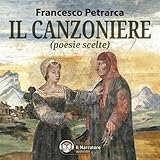
- Audible Audiobook
- Francesco Petrarca (Author) - Moro Silo (Narrator)
- Italian (Publication Language)
- 05/15/2008 (Publication Date) - Il Narratore s.r.l. (Publisher)
Selections by Francesco Petrarca: A Deep Dive into the Canzoniere
Petrarch’s Canzoniere, or Rime Sparse (Scattered Rhymes), is a monumental work that has profoundly influenced Western poetry. A curated selection offers a concentrated entry point into this intricate collection, focusing on the sonnets that established the Petrarchan model. The thematic core revolves around the poet’s unrequited love for Laura, a figure who becomes both an idealized muse and a source of profound spiritual and emotional conflict. These poems are not merely expressions of personal longing; they represent a complex meditation on time, mortality, beauty, and the human behavior, filtered through a deeply introspective voice. The selections aim to showcase the development of this voice and the formal innovation Petrarch brought to the sonnet.
The impact of these poems on subsequent generations of poets, from Wyatt and Surrey in England to poets across Renaissance Europe, cannot be overstated. Petrarch’s careful sculpting of emotion, his sophisticated use of imagery, and his exploration of the internal landscape laid the groundwork for much of what we recognize as lyric poetry. Understanding these Selections by Francesco Petrarca is, therefore, a crucial step in grasping a significant lineage of literary history.
Common Myths About Petrarchan Selections
- Myth: All selections of Petrarch’s work are essentially the same.
- Why it Matters: This overlooks the critical role of translation and editorial choices. Different translators will render the Italian with varying degrees of fidelity to meter, rhyme, and tone, significantly altering the reader’s experience. Editorial introductions and annotation depth also vary widely, impacting comprehension.
- Fix: Always check the translator and editor. For instance, Robert M. Durling’s translation is highly regarded for its scholarly rigor, while others might prioritize poetic flow.
- Myth: Petrarch’s poems are solely about romantic obsession.
- Why it Matters: While love for Laura is central, it serves as a catalyst for broader philosophical and theological reflections. Petrarch grapples with vanity, the passage of time, the conflict between earthly desires and spiritual aspirations, and the nature of fame.
- Fix: Look for poems that address these more existential themes, such as those in the Rime in morte di Madonna Laura section, which explore grief, memory, and divine solace.
- Myth: The Canzoniere follows a strict chronological narrative.
- Why it Matters: While there is a progression, the arrangement is more thematic and psychological than strictly chronological. Petrarch meticulously crafted the order of the poems to create a complex portrait of his internal life and evolving spiritual state.
- Fix: Pay attention to the thematic groupings within the collection. The distinction between poems written during Laura’s life (Rime in vita di Madonna Laura) and after her death (Rime in morte di Madonna Laura) is significant, but even within these sections, the arrangement is deliberate.
Expert Tips for Reading Selections by Francesco Petrarca
- Tip: Prioritize editions with robust scholarly apparatus.
- Actionable Step: Seek out editions that include detailed footnotes or endnotes explaining historical context, mythological allusions, and linguistic nuances.
- Common Mistake to Avoid: Relying on unannotated editions, which can lead to superficial understanding and misinterpretation of complex passages.
- Tip: Understand the difference between Petrarch’s vita activa and vita contemplativa.
- Actionable Step: Note how poems reflect either the poet’s engagement with the world (ambition, fame, earthly love) or his withdrawal into introspection and spiritual reflection.
- Common Mistake to Avoid: Applying a singular emotional lens to all poems, failing to recognize the tension between these two modes of existence that drives much of Petrarch’s work.
- Tip: Analyze the volta in the sonnets.
- Actionable Step: After reading the first eight lines (octave), pause and identify the shift in thought or emotion that typically occurs in the final six lines (sestet).
- Common Mistake to Avoid: Treating the sonnet as a monolithic block of text, missing the dynamic interplay of ideas created by the structural turn.
Selections by Francesco Petrarca: A Comparative Table
| Feature | Edition A (e.g., Norton Critical) | Edition B (e.g., Penguin Classics) | Edition C (e.g., Oxford World’s Classics) |
|---|---|---|---|
| Translator | E.H. Wilkins | David R. Slavitt | Valery Polozova |
| Scope | Primarily Rime Sparse, extensive selection | A broad selection, includes some prose works | Focused on Rime Sparse, comprehensive |
| Annotations | Detailed, scholarly, aimed at literary analysis | Lighter, more focused on basic comprehension | In-depth, historical and linguistic |
| Introductory Essay | Critical analysis of themes and influence | Biographical and historical overview | Thematic exploration and literary context |
| Best For | Academic study, deep textual analysis | Accessible introduction, general reader | Students and scholars seeking a balanced approach |
| Unique Strength | Comprehensive critical commentary | Poetic fluency of translation | Bilingual text with robust annotation |
Decision Rules
- If reliability is your top priority for Selections by Francesco Petrarca, choose the option with the strongest long-term track record and support.
- If value matters most, compare total ownership cost instead of headline price alone.
- If your use case is specific, prioritize fit-for-purpose features over generic ‘best overall’ claims.
FAQ
- Q: How many poems are typically included in “Selections by Francesco Petrarca”?
A: The number varies significantly by edition. Some may include around 50-100 sonnets, while more comprehensive scholarly editions might contain over 300. Always check the edition’s table of contents.
- Q: Is it necessary to read Petrarch in Italian?
A: While reading in the original Italian offers the most authentic experience, high-quality translations can effectively convey the essence of Petrarch’s poetry. Bilingual editions are ideal for those who can engage with both languages.
- Q: What is the primary focus of most selections of Petrarch’s work?
A: Most selections concentrate on the Canzoniere (Rime Sparse), particularly the sonnets detailing his love for Laura, his internal struggles, and his reflections on time and mortality.
- Q: How does Petrarch’s work differ from other Renaissance poets?
A: Petrarch’s unique contribution lies in his intense introspection, his meticulous formal control of the sonnet, and his creation of a complex, often conflicted, lyrical persona that became a model for subsequent poets. His focus on the inner life predates and influences later Romantic sensibilities.
BLOCKQUOTE_0