Fanny Burney’s Camilla: A Classic Novel
Quick Answer
- Camilla by Fanny Burney is a sprawling 1796 novel of manners that meticulously details the social intricacies and romantic entanglements of its characters, particularly the titular heroine.
- Readers seeking detailed social commentary and character introspection within a late 18th-century English setting will find Camilla rewarding, though its length and complex plotting require sustained attention.
- The novel’s primary value lies in its nuanced exploration of reputation, societal expectations, and the challenges faced by young women navigating marriage and social standing.
Who This Is For
- Readers interested in late 18th-century English literature and the novels of Fanny Burney, particularly those who appreciate detailed social observation and character development.
- Those who enjoy lengthy, plot-driven narratives with multiple intertwined storylines and a focus on moral and social dilemmas.
What to Check First
- Novel’s Length and Pacing: Camilla is a substantial work, often published in multiple volumes. Be prepared for a slow build and extensive character arcs.
- Burney’s Prose Style: Burney employs a complex, often formal prose style characteristic of the era. Familiarity with or tolerance for this style is beneficial.
- Focus on Social Propriety: The novel is deeply concerned with reputation, decorum, and the societal pressures placed upon women. If these themes do not resonate, the novel may feel less engaging.
- Comparison to Earlier Works: If you have read Burney’s Evelina, be aware that Camilla is significantly more complex in plot and character, offering a broader canvas of social commentary.
Step-by-Step Plan for Engaging with Camilla by Fanny Burney
Engaging with Camilla requires a deliberate approach to appreciate its depth. Follow these steps to maximize your reading experience.
1. Familiarize Yourself with the Historical Context:
- Action: Read a brief overview of late 18th-century English society, focusing on marriage customs, social hierarchies, and the role of women.
- What to Look For: Understand the pressures and expectations that shaped characters’ decisions, particularly regarding financial security and social standing.
- Mistake to Avoid: Assuming modern social norms apply directly to the characters’ motivations and constraints.
2. Identify the Central Characters and Their Relationships:
- Action: Create a simple character map or keep a running list of the main figures (Camilla, Edgar, Eugenia, Sir Hugh, Mrs. Arlbery, etc.) and their connections.
- What to Look For: Note the initial impressions and evolving dynamics between characters, especially the central romantic interests and their families.
- Mistake to Avoid: Getting lost in the sheer number of characters; focus on those directly impacting Camilla’s journey.
3. Track Camilla’s Development and Misunderstandings:
- Action: Pay close attention to Camilla’s reactions, her susceptibility to influence, and the instances where her judgments are flawed.
- What to Look For: Note how her impulsiveness and misinterpretations drive the plot and create obstacles in her relationships.
- Mistake to Avoid: Viewing Camilla solely as a passive recipient of events; her agency, however misguided, is crucial.
4. Analyze the Role of Reputation and Secrecy:
- Action: Highlight moments where characters’ reputations are threatened or manipulated, and where secrets play a significant role.
- What to Look For: Observe how gossip, veiled accusations, and hidden truths create tension and influence character interactions.
- Mistake to Avoid: Underestimating the devastating impact of social ostracism and damaged reputation in the novel’s world.
5. Examine Burney’s Social Commentary:
- Action: Note instances where Burney uses dialogue or narrative to critique societal norms, affectation, or hypocrisy.
- What to Look For: Identify passages that reveal Burney’s keen observation of human foibles and the artificiality of social conventions.
- Mistake to Avoid: Reading the novel purely as a romance; the social critique is as vital as the plot.
6. Appreciate the Nuance in Character Motivation:
- Action: Consider why characters act as they do, looking beyond surface-level explanations for deeper psychological or social drivers.
- What to Look For: Recognize the complexity of characters like Edgar, who are not simply heroic figures but possess their own vulnerabilities and internal conflicts.
- Mistake to Avoid: Labeling characters as purely good or evil; Burney excels at portraying moral ambiguity.
For those eager to dive into this classic, you can find a well-formatted edition of Camilla by Fanny Burney.
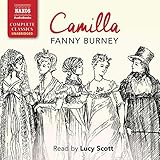
- Audible Audiobook
- Fanny Burney (Author) - Lucy Scott (Narrator)
- English (Publication Language)
- 07/26/2019 (Publication Date) - Naxos AudioBooks (Publisher)
7. Reflect on the Resolution and its Implications:
- Action: After finishing, consider the final outcomes for the characters and what they suggest about Burney’s view of society and individual happiness.
- What to Look For: Assess whether the resolutions feel earned and what lessons, if any, the characters (and reader) have learned.
- Mistake to Avoid: Expecting a perfectly tidy or universally happy ending; the novel’s conclusions are often tempered with realism.
Camilla by Fanny Burney: Navigating Social Entanglements
Fanny Burney’s Camilla stands as a monumental work within the tradition of the English novel of manners. Published in 1796, it delves into the intricate social fabric of late 18th-century England, focusing on the titular heroine’s journey through courtship, familial obligations, and the perilous landscape of reputation. The novel is characterized by its expansive plot, numerous characters, and Burney’s signature meticulous observation of human behavior and societal expectations.
The narrative centers on Camilla Mac=”{readtm.com} Camilla by Fanny Burney” as she navigates the complexities of societal approval, romantic entanglements, and the often-conflicting demands of her guardians and suitors. Burney masterfully illustrates how external pressures and internal misunderstandings can derail happiness, particularly for young women whose futures are heavily dependent on advantageous marriages and maintaining an unblemished reputation. The novel’s strength lies in its detailed portrayal of social rituals, the nuances of polite conversation, and the subtle psychological interplay between characters.
However, the sheer scope and intricate plotting of Camilla can present a significant challenge. Burney’s prose, while precise, is dense and can feel verbose to modern readers. The novel demands patience and a willingness to immerse oneself in the period’s social customs and linguistic style. Unlike the more focused narrative of Evelina, Camilla offers a broader, more complex tapestry, which can be both its greatest asset and its most formidable barrier to entry.
Common Myths About Camilla by Fanny Burney
- Myth: Camilla is simply a straightforward romance novel.
- Why it Matters: This simplification overlooks the novel’s primary purpose as a critique of social structures and a deep dive into moral philosophy.
- Fix: Recognize that while romance is a significant element, the novel’s core is its exploration of reputation, societal expectations, and the consequences of individual choices within a restrictive social framework.
- Myth: The novel’s length indicates a lack of focus or editorial control.
- Why it Matters: This perspective fails to appreciate Burney’s deliberate technique of using extensive detail and multiple plotlines to mirror the overwhelming nature of social life and the complexity of human relationships.
- Fix: Understand that the novel’s breadth is intentional, allowing for a comprehensive examination of various social types and moral dilemmas, and that the intricate plotting serves to highlight the interconnectedness of characters’ fates.
- Myth: Camilla is a passive heroine easily manipulated by others.
- Why it Matters: This view diminishes Camilla’s agency and the internal struggles she faces, which are central to the novel’s thematic concerns.
- Fix: Acknowledge Camilla’s active role in her own predicaments, driven by her own susceptibility to flattery, her judgmental nature, and her emotional responses, which, while often misguided, are her own.
Expert Tips for Reading Camilla
BLOCKQUOTE_0
- Tip 1: Embrace the Slow Burn:
- Action: Dedicate focused reading sessions, perhaps an hour at a time, to allow yourself to absorb the intricate descriptions and character nuances without rushing.
- Common Mistake to Avoid: Trying to skim or speed-read; the novel’s richness lies in its detailed depiction of social interactions and internal monologues, which cannot be appreciated at a hurried pace.
- Tip 2: Maintain a Character and Plot Log:
- Action: Keep a notebook or digital document to jot down characters as they are introduced, their key relationships, and major plot developments or turning points.
- Common Mistake to Avoid: Losing track of the numerous secondary characters and their interwoven subplots, which can lead to confusion and disengagement with the main narrative.
- Tip 3: Contextualize Societal Norms:
- Action: When encountering a character’s reaction or a social dictate, pause to consider the prevailing attitudes of the late 18th century regarding marriage, inheritance, and reputation.
- Common Mistake to Avoid: Judging characters’ actions solely through a modern lens, which can lead to misinterpretations of their motivations and the severity of their predicaments.
Quick Comparison
| Option | Best for | Pros | Watch out |
|---|---|---|---|
| Quick Answer | General use | <em>Camilla</em> by Fanny Burney is a sprawling 1796 novel of manners that meticulou… | Mistake to Avoid: Assuming modern social norms apply directly to the characte… |
| Who This Is For | General use | Readers seeking detailed social commentary and character introspection within… | Mistake to Avoid: Getting lost in the sheer number of characters; focus on th… |
| What to Check First | General use | The novel’s primary value lies in its nuanced exploration of reputation, soci… | Mistake to Avoid: Viewing Camilla solely as a passive recipient of events; he… |
| Step-by-Step Plan for Engaging with Camilla by Fanny Burney | General use | Readers interested in late 18th-century English literature and the novels of… | Mistake to Avoid: Underestimating the devastating impact of social ostracism… |
Decision Rules
- If reliability is your top priority for Camilla by Fanny Burney, choose the option with the strongest long-term track record and support.
- If value matters most, compare total ownership cost instead of headline price alone.
- If your use case is specific, prioritize fit-for-purpose features over generic ‘best overall’ claims.
FAQ
- Q: Is Camilla by Fanny Burney a difficult read?
- A: Camilla is considered a challenging read due to its length, complex plot, and the formal prose style characteristic of the late 18th century. It requires patience and a willingness to engage deeply with its social and psychological intricacies.
- Q: How does Camilla compare to Fanny Burney