Ezra Pound’s Guide To Reading
The ABC of Reading by Ezra Pound: Quick Answer
- The ABC of Reading by Ezra Pound provides a practical, albeit demanding, framework for improving literary comprehension, particularly for poetry.
- It emphasizes active analysis, precise language, and understanding the structural elements of literature.
- This book is for readers dedicated to deepening their analytical skills and appreciating the craft of writing, rather than seeking a casual introduction.
Who This Is For
- Readers who are serious about understanding how literature works, focusing on technique and precise language over plot summary.
- Those interested in Ezra Pound’s critical perspective and its influence on modern literary thought, prepared for his direct and opinionated style.
What To Check First
Before engaging with The ABC of Reading by Ezra Pound, consider these points:
- Your objective: Are you looking for a broad overview of literature, or a focused method to dissect texts? This book offers the latter.
- Your patience for directness: Pound’s prose is unvarnished and opinionated. If you prefer a gentle, encouraging tone, this might not be the best fit.
- Your existing literary background: While Pound aims to educate, some familiarity with classical and modern poetry will enhance your understanding of his examples.
- Your definition of “reading”: Pound defines reading as an active process of analysis, not passive absorption. Be prepared to engage critically.
Step-by-Step Plan: Mastering Literary Precision
Pound’s approach is about cultivating critical habits. Follow these steps to actively engage with his principles:
1. Deconstruct Pound’s “How to Read” Principles:
- Action: Read the initial chapters where Pound defines “good” and “bad” writing and introduces his “ideogrammic method.”
- What to look for: His insistence on clarity, precision, and the power of juxtaposing concrete examples to reveal meaning.
- Mistake to avoid: Skimming these foundational sections; they are crucial for understanding his subsequent analyses.
2. Analyze Poetry Using Melopoeia, Phanopoeia, Logopoeia:
- Action: Examine poems through Pound’s three categories: melopoeia (musicality/sound), phanopoeia (vivid imagery), and logopoeia (intellectual/emotional resonance of language).
- What to look for: How specific word choices, rhythms, and structures contribute to each element in works by poets like Shakespeare or Villon.
- Mistake to avoid: Forcing every poem into one category; these are analytical tools, not rigid classifications.
3. Practice “Exact Meanings” with Vocabulary:
- Action: Select a short, impactful poem and meticulously define each word, noting its historical usage and connotations.
- What to look for: The subtle shifts in meaning created by context. Pound stresses that “great literature is simply language charged with meaning to the utmost possible degree.”
- Mistake to avoid: Relying solely on modern dictionary definitions without considering the text’s historical context or Pound’s own examples of precise word usage.
4. Implement Comparative Textual Analysis:
- Action: Choose two poems with similar themes or from the same era but by different authors (e.g., two Petrarchan sonnets).
- What to look for: The distinct techniques, language choices, and resulting impacts that differentiate them. Pound advocates for comparison to understand unique literary achievements.
- Mistake to avoid: Superficial comparisons that don’t delve into the mechanics of poetic construction.
5. Study Pound’s Exemplary Passages:
- Action: Re-read the literary works Pound selects as models, paying close attention to why he champions them.
- What to look for: The specific qualities of technique, language, and impact that he highlights. For example, his praise for Browning’s dramatic monologues.
- Mistake to avoid: Treating these examples as mere illustrations; they are the practical demonstrations of his theories.
6. Apply the “Rule of Thumb” for Prose Clarity:
- Action: When reading prose, actively identify passages that use concrete nouns and active verbs, minimizing abstract jargon.
- What to look for: Directness, conciseness, and vividness. Pound’s advice is simple: “Use fewer words.”
- Mistake to avoid: Underestimating the power of conciseness, equating wordiness with depth.
For those serious about dissecting literary works, Ezra Pound’s ‘The ABC of Reading’ offers a rigorous yet rewarding approach. It’s an essential guide for anyone looking to understand the mechanics behind great writing.
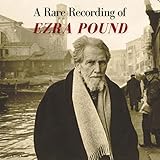
- Audible Audiobook
- Ezra Pound (Author) - Ezra Pound (Narrator)
- English (Publication Language)
- 06/01/2021 (Publication Date) - Listen & Live Audio (Publisher)
Common Mistakes in Applying The ABC of Reading by Ezra Pound
- Mistake: Treating Pound’s advice as rigid dogma.
- Why it matters: Pound’s system is a framework for critical thinking, not an inflexible set of rules. Adhering too strictly can limit your interpretive abilities.
- Fix: Understand these principles as tools to sharpen your own analytical skills. Adapt them to diverse texts and your personal reading journey.
- Mistake: Getting lost in Pound’s extensive historical tangents.
- Why it matters: While Pound’s historical context is often relevant, his digressions can sometimes distract from the core lessons on how to read and analyze literature.
- Fix: Acknowledge the historical notes, but always redirect your focus back to the practical advice on literary technique and interpretation.
- Mistake: Over-reliance on Pound’s specific literary canon.
- Why it matters: Pound’s selections reflect his personal taste and historical biases. Focusing solely on his favored works can narrow your literary exposure.
- Fix: Use his chosen works as a starting point, but apply his analytical methods to a broader range of literature to test and refine your skills.
- Mistake: Neglecting the “melopoeia” aspect of poetry.
- Why it matters: Pound considers the musicality and sound of language to be fundamental to poetry. Ignoring this leads to an incomplete analysis.
- Fix: Read poetry aloud. Pay close attention to rhythm, meter, and assonance/consonance to discern its sonic qualities, as Pound would advocate.
- Mistake: Applying his methods only to poetry.
- Why it matters: While Pound emphasizes poetry, his principles of clarity, precise language, and conciseness are equally applicable to prose.
- Fix: Consciously apply his advice on “exact meanings” and avoiding unnecessary words when reading novels, essays, and other prose forms.
Expert Tips
- Tip: Annotate actively and systematically.
- Actionable Step: Underline striking phrases, circle unfamiliar words, and jot down questions or observations directly in the margins of your book or in a companion notebook.
- Common Mistake to Avoid: Reading passively without marking up the text. This prevents deep engagement and makes it harder to recall specific points for later analysis.
- Tip: Begin with Pound’s explicitly praised poets.
- Actionable Step: Start by analyzing poems from authors like Shakespeare, Villon, or Browning, focusing on the specific techniques Pound highlights in The ABC of Reading.
- Common Mistake to Avoid: Attempting to apply his methods to highly complex or experimental works before mastering the fundamentals with more accessible examples.
- Tip: Use Pound’s framework as a diagnostic tool.
- Actionable Step: When encountering a new poem, ask yourself: Can I identify its melopoeia, phanopoeia, and logopoeia? Does it use language with “exact meanings”? Is it concise?
- Common Mistake to Avoid: Merely agreeing with Pound’s assessments without attempting to replicate his analytical process on other texts.
Decision Checklist: Is This Book for You?
Use this checklist to determine if The ABC of Reading by Ezra Pound aligns with your current reading and learning objectives:
- [ ] Do you want to actively dissect literary works rather than just absorb plots?
- [ ] Are you prepared for direct, opinionated prose and a challenging intellectual approach?
- [ ] Do you have an interest in poetry, particularly classic and modern forms?
- [ ] Are you willing to spend time analyzing individual words and sentence structures?
- [ ] Do you seek a method to improve your critical vocabulary and analytical skills?
- [ ] Are you comfortable with a canon that reflects an author’s specific taste and historical context?
Quick Comparison
| Option | Best for | Pros | Watch out |
|---|---|---|---|
| The ABC of Reading by Ezra Pound Quick Answer | General use | The ABC of Reading by Ezra Pound provides a practical, albeit demanding, fram… | Mistake to avoid: Skimming these foundational sections; they are crucial for… |
| Who This Is For | General use | It emphasizes active analysis, precise language, and understanding the struct… | Mistake to avoid: Forcing every poem into one category; these are analytical… |
| What To Check First | General use | This book is for readers dedicated to deepening their analytical skills and a… | Mistake to avoid: Relying solely on modern dictionary definitions without con… |
| Step-by-Step Plan Mastering Literary Precision | General use | Readers who are serious about understanding <em>how</em> literature works, focusing… | Mistake to avoid: Superficial comparisons that don’t delve into the mechanics… |
Decision Rules
- If reliability is your top priority for The ABC of Reading by Ezra Pound, choose the option with the strongest long-term track record and support.
- If value matters most, compare total ownership cost instead of headline price alone.
- If your use case is specific, prioritize fit-for-purpose features over generic ‘best overall’ claims.
FAQ
- Q: Is “The ABC of Reading by Ezra Pound” suitable for beginners in literary analysis?
A: It can be, but with a caveat. Pound’s style is direct and demanding. Beginners might find it more accessible if they approach it alongside a more conventional introductory text, using Pound’s work to deepen their understanding of specific techniques.
- Q: What is the “ideogrammic method” Pound discusses?
A: It’s a method of presenting complex ideas or emotions by juxtaposing concrete images or examples, much like Chinese characters are formed from simpler components. Pound believed this method could reveal deeper truths and relationships in literature.
- Q: How can I best apply Pound’s advice on “exact meanings”?
A: When reading, pause at key words or phrases. Consider their primary dictionary definition, but also their secondary meanings, historical usage, and how they interact with surrounding words to create layers of significance.
- Q: Does Pound’s emphasis on concise language still hold relevance today?
A: Absolutely. Pound’s insistence on clarity, precision, and avoiding unnecessary words is a timeless principle for effective communication, whether in poetry or prose. His advice encourages readers to seek efficiency and impact in language.
“`
// Pseudo-code for analyzing a poem using Pound’s framework
function analyzePoem(poemText) {
let melopoeiaScore = 0;
let phanopoeiaScore = 0;
let logopoeiaScore = 0;
let wordPrecisionScore = 0;
let conciseness