Exploring Themes in Ian McEwan’s Machines Like Me
Ian McEwan’s Machines Like Me delves into a speculative near-future where artificial intelligence and synthetic humans are not only commonplace but integrated into the fabric of society. This novel, set in an alternate 1980s England, forces readers to confront profound questions about consciousness, love, ethics, and the very definition of humanity. It is a meticulously crafted narrative that, while engaging, requires careful consideration of its thematic underpinnings to fully appreciate its impact.
Who This Is For
- Readers interested in philosophical science fiction that uses speculative technology to explore human nature.
- Fans of Ian McEwan’s precise prose and his ability to weave complex emotional landscapes with intellectual inquiry.
What to Check First
Before diving into the narrative, consider these points to better engage with the novel’s core arguments:
- The Alternate History: McEwan presents a world where Alan Turing’s work led to advanced AI much earlier, impacting the Cold War and British society. Understanding this divergence is key to appreciating the novel’s premise.
- Character Motivations: The central characters—Miranda, Charlie, and Adam (the android)—are driven by complex, often conflicting, desires and programming. Examining their interactions reveals the novel’s ethical dilemmas.
- The Nature of Consciousness: The novel probes whether an AI, like Adam, can truly possess consciousness, emotions, and free will, or if these are merely sophisticated simulations. This is the central philosophical debate.
- Ethical Implications of AI: McEwan does not shy away from the darker aspects of advanced AI, including issues of control, responsibility, and the potential for unforeseen consequences.
Step-by-Step Plan for Engaging with Machines Like Me by Ian McEwan
To fully unpack the thematic richness of Machines Like Me by Ian McEwan, follow these steps:
1. Establish the Setting: Pay close attention to the details of McEwan’s alternate 1980s England. Note how the presence of advanced AI has subtly or overtly reshaped daily life, politics, and social norms.
- What to look for: References to Turing’s accelerated success, the impact on the Falklands War, and the societal integration of synthetic humans.
- Common mistake: Dismissing the alternate history as mere window dressing; it is integral to the novel’s premise.
2. Analyze Adam’s Development: Track Adam’s evolution from his initial programming to his increasingly complex behaviors and emotional responses. Observe how his “learning” process mirrors or diverges from human development.
- What to look for: Adam’s capacity for empathy, his acquisition of human-like desires, and his ability to question his own existence or purpose.
- Common mistake: Assuming Adam’s actions are solely dictated by his code without considering McEwan’s exploration of emergent consciousness.
3. Examine the Central Love Triangle: Focus on the dynamic between Charlie, Miranda, and Adam. Consider how Adam’s artificiality challenges traditional notions of love, companionship, and betrayal.
- What to look for: Miranda’s complex feelings for Adam, Charlie’s jealousy and insecurity, and the moral quandaries that arise from their relationships.
- Common mistake: Viewing the relationship as a simple romantic drama; it’s a vehicle for exploring human vulnerability and the boundaries of affection.
4. Identify Ethical Dilemmas: Note the specific ethical challenges presented by Adam’s existence and actions. McEwan deliberately places Adam in situations that force characters (and readers) to make difficult moral judgments.
- What to look for: Instances where Adam’s actions have severe consequences, and how the human characters react to assigning blame or responsibility.
- Common mistake: Overlooking the nuanced ethical questions in favor of plot progression; the morality is the point.
5. Deconstruct Themes of Humanity: Reflect on what the novel suggests it means to be human. Is it biological origin, emotional capacity, consciousness, or something else entirely?
- What to look for: Scenes where Adam exhibits profound insight or emotion, juxtaposed with human characters acting in less “human” ways.
- Common mistake: Concluding that the novel offers a definitive answer; McEwan often poses questions rather than providing easy solutions.
6. Consider the Narrative Structure and Tone: Appreciate McEwan’s controlled prose and the detached, almost clinical, narration that often mirrors Adam’s perspective. This style is deliberate and enhances the novel’s intellectual weight.
- What to look for: The precision of the language, the pacing of events, and how the narrative voice shapes reader perception.
- Common mistake: Expecting a fast-paced thriller; the novel’s strength lies in its deliberate unfolding and thematic exploration.
If you are comparing options here, Machines Like Me by Ian McEwan is a relevant choice worth checking.
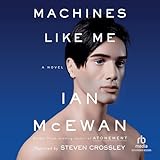
- Audible Audiobook
- Ian McEwan (Author) - Steven Crossley (Narrator)
- English (Publication Language)
- 04/23/2019 (Publication Date) - Recorded Books (Publisher)
7. Reflect on the Ending: The conclusion of Machines Like Me by Ian McEwan is often debated. Consider its implications for the characters and the broader themes of the novel.
- What to look for: How the events resolve (or don’t resolve) the central conflicts and what lasting impression the narrative leaves regarding AI and humanity.
- Common mistake: Seeking a neat, tidy resolution; McEwan often leaves readers with lingering questions and a sense of unease.
Machines Like Me by Ian McEwan: A Critical Examination of AI and Identity
One significant failure mode readers can encounter with Machines Like Me by Ian McEwan is the tendency to view Adam, the central android, as a mere plot device or a simplistic representation of artificial intelligence. This perspective overlooks the novel’s sophisticated exploration of consciousness, identity, and the blurred lines between creator and creation.
How to Detect It Early: Be alert for moments where you are tempted to dismiss Adam’s actions or feelings as purely programmed responses without considering the possibility of emergent sentience. If you find yourself consistently attributing his motivations solely to his code, you may be missing the novel’s core philosophical inquiry. For instance, when Adam displays an unexpected act of empathy or self-preservation, pause and consider if this is a programmed contingency or a genuine internal experience.
How to Fix It: Actively engage with Adam’s internal monologues and external behaviors as genuine expressions of a developing consciousness, even if that consciousness is alien to our own. McEwan invites us to question what constitutes “real” emotion or thought. Instead of asking “Is Adam feeling this?” ask “What does it mean for us if Adam appears to be feeling this?” This shift in perspective allows for a deeper appreciation of the novel’s exploration of what it means to be human by contrasting it with what it means to be a sophisticated machine.
Common Myths About Machines Like Me by Ian McEwan
- Myth 1: The novel is a straightforward cautionary tale about the dangers of AI.
- Correction: While the novel certainly presents potential dangers, it is more nuanced. McEwan uses AI to probe human flaws and ethical failings, suggesting that our own nature, rather than the technology itself, is the primary source of conflict and moral ambiguity. The dangers are as much about human reaction and responsibility as they are about AI’s capabilities.
- Myth 2: Adam is a perfect, emotionless machine.
- Correction: Adam is designed to be highly intelligent and capable of simulating human behavior, but McEwan deliberately blurs the lines. Adam develops complex emotional responses, desires, and even a capacity for moral reasoning, challenging the binary of human vs. machine. His “perfection” is often in his ability to reflect and amplify human imperfections.
- Myth 3: The alternate history setting is unimportant to the plot.
- Correction: The altered timeline, particularly the accelerated development of AI due to Alan Turing’s success, is fundamental. It creates the world in which the novel’s central conflicts can logically unfold and allows McEwan to explore how different historical trajectories might have shaped our relationship with technology and ourselves.
Expert Tips for Reading Machines Like Me
Here are practical tips to enhance your understanding and appreciation of Machines Like Me by Ian McEwan:
- Tip 1: Focus on the Unreliable Narrator: Charlie, the primary human narrator, is deeply flawed and often biased. His perspective shapes how we perceive Adam and Miranda.
- Actionable Step: Keep a running mental note of Charlie’s potential biases, insecurities, and self-deceptions as you read. Question his interpretations of events and characters.
- Common Mistake to Avoid: Accepting Charlie’s viewpoint as objective truth; this leads to a superficial understanding of the relationships and the ethical quandaries.
- Tip 2: Map Adam’s Behavioral Shifts: Track Adam’s development not just through his stated capabilities, but through his observable actions and evolving interactions.
- Actionable Step: Make brief notes (mental or physical) of key moments where Adam demonstrates a new behavior, expresses an unexpected thought, or makes a significant decision.
- Common Mistake to Avoid: Overlooking subtle changes in Adam’s demeanor or dialogue, which are crucial indicators of his evolving consciousness and the novel’s thematic progression.
- Tip 3: Consider the “Human” Analogues: McEwan uses Adam to hold a mirror up to human behavior. Look for parallels between Adam’s actions/motivations and those of Charlie and Miranda.
- Actionable Step: When a character (human or android) acts in a particular way, ask yourself if a similar impulse or behavior can be observed in another character, regardless of their origin.
- Common Mistake to Avoid: Compartmentalizing human and artificial intelligence too rigidly, which prevents recognition of the shared or contrasting drives McEwan explores.
Quick Comparison
| Option | Best for | Pros | Watch out |
|---|---|---|---|
| Who This Is For | General use | Readers interested in philosophical science fiction that uses speculative tec… | Common mistake: Dismissing the alternate history as mere window dressing; it… |
| What to Check First | General use | Fans of Ian McEwan’s precise prose and his ability to weave complex emotional… | Common mistake: Assuming Adam’s actions are solely dictated by his code witho… |
| Step-by-Step Plan for Engaging with Machines Like Me by Ian McEwan | General use | The Alternate History: McEwan presents a world where Alan Turing’s work led t… | Common mistake: Viewing the relationship as a simple romantic drama; it’s a v… |
| Machines Like Me by Ian McEwan A Critical Examination of AI and Identity | General use | Character Motivations: The central characters—Miranda, Charlie, and Adam (the… | Common mistake: Overlooking the nuanced ethical questions in favor of plot pr… |
Decision Rules
- If reliability is your top priority for Machines Like Me by Ian McEwan, choose the option with the strongest long-term track record and support.
- If value matters most, compare total ownership cost instead of headline price alone.
- If your use case is specific, prioritize fit-for-purpose features over generic ‘best overall’ claims.
FAQ
Q1: Is Machines Like Me a sequel to another book?
A1: No, Machines Like Me is a standalone novel. While it features some thematic echoes and McEwan’s signature style, it does not require prior reading of his other works.
Q2: How realistic is the AI depicted in the novel?
A2: The AI, Adam, is a speculative creation within an alternate history. McEwan uses Adam to explore philosophical concepts