Exploring Kim Stanley Robinson’s The Ministry For The Future
Kim Stanley Robinson’s The Ministry For The Future is a monumental work of speculative fiction that tackles the most pressing challenge of our era: climate change. This review aims to provide a clear, structured understanding of its thematic landscape, narrative approach, and its significance in contemporary discourse. It is intended for readers who seek intellectually stimulating fiction that engages with complex global issues.
The Ministry For The Future by Kim Stanley Robinson: Quick Answer
- This novel presents a detailed, often hopeful, vision of humanity’s response to the climate crisis, integrating scientific realism with imaginative policy solutions.
- Its narrative structure is characterized by a large ensemble cast and episodic storytelling, which allows for diverse perspectives but can sometimes dilute narrative momentum.
- It serves as an essential read for those desiring grounded yet imaginative scenarios for navigating existential environmental threats.
Who This Is For
- Readers interested in climate fiction that shifts from dystopian warnings to explore actionable, albeit speculative, solutions.
- Individuals seeking a thought-provoking narrative that synthesizes scientific concepts, economic theory, and geopolitical dynamics.
What to Check First
- Author’s Track Record: Kim Stanley Robinson is renowned for his meticulously researched and often optimistic science fiction, notably his Mars trilogy. Understanding his previous work can calibrate expectations for The Ministry For the Future by Kim Stanley Robinson.
- Narrative Scope: The novel spans decades and features a vast ensemble cast. Prepare for a broad, sometimes diffuse, narrative rather than a tightly focused character arc.
- Thematic Core: The book centers on collective action and systemic change in response to climate breakdown, prioritizing ideas and policy over conventional plot mechanics.
- Scientific and Economic Detail: Robinson delves into the technicalities of carbon sequestration, geoengineering, and economic restructuring. A willingness to engage with these elements is beneficial.
Step-by-Step Plan: Engaging with The Ministry For The Future
To fully appreciate The Ministry For The Future, consider the following structured approach:
1. Grasp the Central Premise: Begin by understanding the novel’s core concept: the establishment of an international body dedicated to advocating for future generations and combating climate change.
- Action: Read the initial chapters with close attention to the formation of the Ministry and its stated objectives.
- What to Look For: The immediate aftermath of a catastrophic heatwave in India and the subsequent geopolitical discussions that lead to the Ministry’s inception.
- Mistake to Avoid: Underestimating the importance of the early chapters as mere exposition; they establish the novel’s fundamental premise and tone.
2. Identify Key Characters: Recognize the central figures, such as Mary Murphy, the Ministry’s head, and the enigmatic “Children of Kali.” Understand that characters often function as vehicles for conveying ideas.
- Action: Maintain a running record of the main protagonists and their respective roles.
- What to Look For: How each character’s experiences and viewpoints contribute to the broader narrative of climate action and its inherent challenges.
- Mistake to Avoid: Becoming overly invested in individual character arcs; the novel prioritizes collective progress and systemic transformations.
3. Analyze Proposed Solutions: Pay close attention to the various scientific, economic, and political strategies discussed for mitigating climate change.
- Action: Document the different proposed solutions, such as direct air capture, carbon coins, and the role of international finance.
- What to Look For: The feasibility, ethical implications, and potential unintended consequences of these proposed interventions.
- Mistake to Avoid: Treating the proposed solutions as definitive blueprints; they are presented as speculative possibilities within a fictional framework.
For those seeking a deeply engaging and intellectually stimulating dive into climate fiction, Kim Stanley Robinson’s The Ministry For The Future is an absolute must-read. This novel offers a unique blend of scientific realism and imaginative policy solutions that will resonate with anyone concerned about our planet’s future.
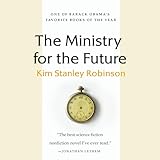
- Audible Audiobook
- Kim Stanley Robinson (Author) - Jennifer Fitzgerald, Fajer Al-Kaisi, Ramon de Ocampo (Narrators)
- English (Publication Language)
- 10/06/2020 (Publication Date) - Orbit (Publisher)
4. Appreciate the Episodic Structure: Recognize that the narrative unfolds through a series of vignettes, case studies, and philosophical discussions rather than a linear, plot-driven arc.
- Action: Understand the novel’s structure as a mosaic of interconnected events and ideas.
- What to Look For: How seemingly disparate events and character encounters contribute to the overarching themes of global cooperation and ecological restoration.
- Mistake to Avoid: Expecting a conventional, tightly woven plot with a clear protagonist’s journey; the narrative is intentionally sprawling.
5. Engage with the “Children of Kali”: Comprehend the symbolic and literal role of this group, which represents a more radical, sometimes violent, approach to environmental activism.
- Action: Consider the ethical dilemmas presented by their actions and their motivations.
- What to Look For: The tension between the Ministry’s diplomatic approach and the Children of Kali’s more direct, confrontational methods.
- Mistake to Avoid: Judging the Children of Kali solely on their violent acts without considering the desperation and philosophical underpinnings that drive them.
6. Reflect on Optimism vs. Realism: Consider Robinson’s fundamentally hopeful outlook, which posits that humanity can solve the climate crisis, even amidst immense challenges.
- Action: Evaluate whether the proposed solutions feel earned or overly convenient within the narrative.
- What to Look For: The moments where progress stalls or setbacks occur, and how the characters and the Ministry adapt.
- Mistake to Avoid: Discounting the novel’s optimism as naive; it is a deliberate choice to explore what a positive future might look like, serving as a call to action.
7. Evaluate the “Why It Matters”: Conclude by considering the novel’s contribution to discussions about climate change and the future of civilization.
- Action: Think about the specific ideas or perspectives the novel introduced or reinforced for you.
- What to Look For: The novel’s ability to inspire hope and encourage critical thinking about systemic solutions.
- Mistake to Avoid: Reading the book solely as entertainment and failing to consider its implications for real-world action and policy.
The Ministry For The Future by Kim Stanley Robinson: A Deep Dive into Climate Solutions
Kim Stanley Robinson’s The Ministry For The Future transcends typical genre boundaries, serving as an ambitious thought experiment framed as fiction. It imagines a future where humanity, pushed to the precipice by escalating climate disasters, establishes a global entity tasked with safeguarding future generations and implementing radical solutions. The novel’s primary strength lies in its detailed exploration of these potential solutions, encompassing innovative financial instruments like “carbon coins,” large-scale geoengineering projects, and the necessary economic restructuring. Robinson’s meticulous research is evident, lending plausibility to its speculative elements. For example, the book elaborates on the mechanics of carbon sequestration, the complexities of international cooperation, and the psychological toll of climate anxiety, all integrated into a cohesive narrative.
The novel’s structure is episodic, featuring a large cast of characters whose individual narratives illuminate the broader societal and global shifts. This approach allows Robinson to present a panoramic view of the climate crisis and its potential resolutions, though it can sometimes lead to a diffusion of narrative focus. Readers expecting a singular, compelling protagonist’s journey may find the sprawling cast challenging. However, the collective nature of the struggle is a deliberate thematic choice; the book underscores that overcoming the climate crisis necessitates a united, global effort, rather than the singular actions of a few individuals.
BLOCKQUOTE_0
This quote encapsulates the novel’s core message: the necessity of collective belief and action in the face of existential threats. It highlights the psychological shift required to move from despair to constructive engagement with climate solutions.
Common Myths About The Ministry For The Future
- Myth: The book is a straightforward utopian narrative where all problems are easily solved.
- Correction: While the overall trajectory is optimistic, The Ministry For The Future vividly depicts the immense suffering caused by climate change (e.g., the opening heatwave in India) and the significant, often violent, obstacles to implementing solutions. It presents challenges and setbacks, illustrating that progress is hard-won and requires continuous effort.
- Myth: The novel offers a definitive, step-by-step guide to solving the climate crisis.
- Correction: Robinson presents a range of potential solutions and scenarios, but these are speculative and often debated within the narrative itself. The book is an exploration of possibilities, not a prescriptive manual. It encourages readers to consider various approaches and their complexities rather than providing a single, simple answer.
- Myth: The “Children of Kali” are simply portrayed as terrorists.
- Correction: While their methods are violent and ethically problematic, Robinson explores the desperation and philosophical underpinnings that drive the “Children of Kali.” They represent a radical response to perceived inaction and a willingness to employ extreme measures when conventional approaches fail, adding a layer of moral complexity to the narrative.
Expert Tips for Reading The Ministry For The Future
- Embrace the Interconnectedness: Recognize that the novel’s strength lies in its depiction of how environmental, economic, and political systems are intertwined.
- Action: Actively look for connections between different character storylines and the policy proposals they represent.
- Mistake to Avoid: Focusing solely on individual character arcs and overlooking how their experiences contribute to the larger systemic picture.
- Engage Critically with the Solutions: Approach the proposed solutions with a discerning eye, considering their potential benefits and drawbacks.
- Action: Make notes on the scientific and economic principles behind each proposed solution and consider its real-world feasibility.
- Mistake to Avoid: Accepting all proposed solutions uncritically; the novel often includes internal debates and challenges to these ideas.
- Understand the Role of Hope: App
Quick Comparison
| Option | Best for | Pros | Watch out |
|---|---|---|---|
| The Ministry For The Future by Kim Stanley Robinson Quick Answer | General use | This novel presents a detailed, often hopeful, vision of humanity’s response… | Mistake to Avoid: Underestimating the importance of the early chapters as mer… |
| Who This Is For | General use | Its narrative structure is characterized by a large ensemble cast and episodi… | Mistake to Avoid: Becoming overly invested in individual character arcs; the… |
| What to Check First | General use | It serves as an essential read for those desiring grounded yet imaginative sc… | Mistake to Avoid: Treating the proposed solutions as definitive blueprints; t… |
| Step-by-Step Plan Engaging with The Ministry For The Future | General use | Readers interested in climate fiction that shifts from dystopian warnings to… | Mistake to Avoid: Expecting a conventional, tightly woven plot with a clear p… |
Decision Rules
- If reliability is your top priority for The Ministry For the Future by Kim Stanley Robinson, choose the option with the strongest long-term track record and support.
- If value matters most, compare total ownership cost instead of headline price alone.
- If your use case is specific, prioritize fit-for-purpose features over generic ‘best overall’ claims.