Exploring Identity in Maria Campbell’s ‘Halfbreed
Quick Answer
- Halfbreed by Maria Campbell is a seminal autobiographical work detailing the author’s experiences as a Métis woman navigating systemic racism and identity struggles in Canada.
- The book offers a raw, unflinching account of survival, resilience, and the fight for self-determination, providing crucial historical and social context.
- This is essential reading for those interested in Indigenous literature, Canadian history, and the profound impacts of colonialism.
Who This Is For
- Readers seeking to understand the complexities of Indigenous identity and the lived realities of Métis people in Canada.
- Individuals interested in personal narratives of resilience against systemic oppression and the historical context of Indigenous rights.
What to Check First
- Author’s Identity: Maria Campbell is a Métis author, playwright, and activist. Her personal experiences are central to the narrative, and understanding her heritage is key.
- Publication Context: Published in 1973, Halfbreed reflects the social and political climate of mid-20th century Canada regarding Indigenous peoples.
- Narrative Form: This is a direct autobiography, not fiction. Its power lies in its unvarnished authenticity and the author’s voice.
- Key Themes: Identity, racism, poverty, family, survival, activism, and the reclamation of self are paramount.
- Historical Backdrop: Familiarity with the historical treatment of Indigenous peoples in Canada, including land dispossession and government policies, will deepen understanding.
Understanding Identity in Halfbreed by Maria Campbell
Maria Campbell’s Halfbreed remains a cornerstone of Indigenous literature, presenting a stark, vital exploration of what it means to be Métis in a society that often denies or misunderstands such identities. The book transcends personal memoir, serving as a critical historical document and a testament to survival against formidable odds. Campbell’s narrative voice is direct and unflinching, pulling the reader into her experiences with a visceral immediacy. The profound strength of Halfbreed lies in its refusal to soften or sentimentalize the harsh realities of her life and the broader experiences of Métis and First Nations individuals in Canada.
For a foundational understanding of the book’s significance, Maria Campbell’s ‘Halfbreed’ is a seminal autobiographical work.
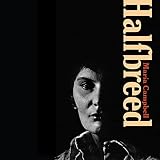
- Audible Audiobook
- Maria Campbell (Author) - Maria Campbell (Narrator)
- English (Publication Language)
- 11/05/2019 (Publication Date) - McClelland & Stewart (Publisher)
The narrative unfolds chronologically, tracing Campbell’s life from her childhood on the Prairies through her adolescence and early adulthood in urban settings. Each chapter exposes another layer of the challenges she faced—poverty, discrimination, abusive relationships, and the persistent struggle to maintain a sense of self amidst pervasive systemic oppression. Campbell’s writing style is characterized by its plainspokenness, a deliberate choice that amplifies the impact of the difficult subjects she confronts. This directness ensures readers engage with her experiences without the buffer of elaborate prose or authorial distance.
Thematic Exploration in Halfbreed by Maria Campbell
The central, overarching theme of Halfbreed is the complex and often painful negotiation of identity. Campbell grapples directly with the term “halfbreed,” a derogatory label used for individuals of mixed Indigenous and European ancestry. She reclaims this term, however, using it to define her existence outside of imposed societal categories. Her journey is one of recognizing the inherent validity of her Métis heritage, even as she navigates a world that frequently forces her to choose sides or denies her existence altogether. This profound struggle for self-definition is a recurring motif, powerfully illustrating the internal and external battles faced by many Indigenous individuals.
Beyond personal identity, the book offers a critical lens on the historical and ongoing impacts of colonialism in Canada. Campbell’s account details the dispossession of Métis lands, the failures of government policies, and the pervasive racism encountered in daily life. Her experiences with the justice system, child welfare services, and other societal institutions serve as concrete examples of how these larger forces shape individual lives. The narrative powerfully illustrates how systemic issues manifest as personal trauma and hardship, underscoring the deep interconnectedness of individual lives and societal structures.
BLOCKQUOTE_0
This quote encapsulates the raw, unvarnished truth that Campbell brings to her narrative. It is a declaration of her identity, firmly rooted in her origins and experiences, and it sets the tone for the unflinching honesty that permeates the entire book.
Step-by-Step Plan for Engaging with the Text
1. Understand the Author’s Context.
- Action: Before beginning the book, read a brief biography of Maria Campbell.
- What to look for: Details about her Métis heritage, her activism, and the historical period in which she lived and wrote. This context is crucial for appreciating the nuances of her story.
- Mistake: Assuming Campbell’s experiences are universally representative of all Indigenous people; her story is specific to her Métis identity and personal journey, offering a unique perspective.
2. Engage with the Historical Backdrop.
- Action: Familiarize yourself with the history of the Métis people in Canada.
- What to look for: Information on key events like the Red River Rebellion, the Manitoba Act, and the subsequent displacement and marginalization of Métis communities.
- Mistake: Reading the memoir in isolation without understanding the broader socio-political landscape that shaped Campbell’s life and the lives of her people. This context is essential for grasping the systemic nature of the challenges she faced.
3. Read for Thematic Resonance, Not Just Plot.
- Action: Keep a journal or notes to track recurring themes such as identity, family, resilience, and systemic injustice.
- What to look for: Instances where Campbell explicitly or implicitly discusses her sense of self, her relationships, and her encounters with discriminatory systems.
- Mistake: Focusing solely on the chronological events of her life without analyzing the deeper meanings and societal critiques embedded within them. The narrative’s power lies in its thematic weight.
4. Pay Attention to the Narrative Voice.
- Action: Note how Campbell’s direct, unadorned prose affects your emotional and intellectual response to her story.
- What to look for: The power of her plainspoken language to convey raw emotion and stark reality. Its simplicity is a deliberate choice to emphasize authenticity and the gravity of her experiences.
- Mistake: Underestimating the significance of her writing style; its directness is a key element of the book’s impact and credibility.
5. Consider the Book’s Legacy and Impact.
- Action: Research critical reception and academic analyses of Halfbreed following its publication.
- What to look for: How the book was received, its influence on subsequent Indigenous literature, and its ongoing relevance in discussions of identity and social justice.
- Mistake: Treating the book as a historical artifact with no current relevance; its themes remain pertinent to contemporary issues of Indigenous rights and reconciliation.
6. Reflect on Language Reclamation.
- Action: Analyze how Campbell uses and reclaims terms like “halfbreed.”
- What to look for: The transformation of a slur into a statement of identity and defiance. This act of linguistic reclamation is a powerful political and personal statement.
- Mistake: Dismissing such terms as merely offensive without considering the author’s deliberate act of reappropriation and its implications for identity and empowerment.
Common Myths About Halfbreed by Maria Campbell
- Myth 1: Halfbreed is a purely personal story about one woman’s individual hardship.
- Why it matters: This perspective diminishes the book’s broader significance as a social and historical document that speaks to collective experiences.
- Fix: Recognize that while deeply personal, Campbell’s narrative serves as a powerful microcosm of the collective experiences of Métis and Indigenous peoples facing systemic racism and dispossession. It is an act of bearing witness for a community.
- Myth 2: The book is outdated and its issues are no longer relevant in contemporary Canada.
- Why it matters: This view overlooks the ongoing nature of systemic inequalities and the continuing struggle for Indigenous self-determination and reconciliation.
- Fix: Understand that the historical context provided in Halfbreed directly informs present-day challenges and the ongoing process of reconciliation. The themes of identity, resilience, and resistance remain critically important.
- Myth 3: Campbell’s narrative is an objective, factual account devoid of personal bias.
- Why it matters: Autobiographical accounts, while truthful to the author’s experience, are inherently subjective and shaped by individual perspective.
- Fix: Appreciate the authenticity of Campbell’s lived experience while understanding that it is presented through her personal perspective, emotions, and interpretations. The subjectivity is part of its power and its truth.
Expert Tips for Reading ‘Halfbreed’
- Tip 1: Embrace the Discomfort.
- Action: Be prepared for graphic descriptions of violence, poverty, and racism. Do not shy away from these passages; they are integral to the book’s message.
- Mistake to avoid: Glossing over difficult sections or seeking to soften the impact. The raw depiction is intentional and crucial to conveying the severity of the author’s experiences and the systemic issues she faced.
- Tip 2: Seek Supplementary Context.
- Action: After reading the memoir, explore critical essays or scholarly articles about Halfbreed and Maria Campbell’s work.
- Mistake to avoid: Believing that a single reading provides the complete picture. Academic analysis can offer valuable context and a deeper understanding of the text’s literary, historical, and political significance.
- Tip 3: Connect Personal Struggles to Political Realities.
- Action: Actively draw connections between Campbell’s individual struggles and the broader political and social movements affecting Indigenous peoples in Canada during her lifetime and beyond.
- Mistake to avoid: Viewing her story as solely an individual tragedy without recognizing its implications for collective Indigenous rights, activism, and the ongoing fight for self-determination.
Decision Criteria for Engaging with ‘Halfbreed’
When considering Halfbreed by Maria Campbell, your primary decision criterion should be your existing knowledge and interest in the historical and social context of Indigenous peoples in Canada.
- If you have limited prior knowledge of Métis history or Canadian Indigenous relations: You will benefit greatly from reading supplementary materials (historical overviews, academic articles) alongside or before diving into Halfbreed. This will enrich your understanding of the systemic issues Campbell addresses.
- If you are already familiar with the historical context: You can likely engage with Halfbreed more directly, appreciating the personal testament as a powerful illustration of broader historical truths. The book will likely resonate deeply as a lived experience of known historical realities.
This criterion shifts the recommendation from a simple “read this book” to a more nuanced approach, ensuring a richer and more informed reading experience based on individual preparation.
Decision Rules
- If reliability is your top priority for Halfbreed by Maria Campbell, choose the option with the strongest long-term track record and support.
- If value matters most, compare total ownership cost instead of headline price alone.
- If your use case is specific, prioritize fit-for-purpose features over generic ‘best overall’ claims.
FAQ
- Q: Is ‘Halfbreed’ a difficult book to read?
- A: Yes, Halfbreed addresses sensitive and often traumatic subjects, including racism, poverty, and violence. Its direct and unflinching narrative style can be emotionally challenging but is also profoundly impactful and essential for understanding the author’s experience.
- Q: What is the significance of the title ‘Halfbreed’?
- A: The title refers to the author’s Métis identity, a term historically used as a derogatory label for people of mixed Indigenous and European ancestry. Campbell reclaims this term, using it to define her identity on her own terms and to challenge societal definitions, transforming a slur into a statement of resilience.
- Q: Who is the primary audience for this book?
- A: The book is essential reading for anyone interested in Indigenous literature, Canadian history, social justice, and the complexities of identity formation. It is particularly valuable for students, academics, and general readers seeking authentic Indigenous voices and firsthand accounts of systemic oppression.
- Q: How does ‘Halfbreed’ compare to other autobiographies of Indigenous authors?
- A: Halfbreed is distinguished by its raw, unmediated prose and its unflinching depiction of the systemic issues faced by Métis people. While other autobiographies share themes of resilience and cultural identity, Campbell’s work is a foundational text for its historical context, its powerful personal testimony, and its critical examination of Canadian society.
| Aspect | Description | Relevance to Reader |
|---|---|---|
| Narrative Style | Direct, unvarnished, first-person account of lived experiences. | Creates immediate emotional connection and a sense of authenticity. |
| Thematic Depth | Explores identity, racism, poverty, survival, and the search for belonging. | Provides critical insights into the impacts of colonialism and systemic injustice. |
| Historical Context | Covers Métis life in Canada from the mid-20th century. | Illuminates the historical roots of contemporary Indigenous issues. |
| Author’s Intent | To bear witness, challenge societal norms, and reclaim identity. | Empowers readers to understand the importance of authentic Indigenous voices. |