Evelyn Waugh’s Wartime Novel: Officers And Gentlemen
Evelyn Waugh’s Officers and Gentlemen is the second novel in his Sword of Damocles trilogy, continuing the story of Guy Crouchback during World War II. This work offers a trenchant satirical examination of military life, duty, and the often-absurd realities of war, challenging readers to look beyond superficial notions of heroism. It is a novel that demands careful reading, rewarding those who engage with its intricate social commentary and psychological depth.
Who This Is For
- Readers seeking sharp social critique: This novel is for those who appreciate literature that dissects institutional follies and human pretensions with incisive wit, particularly within the context of wartime. It offers a nuanced look at how societal structures, like the military, can both uphold and undermine individual integrity.
- Fans of Evelyn Waugh’s distinctive voice: Individuals familiar with Waugh’s earlier works will find a continuation of his characteristic blend of dark humor, moral inquiry, and social observation, applied here to the military sphere. His prose is precise, and his observations are often unsparing.
What to Check First
- The Trilogy’s Narrative Arc: Officers and Gentlemen follows Men at Arms and precedes Unconditional Surrender. Understanding Guy Crouchback’s journey requires awareness of his initial motivations and subsequent experiences in the preceding novel, particularly his disillusionment following the Phoney War.
- Waugh’s Satirical Intent: Expect a critical rather than celebratory portrayal of the military. Waugh uses the setting to expose class distinctions, bureaucratic absurdities, and the disconnect between idealized duty and practical execution. His satire is often biting and aimed at the performative aspects of military life.
- Guy Crouchback’s Characterization: Guy is not a conventional war hero. His internal struggles, his search for purpose, and his often-passive engagement with events are central to the novel’s thematic concerns. He is a character defined by his reactions and his internal moral compass, rather than by decisive action.
- The Historical Backdrop: The novel is set during the early years of World War II, notably featuring the ill-fated Commando raid on the Lofoten Islands. This historical context serves as the stage for Waugh’s satire, allowing him to explore the gap between grand strategy and the often-chaotic realities faced by those on the ground.
Understanding Officers And Gentlemen by Evelyn Waugh: A Step-by-Step Approach
To fully appreciate the nuances of Officers and Gentlemen, a structured approach is beneficial, allowing for a deeper engagement with Waugh’s critique.
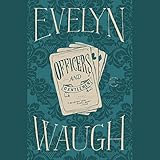
- Audible Audiobook
- Evelyn Waugh (Author) - Christian Rodska (Narrator)
- English (Publication Language)
- 12/11/2012 (Publication Date) - Little, Brown & Company (Publisher)
1. Track Guy Crouchback’s Disillusionment:
- Action: Closely observe Guy’s internal thoughts and his reactions to the escalating chaos and perceived pointlessness of his military assignments. Note his persistent feeling of being an outsider and his struggle to reconcile romantic war ideals with the mundane and often incompetent reality.
- What to look for: His tendency to be swept along by events rather than directing them, and his internal monologues that reveal a deep-seated weariness with the performance of duty.
- Mistake: Interpreting Guy as a decisive protagonist; he is more accurately characterized as a figure wrestling with his own inertia and the absurdity of his surroundings, a passive observer in a world of active, often misguided, participants.
2. Analyze the Military as a Satirical Stage:
- Action: Identify and dissect instances of bureaucratic inefficiency, the influence of social standing on military roles, and the disconnect between high-level objectives and the actions of those executing them.
- What to look for: The convoluted planning processes, the self-importance of certain officers, and the often-arbitrary nature of military duties and deployments. For example, the elaborate preparations for seemingly minor actions highlight the disconnect.
- Mistake: Treating the military operations depicted as realistic representations of wartime strategy; Waugh exaggerates and distorts these elements to highlight their inherent ridiculousness and the performative nature of military bureaucracy.
3. Deconstruct the Concept of “Gentlemen”:
- Action: Examine how Waugh defines, uses, and critiques the notion of “gentleman” within the military context of the novel.
- What to look for: The contrast between inherited social status and actual character, the moral compromises made by those who adhere to a perceived code of gentility, and how war challenges these social constructs. The novel questions whether true gentility can survive the brutal realities of conflict.
- Mistake: Assuming Waugh endorses the “gentlemanly” behavior depicted; he often uses the term ironically to expose hypocrisy, entitlement, and the way social privilege can shield individuals from accountability.
4. Evaluate the Episodic Narrative Structure:
- Action: Pay attention to the shifts in perspective and the often-fragmented progression of the plot, particularly during the extended sequence detailing the Lofoten raid.
- What to look for: How these structural choices contribute to a sense of confusion, disorientation, and the disjointed experience of wartime operations. The narrative reflects the chaotic and unpredictable nature of military campaigns.
- Mistake: Expecting a tightly plotted, linear war narrative; Waugh’s structure prioritizes thematic exploration and psychological insight over conventional storytelling, mirroring the disarray of war.
5. Contextualize within Early World War II:
- Action: Research the historical events that form the novel’s backdrop, such as the early Commando raids and the political atmosphere of the war’s initial phase.
- What to look for: How Waugh leverages historical events as a framework for his satirical commentary, sometimes amplifying or twisting them to serve his narrative and critical purposes. The Lofoten Islands raid, for instance, becomes a stage for Waugh’s critique of military planning and execution.
- Mistake: Reading Officers and Gentlemen as a historical document; it is a fictional work that uses historical events as a canvas for its social and moral critique, prioritizing thematic resonance over strict historical accuracy.
6. Explore the Interplay of Faith and Duty:
- Action: Trace Guy Crouchback’s evolving understanding of his Catholic faith and his perception of duty throughout the novel.
- What to look for: The inherent tension between his religious convictions and the demands of military service, and how his concept of duty transforms from an abstract ideal to a more personal, albeit often misapplied, responsibility. His search for a meaningful cause is deeply tied to his spiritual quest.
- Mistake: Overlooking the spiritual and philosophical dimensions of Guy’s quest; these elements are fundamental to his character development and the novel’s thematic depth, offering a counterpoint to the superficiality of military life.
Common Myths About Officers And Gentlemen by Evelyn Waugh
This section addresses prevalent misconceptions about Waugh’s novel and its reception, offering a more nuanced understanding.
- Myth 1: Officers and Gentlemen is a straightforward endorsement of British wartime efforts.
- Why it matters: This view misinterprets Waugh’s satirical method, reducing a complex critique of institutional failings and human vanity to simple patriotism. It fails to acknowledge the depth of his critique.
- Correction: Waugh consistently employed war as a setting to satirize the follies of human institutions and the pretensions of individuals. His portrayal of the military is inherently critical, highlighting absurdity and class dynamics rather than glorifying conflict. The novel exposes the gap between propaganda and reality.
- Myth 2: Guy Crouchback is a flawed but ultimately heroic figure.
- Why it matters: This perspective often overlooks Waugh’s deliberate portrayal of Crouchback as a character often adrift, whose “heroism” is frequently undermined by his own ineffectualness and reactive nature. It seeks a traditional hero where Waugh presents a more complex, morally searching individual.
- Correction: Crouchback functions as a vehicle for Waugh’s satire. While he possesses a moral sensibility, his actions are frequently misguided or passive. His journey is marked by profound disillusionment, and any sense of redemption is ambiguous and hard-won, not inherent. He is more a commentator than a commander.
- Myth 3: Waugh’s humor in this novel serves primarily to provide levity.
- Why it matters: This misunderstands the function of Waugh’s dark humor, which often serves to intensify the sense of horror and absurdity rather than to offer escapism. The humor is a tool for critique, not comfort.
- Correction: Waugh’s humor is a critical tool. It exposes the ridiculousness of the military establishment and the characters’ self-importance, thereby sharpening the focus on the underlying moral decay and tragic elements of war. The laughter elicited is often uncomfortable, a recognition of grim truths.
Expert Tips for Understanding Officers And Gentlemen
- Tip 1: Focus on Dialogue for Social Clues.
- Action: Pay close attention to the language, tone, and subtext in conversations between characters, especially those from different social strata. Waugh’s dialogue is a masterclass in revealing character and social dynamics through subtle cues.
- Common Mistake to Avoid: Assuming characters’ stated intentions or beliefs accurately reflect their motivations or Waugh’s commentary; often, the unsaid or the ironic is more revealing of their true status and attitudes.
- Tip 2: Trace the Symbolism of Uniforms and Ranks.
- Action: Note how characters’ uniforms and their adherence to or subversion of military protocol are depicted. Waugh uses these external markers to comment on internal character and societal hierarchy.
- Common Mistake to Avoid: Overlooking the symbolic weight of attire and rank; Waugh uses these elements to comment on social hierarchy, identity, and the performance of duty, often satirizing their superficial importance and how they can mask incompetence or moral failing.
- Tip 3: Recognize the Role of Chance and Coincidence.
- Action: Observe how random events and improbable coincidences often drive the plot forward or shape character outcomes. This is a deliberate technique to highlight the unpredictable nature of life.
- Common Mistake to Avoid: Seeking logical causality for every plot development; Waugh deliberately employs elements of chance to underscore the unpredictable and often
Quick Comparison
| Option | Best for | Pros | Watch out |
|---|---|---|---|
| Who This Is For | General use | Readers seeking sharp social critique: This novel is for those who appreciate… | Mistake: Interpreting Guy as a decisive protagonist; he is more accurately ch… |
| What to Check First | General use | Fans of Evelyn Waugh’s distinctive voice: Individuals familiar with Waugh’s e… | Mistake: Treating the military operations depicted as realistic representatio… |
| Understanding Officers And Gentlemen by Evelyn Waugh A Step-by-Step Approach | General use | The Trilogy’s Narrative Arc: Officers and Gentlemen follows Men at Arms a… | Mistake: Assuming Waugh endorses the “gentlemanly” behavior depicted; he ofte… |
| Common Myths About Officers And Gentlemen by Evelyn Waugh | General use | Waugh’s Satirical Intent: Expect a critical rather than celebratory portrayal… | Mistake: Expecting a tightly plotted, linear war narrative; Waugh’s structure… |
Decision Rules
- If reliability is your top priority for Officers And Gentlemen by Evelyn Waugh, choose the option with the strongest long-term track record and support.
- If value matters most, compare total ownership cost instead of headline price alone.
- If your use case is specific, prioritize fit-for-purpose features over generic ‘best overall’ claims.