Esperanza Rising: A Story Of Resilience
Quick Answer
- Esperanza Rising by Pam Muñoz Ryan is a historical fiction novel suitable for middle-grade readers, focusing on themes of resilience, adaptation, and the immigrant experience.
- The book excels in its empathetic portrayal of hardship and its exploration of personal growth in the face of adversity.
- It is a strong choice for readers interested in historical contexts of the Great Depression and Mexican-American history.
Who This Is For
- Readers aged 9-12 who are exploring themes of immigration, cultural change, and overcoming challenges.
- Educators and parents seeking literature that promotes empathy and understanding of historical periods, particularly the Mexican Revolution’s aftermath and early 20th-century California.
What To Check First
- Historical Context: Familiarize yourself with the period (1930s California) and the social conditions for Mexican immigrants. This provides crucial background for Esperanza’s journey.
- Author’s Style: Pam Muñoz Ryan is known for her lyrical prose and character-driven narratives. Expect emotional depth rather than fast-paced action.
- Thematic Focus: The novel centers on resilience, hope, and the concept of “rising” from difficult circumstances. Understanding these themes will enhance the reading experience.
- Target Audience: While accessible, the themes of loss and hardship are handled with sensitivity but are present. Consider the emotional maturity of younger readers.
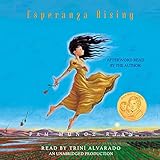
- Audible Audiobook
- Pam Muñoz Ryan (Author) - Trini Alvarado (Narrator)
- English (Publication Language)
- 10/31/2003 (Publication Date) - Listening Library (Publisher)
Step-by-Step Plan: Understanding Esperanza Rising by Pam Muñoz Ryan
1. Engage with the Protagonist’s Initial World: Begin by understanding Esperanza’s privileged life in Aguascalientes, Mexico.
- Action: Read the first few chapters carefully.
- Look for: Descriptions of her comfortable home, her relationship with her family, and her sense of security.
- Mistake: Overlooking the stark contrast between her early life and later experiences, which diminishes the impact of her subsequent struggles.
2. Observe the Catalyst for Change: Pay attention to the events that disrupt Esperanza’s life and force her family to flee.
- Action: Note the specific incidents and their immediate consequences.
- Look for: The suddenness of the loss and the reasons for their departure to California.
- Mistake: Dismissing the political and social unrest in Mexico as mere background; these are direct causes of her displacement.
3. Track Esperanza’s Adaptation to the Labor Camps: Focus on her initial difficulties adjusting to manual labor and communal living.
- Action: Observe her reactions to the harsh working conditions and the crowded camps.
- Look for: Her internal resistance and her physical struggles with tasks she’s never performed.
- Mistake: Assuming her adaptation is quick or easy; the narrative emphasizes the prolonged difficulty and emotional toll.
4. Identify Key Relationships and Support Systems: Note the people who influence Esperanza’s journey.
- Action: Observe her interactions with figures like Miguel, Hortensia, and Alfonso.
- Look for: How these relationships offer both challenges and support, and how they evolve.
- Mistake: Underestimating the importance of community and chosen family in overcoming adversity.
5. Analyze Moments of Personal Growth: Pinpoint instances where Esperanza demonstrates newfound strength or understanding.
- Action: Look for specific actions or decisions that show her changing perspective.
- Look for: Her willingness to help others, her acceptance of new responsibilities, or her internal shifts in attitude.
- Mistake: Focusing solely on external plot points and missing the subtle, internal development of the character.
6. Consider the Symbolism of “Rising”: Reflect on how the title’s theme is manifested throughout the narrative.
- Action: Connect Esperanza’s personal journey to the broader concept of overcoming hardship.
- Look for: Instances where she or others demonstrate resilience, hope, or a return to dignity after suffering.
- Mistake: Interpreting “rising” only as a return to wealth or status, rather than as personal emotional and spiritual growth.
7. Evaluate the Resolution and its Message: Assess the ending and what it communicates about hope and the future.
- Action: Read the conclusion with an eye for the long-term implications for Esperanza.
- Look for: The sense of closure and the underlying message about the immigrant experience.
- Mistake: Expecting a perfectly happy ending without acknowledging the lingering realities of the challenges faced.
Esperanza Rising by Pam Muñoz Ryan: Themes and Strengths
Pam Muñoz Ryan’s Esperanza Rising is a compelling narrative that delves into the profound impact of displacement and the enduring power of the human spirit. The novel masterfully contrasts Esperanza’s opulent childhood in Mexico with the stark realities of migrant labor in California during the Great Depression. Its primary strength lies in its nuanced portrayal of a young girl forced to confront loss, poverty, and prejudice, and to forge a new identity from the ashes of her former life. The author’s lyrical prose creates vivid imagery, drawing readers into Esperanza’s emotional landscape. The themes of resilience, the importance of family (both biological and chosen), and the cyclical nature of hardship and hope are woven throughout the story with considerable grace. The novel offers a sensitive yet unflinching look at the Mexican-American experience during a tumultuous historical period, making it a valuable educational tool as well as an engaging read.
BLOCKQUOTE_0
A Contrarian View: Who Might Find Esperanza Rising Less Compelling
While widely acclaimed, Esperanza Rising may not resonate with all readers, particularly those seeking fast-paced action or a purely uplifting narrative without significant emotional challenge. The novel’s strength in depicting hardship means that readers sensitive to themes of loss, illness, and poverty may find certain passages difficult. Furthermore, the pacing is deliberately measured, focusing on Esperanza’s internal transformation rather than external plot twists. Readers accustomed to more plot-driven young adult fiction might find the narrative slow. The ending, while hopeful, is not a simplistic “happily ever after,” reflecting a more mature understanding of ongoing challenges.
Expert Tips for Reading Esperanza Rising
- Tip 1: Connect with Esperanza’s Sensory Experiences.
- Action: Pay close attention to the descriptions of heat, dust, textures of work, and the taste of simple food.
- Common Mistake: Reading these descriptions as mere background. They are crucial for understanding Esperanza’s physical and emotional discomfort and her gradual acclimatization.
- Tip 2: Recognize the Symbolism of Nature.
- Action: Note how elements like the earth, the changing seasons, and the specific crops (like grapes and potatoes) are described.
- Common Mistake: Ignoring these natural elements as simply setting. They often mirror Esperanza’s internal state or foreshadow events.
- Tip 3: Understand the Cultural Nuances.
- Action: Research basic aspects of Mexican culture and traditions mentioned in the book, such as “las uvas” (grapes) or the significance of certain family roles.
- Common Mistake: Applying a purely American lens to the characters’ motivations and actions without acknowledging their cultural background.
Common Myths About Esperanza Rising
- Myth: Esperanza Rising is solely a story about rags-to-riches.
- Why it matters: This mischaracterization overlooks the novel’s deeper themes of internal growth and resilience. Esperanza’s “riches” are not material but emotional and spiritual.
- Fix: Focus on Esperanza’s journey of self-discovery and her ability to find strength and dignity despite her changed circumstances, rather than a simple return to wealth.
- Myth: The novel presents a simplified view of the immigrant experience.
- Why it matters: While aimed at a younger audience, the book acknowledges the complexities of prejudice, labor disputes, and the emotional toll of displacement.
- Fix: Look for the instances where the novel depicts the harsh realities of camp life, the tensions between different groups, and the ongoing struggles faced by migrant workers.
- Myth: Esperanza is a passive character who is simply acted upon.
- Why it matters: This diminishes her agency and her eventual transformation. Her resilience is an active process, not a passive state.
- Fix: Identify moments where Esperanza makes choices, adapts her behavior, or actively seeks to understand and contribute, even in small ways.
Quick Comparison
| Option | Best for | Pros | Watch out |
|---|---|---|---|
| Quick Answer | General use | Esperanza Rising by Pam Muñoz Ryan is a historical fiction novel suitable f… | Mistake: Overlooking the stark contrast between her early life and later expe… |
| Who This Is For | General use | The book excels in its empathetic portrayal of hardship and its exploration o… | Mistake: Dismissing the political and social unrest in Mexico as mere backgro… |
| What To Check First | General use | It is a strong choice for readers interested in historical contexts of the Gr… | Mistake: Assuming her adaptation is quick or easy; the narrative emphasizes t… |
| Step-by-Step Plan Understanding Esperanza Rising by Pam Muñoz Ryan | General use | Readers aged 9-12 who are exploring themes of immigration, cultural change, a… | Mistake: Underestimating the importance of community and chosen family in ove… |
Decision Rules
- If reliability is your top priority for Esperanza Rising by Pam Muñoz Ryan, choose the option with the strongest long-term track record and support.
- If value matters most, compare total ownership cost instead of headline price alone.
- If your use case is specific, prioritize fit-for-purpose features over generic ‘best overall’ claims.
FAQ
- Q: Is Esperanza Rising based on a true story?
- A: While the novel is historical fiction and not a biography of a specific individual, it is deeply informed by the historical realities of Mexican migrant workers in California during the Great Depression. Pam Muñoz Ryan drew inspiration from historical accounts and her own family history.
- Q: What age group is most appropriate for Esperanza Rising?
- A: The book is generally recommended for readers aged 9-12 (grades 4-7). It handles mature themes like loss and hardship with sensitivity, making it suitable for this age range.
- Q: What are the main themes explored in Esperanza Rising?
- A: Key themes include resilience, adaptation, the immigrant experience, family (both biological and chosen), hope, loss, and personal growth.
- Q: How does the novel portray the concept of “rising”?
- A: “Rising” in the novel refers to Esperanza’s personal journey of overcoming adversity, finding inner strength, and adapting to new circumstances. It is about emotional and spiritual growth rather than solely a return to material wealth.