Erik Larson’s The Splendid And The Vile: A WWII Narrative
Quick Answer
- The Splendid and the Vile offers a vivid, character-driven account of Winston Churchill’s first year as Prime Minister during the intense London Blitz.
- The narrative excels at depicting the daily human experience and emotional toll of war on both civilians and leaders, highlighting resilience.
- This book is best suited for readers who enjoy narrative non-fiction that brings historical figures and events to life through detailed storytelling.
Who This Is For
- Readers seeking to understand the personal impact of leadership and the human side of World War II, particularly the Battle of Britain.
- Individuals who appreciate deeply researched narrative non-fiction that balances historical events with strong character development and atmosphere.
What to Check First
- Authorial Style: Erik Larson is known for his meticulous research and compelling narrative techniques, similar to his work on The Devil in the White City. He excels at immersive historical storytelling.
- Chronological Focus: The book centers on Winston Churchill’s initial year as Prime Minister, from May 1940 to May 1941, a period defined by relentless aerial bombardment and Britain’s fight for survival.
- Narrative Emphasis: Larson prioritizes the human experience and the impact of the Blitz on individuals, both within Churchill’s inner circle and among ordinary Londoners, rather than a purely strategic military overview.
- Key Figures: Beyond Churchill, the narrative prominently features his wife Clementine, daughter Mary, secretary Elizabeth Nel, and advisors like Lord Beaverbrook and Sir Alexander Cadogan, offering insights into their personal experiences and roles.
Step-by-Step Plan for Understanding Wright Morris by The Splendid And The Vile
This section provides a structured approach to reading Erik Larson’s The Splendid and the Vile, focusing on appreciating its specific narrative strengths and historical context, offering a lens through which to understand its unique contribution to the WWII narrative.
1. Establish the Precarity of May 1940:
- Action: Begin by carefully reading the initial chapters that detail Britain’s desperate situation as Churchill assumes leadership.
- What to Look For: Evidence of the dire military circumstances, the fall of France, and the palpable threat of invasion. Larson meticulously constructs this atmosphere of crisis.
- Mistake to Avoid: Underestimating the genuine possibility of British defeat and occupation. Larson’s detailed portrayal of this vulnerability is crucial for grasping the subsequent resolve.
2. Analyze Churchill’s Wartime Leadership Style:
- Action: Pay close attention to Larson’s depiction of Churchill’s daily routines, public addresses, and interactions with his advisory team.
- What to Look For: Indicators of Churchill’s unwavering determination, his capacity to inspire national morale, and his strategic thinking amidst overwhelming challenges. Note his personal habits and their influence on his leadership.
- Mistake to Avoid: Focusing solely on the iconic speeches and overlooking the more nuanced, behind-the-scenes decision-making processes and the personal toll these took on him.
To fully appreciate Erik Larson’s masterful storytelling in ‘The Splendid and the Vile,’ consider this structured approach. It helps unpack the historical context and the human element Larson so brilliantly captures.
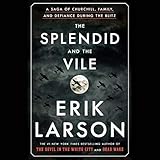
- Audible Audiobook
- Erik Larson (Author) - John Lee, Erik Larson (Narrators)
- English (Publication Language)
- 02/25/2020 (Publication Date) - Random House Audio (Publisher)
3. Immerse Yourself in the Blitz Experience:
- Action: Engage deeply with Larson’s descriptions of the air raids, civilian life under constant bombardment, and the efforts to maintain societal functions.
- What to Look For: The sensory details Larson employs—the sounds of sirens and explosions, the visual destruction, and the pervasive emotional impact. Understand the psychological strain on individuals and the collective spirit of London.
- Mistake to Avoid: Treating the Blitz merely as a historical backdrop. Larson uses it as a central element to powerfully illustrate the human cost and the extraordinary resilience of the era.
4. Trace the Personal Narratives:
- Action: Follow the individual stories of Churchill’s family members and his close associates as presented by Larson.
- What to Look For: How the war and the Blitz affected their personal lives, their relationships, and their specific contributions. Larson uses these individual narratives to humanize the monumental historical events.
- Mistake to Avoid: Skipping over sections detailing the lives of figures other than Churchill. These provide crucial emotional depth and a more complete understanding of the era’s pervasive impact.
5. Deconstruct the Title’s Thematic Duality:
- Action: Reflect on how Larson juxtaposes moments of British defiance, unity, and inspiration (the “splendid”) with the brutal destruction and terror of the war (the “vile”).
- What to Look For: Examples of courage and despair, hope and fear, order and chaos. The title serves as a thematic guide throughout the narrative.
- Mistake to Avoid: Interpreting the title as a simple, clear-cut dichotomy. Larson demonstrates how these elements were often intertwined and experienced concurrently by individuals.
6. Consider the Counterfactual Nature of History:
- Action: Contemplate the alternative paths Britain might have taken had leadership faltered or national morale collapsed under the sustained pressure.
- What to Look For: Larson implicitly and explicitly highlights the precariousness of the situation, suggesting that different choices or outcomes were very much possible.
- Mistake to Avoid: Assuming the ultimate outcome of the war was predetermined or inevitable. The book underscores the fragility of the situation and the critical role of leadership and public resolve.
Understanding Wright Morris by The Splendid And The Vile: A Narrative Analysis
Erik Larson’s approach in The Splendid and the Vile offers a unique perspective on historical narrative. While not a direct stylistic comparison to Wright Morris, Larson employs a similar principle of focused observation and deep immersion to capture the essence of a specific time and place. Morris, through his photography and prose, dissected the American landscape and its inhabitants with a keen eye for detail. Larson, using extensive archival research and narrative craft, illuminates the human experience within the grand sweep of World War II. The counter-intuitive angle is that despite the epic scale of his subject—the Battle of Britain—Larson’s technique often mirrors the intimate, observational power of a photographer like Morris, zeroing in on telling details and quiet moments that reveal character and context.
This book is not a traditional military history or a comprehensive biography of Churchill. Instead, it functions as a richly woven tapestry of the daily lives of those in positions of power and those on the front lines of civilian life during Britain’s most perilous year. Larson’s primary strength lies in his ability to transport the reader into the moment, allowing them to grasp the fear, the determination, and the unexpected flashes of humor that characterized life under the Blitz. He unflinchingly portrays the grim realities while simultaneously highlighting the indomitable spirit of London.
The Splendid and the Vile: A Thematic Framework
Larson structures his narrative to underscore the inherent duality of the era. The “splendid” represents moments of profound national unity, acts of courage, and Churchill’s galvanizing leadership. Conversely, the “vile” encompasses the widespread destruction wrought by the Luftwaffe, the pervasive fear, and the immense loss of life. This framework is not a simplistic good-versus-evil portrayal; rather, it is a nuanced exploration of the complex interplay between human resilience and overwhelming destruction.
BLOCKQUOTE_0
This representative quote from the book encapsulates Larson’s sophisticated thematic approach. He effectively demonstrates how, even amidst the darkest hours, moments of profound human connection and unwavering determination could emerge, showcasing the multifaceted nature of historical experience.
Common Myths About Wright Morris by The Splendid And The Vile
- Myth: The book is primarily a biography of Winston Churchill.
- Why it Matters: While Churchill is the central figure, The Splendid and the Vile focuses on his leadership during a specific, critical year (1940-1941) and the impact of the Blitz on his government and London. It’s not a comprehensive life story.
- Correction: Understand the book as a focused portrait of Churchill under extreme pressure, interwoven with the experiences of his inner circle and the broader civilian population.
- Myth: The narrative provides detailed military strategies and battle accounts.
- Why it Matters: Larson prioritizes the human element and the atmosphere of the Blitz. While military events are the backdrop, the focus is on the lived experience, not tactical analysis.
- Correction: Approach the book as narrative non-fiction that uses historical events to explore themes of leadership, resilience, and the human cost of war.
- Myth: The “splendid” and “vile” represent a clear moral or political divide.
- Why it Matters: Larson uses the title to explore the complex, often intertwined nature of courage and destruction, hope and despair. The lines are frequently blurred in the lived experience of war.
- Correction: Recognize the title as a thematic guide to the contrasts and complexities of the period, where moments of bravery and destruction often coexist.
Expert Tips for Engaging with The Splendid And The Vile
- Tip 1: Focus on the Sensory Details:
- Action: Actively look for and absorb Larson’s descriptive passages that appeal to the senses—the sounds of air raids, the smell of smoke, the feeling of cold in shelters.
- Common Mistake to Avoid: Skimming over descriptive passages in favor of plot progression. These details are crucial for understanding the immersive quality and the emotional weight of the Blitz experience.
- Tip 2: Track Individual Resilience:
- Action: Pay attention to how Larson portrays the coping mechanisms and personal fortitude of various individuals, not just Churchill, but also his family and staff.
- Common Mistake to Avoid: Overlooking the stories of secondary characters. Their individual struggles and triumphs are integral to Larson’s portrayal of collective resilience.
- Tip 3: Consider the “What Ifs”:
- Action: As you read, reflect on the precariousness of Britain’s situation and how different leadership decisions or shifts in public morale might have altered the course of events.
Quick Comparison
| Option | Best for | Pros | Watch out |
|---|---|---|---|
| Quick Answer | General use | The Splendid and the Vile offers a vivid, character-driven account of Winst… | Mistake to Avoid: Underestimating the genuine possibility of British defeat a… |
| Who This Is For | General use | The narrative excels at depicting the daily human experience and emotional to… | Mistake to Avoid: Focusing solely on the iconic speeches and overlooking the… |
| What to Check First | General use | This book is best suited for readers who enjoy narrative non-fiction that bri… | Mistake to Avoid: Treating the Blitz merely as a historical backdrop. Larson… |
| Step-by-Step Plan for Understanding Wright Morris by The Splendid And The Vile | General use | Readers seeking to understand the personal impact of leadership and the human… | Mistake to Avoid: Skipping over sections detailing the lives of figures other… |
Decision Rules
- If reliability is your top priority for Wright Morris by The Splendid And The Vile, choose the option with the strongest long-term track record and support.
- If value matters most, compare total ownership cost instead of headline price alone.
- If your use case is specific, prioritize fit-for-purpose features over generic ‘best overall’ claims.