Ellis Peters’ A Morbid Taste For Bones
Quick Answer
- A Morbid Taste For Bones by Ellis Peters is the foundational novel in the Brother Cadfael series, introducing a compelling protagonist and a meticulously crafted medieval setting.
- It is best suited for readers who appreciate character-driven historical mysteries with rich period detail and a focus on deductive reasoning.
- Those seeking fast-paced action, modern forensic techniques, or overt plot twists may find its deliberate pacing and intellectual approach less engaging.
Who This Is For
- Readers new to Ellis Peters and the Brother Cadfael series, looking for an introduction to the core characters and world.
- Enthusiasts of historical fiction and mysteries who value atmospheric settings, well-researched historical context, and nuanced character development.
What To Check First
- Series Context: Confirm this is the first book in the Brother Cadfael series. Its role as an introduction is critical for understanding Cadfael’s character and the series’ established tone.
- Historical Period: Note the setting of 1138 England during the Anarchy, a period of civil war. This turbulent backdrop is essential for understanding the characters’ motivations and the novel’s underlying tensions.
- Authorial Style: Be prepared for Ellis Peters’ deliberate and prose-rich writing style. It prioritizes atmosphere and character over rapid plot progression.
- Protagonist’s Background: Understand Brother Cadfael’s unique position as a monk with a past as a crusader and sailor, as this duality informs his investigative approach.
Step-by-Step Plan: Engaging with A Morbid Taste For Bones by Ellis Peters
This plan outlines a methodical approach to reading and analyzing A Morbid Taste For Bones by Ellis Peters, focusing on key elements for a thorough appreciation.
1. Establish the Setting: Read the initial chapters detailing the founding of the Benedictine priory at Shrewsbury.
- Action: Focus on the narrative’s depiction of the monastic community and its external environment.
- What to look for: The contrast between the monastic ideal and the political instability of 1138 England. Observe the initial interactions and power dynamics among the monks and local figures.
- Mistake to avoid: Underestimating the significance of the historical context. The Anarchy is not merely a backdrop but a direct influence on character actions and the narrative’s inherent tensions.
2. Identify the Catalyst: Focus on the discovery of the body and the immediate reactions and accusations that follow.
- Action: Note the initial presentation of the crime and the suspects.
- What to look for: The characters’ initial responses, the presented evidence, and how existing social structures within the abbey and community are impacted.
- Mistake to avoid: Dismissing early suspects as too obvious. Peters often employs misdirection, making initial impressions valuable for tracking narrative shifts.
3. Analyze Cadfael’s Approach: Observe how Brother Cadfael begins his investigation, utilizing his distinctive skills.
- Action: Pay attention to Cadfael’s investigative process.
- What to look for: Cadfael’s blend of monastic knowledge, his practical experience from his secular life, and his keen observation of human behavior.
- Mistake to avoid: Expecting modern forensic methods. Cadfael’s investigation is rooted in medieval logic, observation, and an understanding of human psychology.
4. Track Clues and Red Herrings: Follow the progression of evidence and the introduction of misleading information throughout the story.
- Action: Record significant pieces of evidence and potential misdirections.
- What to look for: Physical clues, witness testimonies, and any inconsistencies Cadfael identifies. Note how each piece of information affects existing hypotheses.
- Mistake to avoid: Becoming prematurely fixated on a single suspect. Peters deliberately introduces diversions to maintain suspense and challenge reader assumptions.
5. Examine Character Motivations: Scrutinize the underlying reasons driving each character’s actions and reactions.
- Action: Consider the personal histories and motivations of key characters.
- What to look for: The interplay of greed, fear, ambition, piety, and past grievances. Consider how personal histories shape present conduct.
- Mistake to avoid: Attributing all actions solely to malice. Characters in Peters’ work are often complex, driven by a spectrum of human emotions and circumstances.
6. Deconstruct Cadfael’s Deductions: Observe the process by which Cadfael synthesizes information to reach his conclusions.
- Action: Analyze Cadfael’s logical progression from evidence to conclusion.
- What to look for: The logical flow of Cadfael’s reasoning, moments of insight, and how he connects disparate details into a coherent narrative.
- Mistake to avoid: Underestimating Cadfael’s intellectual rigor. His solutions are the result of methodical deduction, not sudden intuitive leaps.
If you’re looking for a classic historical mystery to start with, this is the perfect entry point. It masterfully sets the stage for the entire Brother Cadfael series.
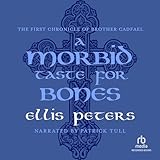
- Audible Audiobook
- Ellis Peters (Author) - Patrick Tull (Narrator)
- English (Publication Language)
- 12/30/2009 (Publication Date) - Recorded Books (Publisher)
7. Appreciate the Resolution: Understand the final revelation of the culprit and its implications for the characters and the community.
- Action: Evaluate the final solution and its thematic resonance.
- What to look for: The explanation of the crime, the nature of the justice dispensed, and the lasting impact on the abbey and its inhabitants.
- Mistake to avoid: Expecting a high-octane, violent climax. Peters’ resolutions tend to be more measured, focusing on moral and spiritual consequences.
A Morbid Taste For Bones by Ellis Peters: Thematic Depth and Reader Fit
A Morbid Taste For Bones by Ellis Peters serves as the foundational text for the acclaimed Brother Cadfael series, introducing readers to a world where historical authenticity, spiritual contemplation, and criminal investigation converge. Set in the tumultuous year of 1138, the novel immerses the reader in England’s Anarchy, a civil war that casts a long shadow over the characters’ lives and motivations. This historical backdrop is not merely a passive setting; it actively shapes the anxieties, allegiances, and pervasive sense of unease that underpins the narrative.
The central thematic concern of the novel is the intricate relationship between the sacred and the profane. The establishment of a new Benedictine priory in Shrewsbury is violently disrupted by a murder. Brother Cadfael, a monk whose past life as a crusader and sailor grants him a unique perspective, is compelled to investigate. His ability to bridge the secular and spiritual realms allows him to navigate the complexities of human sin, consequence, and divine judgment. The novel thus explores themes of sin, penance, and redemption, not only for the guilty party but for the entire community impacted by the crime.
Expert Tips for Engaging with the Novel
- Tip: Actively map character relationships and potential allegiances early on.
- Actionable Step: Keep a running list of characters, their stated relationships, and any observed tensions or alliances.
- Common Mistake to Avoid: Assuming initial character descriptions are definitive. Peters often layers complexity, and relationships evolve or reveal hidden depths.
- Tip: Pay close attention to Cadfael’s observations about human nature, not just physical clues.
- Actionable Step: Note Cadfael’s internal monologues or dialogues where he reflects on the motivations and psychological states of others.
- Common Mistake to Avoid: Over-focusing solely on the tangible evidence presented. Cadfael’s insights into human frailty are as critical to his deductions as physical clues.
- Tip: Understand that justice in this era is often intertwined with moral and spiritual reckoning.
- Actionable Step: Consider the consequences of the crime and its resolution not just in legal terms, but in terms of spiritual impact on the individuals and the community.
- Common Mistake to Avoid: Expecting a purely secular or modern concept of justice. The resolution often involves a blend of earthly consequences and divine or moral judgment.
Common Myths Debunked
- Myth: Brother Cadfael is a typical medieval detective.
- Correction: While he solves crimes, Cadfael’s methodology is distinct. He relies on observation, logic, and an understanding of human nature, informed by his unique past experiences, rather than formal investigative procedures or forensic science. His monastic vows also shape his approach, emphasizing contemplation and moral reasoning.
- Evidence: The text highlights Cadfael’s background as a crusader and sailor, emphasizing practical experience and worldly wisdom that he applies within his monastic context. His deductions are often based on understanding why people act as they do, rather than solely on physical evidence.
- Myth: The historical setting is merely a backdrop for the mystery.
- Correction: The political instability of the Anarchy is not incidental; it is a crucial element that influences character motivations, creates opportunities for conflict, and shapes the overall atmosphere of the novel.
- Evidence: The presence of warring factions and the general lawlessness of the period create an environment where suspicion and violence can flourish. Characters’ allegiances and fears are directly tied to the ongoing civil war, providing context for their actions and potential motives.
- Myth: The mystery in A Morbid Taste For Bones by Ellis Peters is straightforward.
- Correction: Ellis Peters is known for her subtle plotting and character development. The narrative employs misdirection and develops multiple plausible suspects, making the solution less obvious than initial appearances might suggest.
- Evidence: The novel introduces several characters with potential motives and opportunities, and the investigation unfolds through a series of revelations and reconsiderations, challenging the reader’s initial assumptions about who the culprit might be.
Contrarian Considerations: Limitations of A Morbid Taste For Bones
While A Morbid Taste For Bones by Ellis Peters is a seminal work in historical mystery, a contrarian viewpoint highlights potential limitations for certain readers. Its strengths in historical immersion and character depth can, for some, translate into drawbacks.
- Pacing Discrepancy: The deliberate, measured pace, integral to building atmosphere and character, can feel
Quick Comparison
| Option | Best for | Pros | Watch out |
|---|---|---|---|
| Quick Answer | General use | A Morbid Taste For Bones by Ellis Peters is the foundational novel in the Bro… | Mistake to avoid: Underestimating the significance of the historical context.… |
| Who This Is For | General use | It is best suited for readers who appreciate character-driven historical myst… | Mistake to avoid: Dismissing early suspects as too obvious. Peters often empl… |
| What To Check First | General use | Those seeking fast-paced action, modern forensic techniques, or overt plot tw… | Mistake to avoid: Expecting modern forensic methods. Cadfael’s investigation… |
| Step-by-Step Plan Engaging with A Morbid Taste For Bones by Ellis Peters | General use | Readers new to Ellis Peters and the Brother Cadfael series, looking for an in… | Mistake to avoid: Becoming prematurely fixated on a single suspect. Peters de… |
Decision Rules
- If reliability is your top priority for A Morbid Taste For Bones by Ellis Peters, choose the option with the strongest long-term track record and support.
- If value matters most, compare total ownership cost instead of headline price alone.
- If your use case is specific, prioritize fit-for-purpose features over generic ‘best overall’ claims.