Edwin Raymond’s An Inconvenient Cop: A Review
An Inconvenient Cop by Edwin Raymond: Quick Answer
- “An Inconvenient Cop” by Edwin Raymond offers a raw, unflinching look at the realities of police work, detailing personal experiences and systemic issues.
- Readers seeking a critical, insider perspective on law enforcement, with a focus on ethical dilemmas and departmental challenges, will find this book compelling.
- Those expecting a purely procedural crime narrative or a defense of policing may find its critical stance and personal focus less aligned with their expectations.
Who This Is For
- Readers interested in memoirs that explore the complexities and moral ambiguities of public service, particularly within law enforcement.
- Individuals seeking an unvarnished account of the challenges faced by officers on the ground, including the personal toll and systemic pressures.
What to Check First
Before diving into Edwin Raymond’s “An Inconvenient Cop,” consider these points:
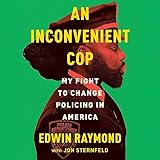
- Audible Audiobook
- Edwin Raymond (Author) - Edwin Raymond (Narrator)
- English (Publication Language)
- 10/17/2023 (Publication Date) - Penguin Audio (Publisher)
- Author’s Background: Raymond’s career as a police officer is central to the narrative. His specific experiences and the departments he served provide the context for his observations.
- Tone and Perspective: The book is a personal account, often critical, rather than a neutral sociological study or a typical crime procedural. Expect a strong authorial voice and subjective interpretations.
- Focus on Systemic Issues: While personal anecdotes drive the narrative, the book frequently delves into critiques of police culture, departmental policies, and the broader justice system.
- Potential for Discomfort: Raymond does not shy away from difficult topics, including violence, corruption, and personal struggles. Readers should be prepared for mature and potentially disturbing content.
An Inconvenient Cop by Edwin Raymond: A Deeper Dive
Edwin Raymond’s memoir, “An Inconvenient Cop,” presents a candid and often challenging perspective on his time in law enforcement. The book is less a collection of solved cases and more an exploration of the internal conflicts and external pressures faced by an officer who grappled with the ethical demands of his profession. Raymond’s narrative is marked by a commitment to honesty, even when that honesty exposes uncomfortable truths about himself and the institutions he served.
The strength of “An Inconvenient Cop” lies in its refusal to offer easy answers or idealized portrayals. Raymond details instances where he felt compelled to question orders, challenge departmental norms, and confront the moral compromises that he perceived within the system. This internal struggle is the core of the book, making it a valuable read for those interested in the human element of policing, beyond the badge and the uniform. The narrative highlights the psychological burden of the job and the isolation that can come from adhering to a personal code of ethics when it conflicts with prevailing practices.
Comparison Framework: An Inconvenient Cop vs. Similar Works
| Feature | An Inconvenient Cop (Edwin Raymond) | Blue (J.P. Smith) | The Autobiography of Malcolm X (Malcolm X, Alex Haley) |
|---|---|---|---|
| Primary Focus | Personal ethical struggles, systemic critique | Police patrol experiences, urban environment | Social justice, personal transformation, activism |
| Narrative Style | Reflective, critical memoir | Gritty, observational | Autobiographical, historical, philosophical |
| Key Themes | Integrity, disillusionment, justice | Duty, danger, community | Identity, oppression, redemption |
| Authorial Stance | Insider critique | Observational insider | Transformative insider |
| Reader Takeaway | Nuances of policing, moral costs | Ground-level reality of police work | Power of conviction, evolution of belief |
Step-by-Step Reading Plan for An Inconvenient Cop
To gain the most from Edwin Raymond’s “An Inconvenient Cop,” consider this approach:
1. Understand the Author’s Context: Begin by reading the introduction and any author’s notes to grasp Raymond’s professional background and motivations for writing.
- What to Look For: Information about his tenure, specific departments, and overarching purpose.
- Mistake: Skipping this context can lead to misinterpreting his criticisms as generalized complaints rather than specific observations rooted in experience.
2. Engage with Early Anecdotes: Pay close attention to the initial stories that establish Raymond’s early career and his initial perceptions of police work.
- What to Look For: Instances of idealism, early moral challenges, and the emergence of his critical perspective.
- Mistake: Dismissing early chapters as mere setup can mean missing the foundational experiences that shaped his later disillusionment.
3. Identify Recurring Ethical Dilemmas: As you read, note the patterns of ethical conflicts Raymond describes. These are central to the book’s thesis.
- What to Look For: Specific examples of pressure to conform, cover-ups, or situations where personal conscience clashed with duty.
- Mistake: Treating each anecdote in isolation overlooks the systemic critique Raymond is building.
4. Analyze Departmental Critiques: Observe how Raymond discusses specific policies, leadership, or cultural aspects of the police departments he was part of.
- What to Look For: Concrete examples of how rules or unwritten codes created problems or compromised justice.
- Mistake: Assuming Raymond’s criticisms are solely personal grievances without examining the systemic structures he points to.
5. Consider the Personal Toll: Recognize the narrative’s focus on the psychological and emotional impact of his experiences on Raymond.
- What to Look For: Descriptions of stress, doubt, isolation, and the personal cost of his adherence to his principles.
- Mistake: Focusing only on the external events and neglecting the internal, personal narrative that gives the book its emotional weight.
6. Reflect on the “Inconvenient” Aspect: Ponder why Raymond chose this title and what it signifies about his role and his perspective within law enforcement.
- What to Look For: Moments where his actions or beliefs made him a difficult figure for colleagues or superiors.
- Mistake: Not considering the title’s implications can lead to a superficial understanding of the author’s self-perception and his place within the narrative.
Common Mistakes When Reading “An Inconvenient Cop”
- Mistake: Expecting a traditional crime thriller or procedural.
- Why it Matters: This expectation can lead to disappointment if the reader is looking for fast-paced action and solved cases, rather than introspection and critique.
- Fix: Approach the book as a memoir and a critical examination of law enforcement, focusing on the author’s personal journey and observations.
- Mistake: Dismissing criticisms as mere complaining or personal bias.
- Why it Matters: Raymond’s points are often grounded in specific experiences and observations of systemic issues. Overlooking these can lead to a shallow understanding of his arguments.
- Fix: Actively look for the evidence and reasoning behind his critiques, connecting individual anecdotes to broader patterns he identifies.
- Mistake: Reading without considering the author’s intent.
- Why it Matters: Raymond aims to offer an insider’s perspective on the complexities and challenges of policing, not necessarily to provide solutions or defend all actions.
- Fix: Acknowledge that the book is a personal account and a commentary, meant to provoke thought rather than offer definitive answers.
- Mistake: Ignoring the emotional and psychological impact on the author.
- Why it Matters: The personal toll of his experiences is a significant theme. Neglecting this aspect limits the reader’s understanding of his journey and his perspective.
- Fix: Pay attention to how Raymond describes his own feelings, doubts, and the personal cost of his choices.
Decision Rules
- If reliability is your top priority for An Inconvenient Cop by Edwin Raymond, choose the option with the strongest long-term track record and support.
- If value matters most, compare total ownership cost instead of headline price alone.
- If your use case is specific, prioritize fit-for-purpose features over generic ‘best overall’ claims.
FAQ
- Q: Is “An Inconvenient Cop” a factual account or fiction?
- A: “An Inconvenient Cop” is presented as a memoir, a factual account of Edwin Raymond’s personal experiences and observations during his career as a police officer.
- Q: What is the primary message Edwin Raymond conveys in “An Inconvenient Cop”?
- A: Raymond’s primary message appears to be a critical examination of the realities of police work, highlighting the ethical compromises, systemic issues, and personal struggles faced by officers who strive for integrity within challenging environments.
- Q: Who would benefit most from reading “An Inconvenient Cop”?
- A: Individuals interested in in-depth, critical perspectives on law enforcement, police memoirs, and the complexities of public service would likely find this book beneficial. It is particularly relevant for those seeking an insider’s view on the moral and professional challenges within policing.