Edgar Allan Poe’s Tales and Poems: A Comprehensive Look
Edgar Allan Poe’s collected works remain a cornerstone of American literature, offering a dark, introspective journey into the human psyche. This compilation, often referred to as “The Complete Tales and Poems of Edgar Allan Poe by Edgar Allan Poe,” provides readers with an extensive catalog of his most celebrated and lesser-known writings. This guide aims to help you navigate the various editions and understand the enduring impact of Poe’s macabre genius.
The Complete Tales and Poems of Edgar Allan Poe by Edgar Allan Poe: Who This Is For
- Students and Academics: Those studying American Romanticism, Gothic literature, or Poe’s specific contributions to short fiction and poetry.
- Enthusiasts of Dark and Psychological Literature: Readers who appreciate intricate plots, atmospheric settings, and explorations of themes like death, loss, and madness.
What to Check First
Before acquiring “The Complete Tales and Poems of Edgar Allan Poe by Edgar Allan Poe,” consider these factors:
- Edition Completeness: Ensure the edition includes both his major tales and poems. Some abridged versions exist, which may omit significant works.
- Annotations and Introductions: Look for editions with scholarly introductions and annotations. These can provide valuable context, literary analysis, and historical background, enhancing comprehension.
- Textual Accuracy: Verify that the edition uses reliable source texts. Minor variations in Poe’s works can affect interpretation.
- Publisher Reputation: Reputable publishers like Penguin Classics, Oxford World’s Classics, or Norton often offer well-edited and authoritative editions.
Step-by-Step Plan for Engaging with Poe’s Works
1. Start with the Iconic Tales: Begin with “The Tell-Tale Heart,” “The Black Cat,” and “The Pit and the Pendulum.”
- Action: Read these stories to grasp Poe’s signature style of suspense, psychological horror, and unreliable narration.
- What to look for: The meticulous detail in describing internal states and the escalating sense of dread.
- Mistake to avoid: Rushing through the narrative without appreciating the slow build-up of atmosphere and character descent.
2. Explore the Detective Fiction: Move on to “The Murders in the Rue Morgue” and “The Purloined Letter.”
- Action: Analyze the introduction of C. Auguste Dupin and Poe’s foundational principles of detective reasoning.
- What to look for: The logical deduction and analytical prowess that set the stage for modern detective fiction.
- Mistake to avoid: Underestimating the intellectual rigor of these early mysteries, assuming they are merely simple puzzles.
3. Delve into the Poems: Read “The Raven,” “Annabel Lee,” and “Eldorado.”
- Action: Pay close attention to Poe’s use of rhythm, rhyme, and meter to create musicality and emotional impact.
- What to look for: The recurring themes of beauty, death, and the ineffable nature of loss.
- Mistake to avoid: Treating the poems as mere verse; recognize their structural complexity and thematic depth.
For an immersive experience into Poe’s dark and introspective world, consider a comprehensive collection. This edition offers an extensive catalog of his most celebrated and lesser-known writings, perfect for diving deep into his macabre genius.
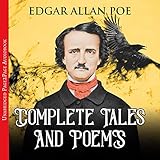
- Audible Audiobook
- Edgar Allan Poe (Author) - Roberto Scarlato (Narrator)
- English (Publication Language)
- 01/30/2020 (Publication Date) - Page2Page (Publisher)
4. Consider the Philosophical and Gothic: Examine tales like “Ligeia” and “The Fall of the House of Usher.”
- Action: Engage with the more complex philosophical underpinnings and elaborate Gothic settings.
- What to look for: Poe’s exploration of consciousness, memory, and the blurring lines between life and death.
- Mistake to avoid: Dismissing these as overly elaborate; they are crucial to understanding Poe’s mature style and concerns.
5. Read Critically with Context: Seek out scholarly introductions or critical essays.
- Action: Use supplemental material to understand Poe’s place in literary history and his biographical influences.
- What to look for: Insights into Poe’s innovations in short fiction and his enduring legacy.
- Mistake to avoid: Reading in a vacuum without considering the historical and literary context that shaped his work.
Understanding The Complete Tales and Poems of Edgar Allan Poe by Edgar Allan Poe
Poe’s body of work, often collected as “The Complete Tales and Poems of Edgar Allan Poe by Edgar Allan Poe,” is not monolithic. It spans early, somewhat derivative pieces to mature, profoundly influential narratives and verses. Understanding this evolution is key to appreciating his genius.
Strengths and Limitations of Poe’s Corpus
Poe’s greatest strength lies in his unparalleled ability to evoke atmosphere and explore the darker aspects of the human psyche. His innovations in the short story form, particularly in suspense and detective genres, are undeniable.
- Strength: Masterful command of language and rhythm, creating a unique, often hypnotic, reading experience.
- Example: The opening lines of “The Fall of the House of Usher” immediately establish a sense of oppressive gloom: “During the whole of a dull, dark, and soundless day in the autumn of the year, when the clouds hung oppressively low in the heavens, I had been passing alone, on horseback, through a singularly dreary tract of country…”
- Takeaway: Poe uses descriptive language not just to set a scene, but to imbue it with a palpable emotional weight.
- Limitation: Some critics point to a recurring tendency towards melodrama or an overly stylized emotionality that can, for some modern readers, strain credulity.
- Example: The extreme reactions and heightened language in tales like “The Masque of the Red Death” can feel performative if not approached with an understanding of the Gothic tradition.
- Takeaway: While effective for its time and genre, this intensity requires a reader willing to engage with its specific dramatic conventions.
Navigating Poe’s Literary Landscape
When approaching “The Complete Tales and Poems of Edgar Allan Poe by Edgar Allan Poe,” a structured reading plan can enhance comprehension and appreciation. Consider segmenting your reading based on thematic elements or genre.
Segmentation by Reader Objective
- For the Newcomer: Begin with the most accessible and widely recognized works.
- Recommended Reading: “The Tell-Tale Heart,” “The Raven,” “Annabel Lee.”
- Focus: Grasping Poe’s signature style, mood, and poetic musicality.
- For the Literary Analyst: Dive into the more complex and thematically dense pieces.
- Recommended Reading: “Ligeia,” “The Fall of the House of Usher,” “Eureka.”
- Focus: Examining Poe’s philosophical ideas, narrative techniques, and stylistic experimentation.
- For the Genre Explorer: Focus on Poe’s foundational contributions.
- Recommended Reading: “The Murders in the Rue Morgue” (detective), “The Pit and the Pendulum” (suspense/horror), “The Masque of the Red Death” (allegory).
- Focus: Understanding Poe’s role in shaping distinct literary genres.
Surprising Pick: “Lionizing”
While Poe is celebrated for his darker tales, “Lionizing” offers a satirical, albeit still sharp, critique of literary ambition and pretension.
- Why it’s Under-the-Radar: Often overshadowed by his more famous horror stories, this tale showcases Poe’s wit and his ability to dissect social and professional vanity with a scalpel.
- Reading Takeaway: It reveals a facet of Poe’s writing that is less about supernatural dread and more about the absurdities of human behavior within intellectual circles.
Common Myths about Edgar Allan Poe
- Myth: Poe was solely a writer of horror and the macabre.
- Rebuttal: While horror is his most recognized genre, Poe was also a pioneer of detective fiction (“The Murders in the Rue Morgue”), a gifted poet, a literary critic, and an essayist who explored science and philosophy (“Eureka”). His work demonstrates significant range beyond the purely terrifying.
- Myth: Poe’s writing is overly sentimental and melodramatic.
- Rebuttal: While his prose can be highly stylized and emotionally charged, this is often a deliberate artistic choice characteristic of the Romantic and Gothic movements. His intensity serves to explore extreme psychological states, a core tenet of his literary project, rather than mere sentimentality.
Expert Tips for Engaging with Poe
BLOCKQUOTE_0
This quote highlights Poe’s belief in the power of art and beauty, even within his darkest works. Understanding this aesthetic drive is crucial.
- Tip 1: Read Aloud.
- Actionable Step: Read Poe’s poems and prose aloud to fully appreciate their musicality, rhythm, and phonetic impact.
- Common Mistake to Avoid: Skimming the text silently, which can lead to missing the intricate sonic patterns Poe meticulously crafted.
- Tip 2: Focus on the Narrator.
- Actionable Step: Pay close attention to the reliability and psychological state of Poe’s narrators, who are often as central to the mystery or horror as the events themselves.
- Common Mistake to Avoid: Accepting the narrator’s account at face value without questioning their perceptions or motivations.
- Tip 3: Contextualize the Gothic.
- Actionable Step: Familiarize yourself with the conventions of Gothic literature to better understand the tropes, settings, and thematic concerns Poe employed and often subverted.
- Common Mistake to Avoid: Judging Poe’s work solely by modern literary standards without acknowledging its historical and genre context.
Quick Comparison
| Option | Best for | Pros | Watch out |
|---|---|---|---|
| Who This Is For | General use | Students and Academics: Those studying American Romanticism, Gothic literatur… | Mistake to avoid: Rushing through the narrative without appreciating the slow… |
| What to Check First | General use | Enthusiasts of Dark and Psychological Literature: Readers who appreciate intr… | Mistake to avoid: Underestimating the intellectual rigor of these early myste… |
| Step-by-Step Plan for Engaging with Poes Works | General use | Edition Completeness: Ensure the edition includes both his major tales and po… | Mistake to avoid: Treating the poems as mere verse; recognize their structura… |
| Understanding The Complete Tales and Poems of Edgar Allan Poe by Edgar Allan Poe | General use | Annotations and Introductions: Look for editions with scholarly introductions… | Mistake to avoid: Dismissing these as overly elaborate; they are crucial to u… |
Decision Rules
- If reliability is your top priority for The Complete Tales and Poems of Edgar Allan Poe by Edgar Allan Poe, choose the option with the strongest long-term track record and support.
- If value matters most, compare total ownership cost instead of headline price alone.
- If your use case is specific, prioritize fit-for-purpose features over generic ‘best overall’ claims.
FAQ
- Q: Which edition of “The Complete Tales and Poems of Edgar Allan Poe by Edgar Allan Poe” is considered the most definitive?
- A: Editions published by reputable academic presses, such as the Norton Critical Editions or Oxford World’s Classics, are generally considered authoritative due to their scholarly introductions, annotations, and adherence to textual accuracy. Always check reviews for specific editions.
- Q: Are Poe’s tales and poems suitable for younger readers?
- A: Poe’s works often deal with mature themes such as death, madness, and violence. While some poems might be accessible, many tales are best suited for mature young adults and adults who can process complex psychological and disturbing content.
- Q: What is the primary difference between Poe’s tales and his poems?
- A: His tales primarily focus on narrative, plot, character, and psychological exploration through prose, often in genres like horror, mystery, and satire. His poems emphasize rhythm, rhyme, musicality, and emotional expression through verse, frequently exploring themes of beauty, love, and loss.
- Q: How did Edgar Allan Poe influence future literature?
- A: Poe is credited with inventing the modern detective story, popularizing the psychological horror genre, and significantly impacting Symbolist poetry. His emphasis on atmosphere, mood, and the exploration of the subconscious has resonated with countless writers across various genres.
How this list was curated
- We selected titles using clarity, practical usefulness, and long-term relevance.
- We balanced foundational picks with specialized options for different reader goals.
Structured Pick Cards
Strengths and Limitations of Poe’s Corpus
- Best for: readers who want practical takeaways and clear progression.
- Skip if: you need only advanced theory with little implementation guidance.
- Trade-off: stronger depth can mean a slower pace in some chapters.
Segmentation by Reader Objective
- Best for: readers who want practical takeaways and clear progression.
- Skip if: you need only advanced theory with little implementation guidance.
- Trade-off: stronger depth can mean a slower pace in some chapters.
Surprising Pick: “Lionizing”
- Best for: readers who want practical takeaways and clear progression.
- Skip if: you need only advanced theory with little implementation guidance.
- Trade-off: stronger depth can mean a slower pace in some chapters.
By Reader Level
- Beginner: start with one fundamentals pick and one habit-building pick.
- Intermediate: prioritize books with frameworks you can apply weekly.
- Advanced: choose deeper titles focused on systems and decision quality.