Dr. Seuss’s The Lorax: Environmental Lessons
Quick Answer
- The Lorax by Dr. Seuss is a cautionary tale about industrial exploitation of natural resources and the consequences for the environment.
- It emphasizes the importance of environmental stewardship and the responsibility of individuals to speak for those who cannot, like nature.
- The book serves as a foundational text for understanding ecological interdependence and the impact of unchecked greed.
Who This Is For
- Readers seeking to introduce children to environmental themes through engaging storytelling.
- Individuals interested in the origins of environmental literature and its enduring impact on public consciousness.
What to Check First
- Author’s Intent: Dr. Seuss (Theodor Geisel) wrote The Lorax in 1971, a period of growing environmental awareness. His intent was to warn against pollution and corporate irresponsibility.
- Target Audience: While a children’s book, its themes resonate with adults, making it a valuable read for families and educational settings.
- Key Characters: Understand the roles of the Once-ler (representing industry), the Lorax (representing nature’s voice), and the boy (representing future hope and action).
- Narrative Structure: The story is framed as a recollection by the Once-ler to a young boy, highlighting the progression from a pristine environment to its destruction.
Step-by-Step Plan: Understanding The Lorax by Dr. Seuss
1. Read the Book: Begin by reading The Lorax by Dr. Seuss from cover to cover.
- What to Look For: Pay attention to the descriptions of the natural environment before and after the arrival of the Once-ler’s industry. Note the visual contrast and the escalating pollution.
- Mistake to Avoid: Skimming the text or focusing only on the rhyme and rhythm without absorbing the narrative’s environmental message.
2. Identify the Once-ler’s Motivation: Analyze the Once-ler’s initial actions and his justification for them.
- What to Look For: Observe how the Once-ler starts small, driven by a desire to create “Thneeds,” and how this grows into a massive industrial operation driven by profit and demand.
- Mistake to Avoid: Attributing the Once-ler’s actions solely to malice rather than the seductive pull of economic expansion and consumerism.
3. Recognize the Lorax’s Role: Understand the significance of the Lorax’s character and his pronouncements.
- What to Look For: Note the Lorax’s repeated warnings: “I speak for the trees, for the trees have no tongues.” Observe his attempts to intervene and his eventual departure.
- Mistake to Avoid: Dismissing the Lorax as a mere fictional character; his voice represents the silenced natural world.
4. Analyze the “Thneed” Concept: Consider what the “Thneed” symbolizes in the context of the story.
- What to Look For: A “Thneed” is a versatile but ultimately unnecessary product. It represents the manufactured demand for goods, often at a high environmental cost.
- Mistake to Avoid: Focusing on the literal item rather than its symbolic representation of consumer culture and unsustainable production.
5. Examine the Environmental Degradation: Trace the physical impact of the Once-ler’s industry on the landscape.
- What to Look For: The cutting down of Truffula Trees, the pollution of the air and water, and the disappearance of the Swomee-Swans and Brown Bar-ba-loots.
- Mistake to Avoid: Underestimating the direct, causal link between industrial activity and ecological collapse depicted in the book.
To truly grasp the environmental message, start by reading the classic tale, The Lorax by Dr. Seuss. It’s a powerful way to introduce these important themes.
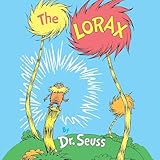
- Audible Audiobook
- Dr. Seuss (Author) - Ted Danson (Narrator)
- English (Publication Language)
- 06/27/2006 (Publication Date) - Listening Library (Publisher)
6. Interpret the Ending: Understand the message conveyed by the Once-ler’s final state and the gift he gives the boy.
- What to Look For: The Once-ler lives in a desolate environment, surrounded by the remnants of his industry. The “last Truffula Seed” represents a fragile hope for renewal.
- Mistake to Avoid: Believing the story offers a simple solution; the seed requires conscious effort and responsible action to grow.
7. Consider the Counter-Narrative: Reflect on the book’s enduring relevance and potential criticisms.
- What to Look For: While celebrated for its environmental message, some critiques suggest it oversimplifies complex industrial processes or assigns blame too monolithically.
- Mistake to Avoid: Accepting the book’s message as the sole perspective on environmental issues without considering broader economic and social factors.
The Lorax by Dr. Seuss: Environmental Themes and Interpretation
The Lorax by Dr. Seuss presents a potent, albeit simplified, narrative of environmental exploitation. The story’s strength lies in its direct and accessible language, making complex ecological concepts understandable for young readers. The vibrant illustrations, characteristic of Dr. Seuss’s style, visually reinforce the devastating impact of the Once-ler’s factory on the once-lush landscape. The central theme is the vital need for environmental advocacy. The Lorax, a creature who “speaks for the trees,” embodies the voice of nature, a voice that is often ignored or silenced by industrial progress driven by profit. The story powerfully illustrates the concept of ecological interdependence; the fate of the Swomee-Swans and Brown Bar-ba-loots is directly tied to the health of the Truffula Trees, highlighting how the destruction of one element impacts the entire ecosystem.
However, a contrarian perspective suggests that the book, while well-intentioned, presents a somewhat binary view of industry versus nature. The Once-ler is portrayed as a singular antagonist, and the narrative doesn’t delve into the complexities of economic necessity, job creation, or the potential for sustainable industrial practices. This can lead to an oversimplified understanding where all industry is inherently destructive. The story’s enduring power comes from its stark depiction of consequences, serving as a memorable lesson on the importance of speaking up for environmental protection, even when it’s difficult. The final act of the Once-ler entrusting the last seed to the boy is a crucial turning point, shifting the onus from passive observation to active responsibility for the future.
Common Mistakes
- Myth: The Lorax is just a children’s story with no real-world application.
- Why it Matters: This dismisses the book’s significant role in shaping early environmental consciousness and its continued relevance in discussions about sustainability and corporate accountability.
- Fix: Recognize that the allegorical nature of the story allows for deep interpretation of ecological principles and human impact on the environment.
- Myth: The Once-ler is inherently evil.
- Why it Matters: This overlooks the more nuanced critique of unchecked capitalism and consumerism. The Once-ler’s actions stem from a desire for progress and profit, which can become destructive when divorced from ethical considerations.
- Fix: Understand the Once-ler as a representation of industrial ambition and the seductive nature of economic growth, rather than a purely malevolent figure.
- Myth: The story offers a clear-cut solution to environmental problems.
- Why it Matters: The ending with the last seed is a symbol of hope, not a guaranteed fix. It implies that restoration requires deliberate effort and change in behavior.
- Fix: Interpret the last seed as a call to action and a reminder that environmental recovery is an ongoing process demanding vigilance and responsible stewardship.
Expert Tips for Engaging with The Lorax
1. Focus on the “Why” of Consumption:
- Actionable Step: When discussing “Thneeds,” ask children or yourself: “Why do we buy things? Do we really need them, or do we just want them?”
- Common Mistake to Avoid: Accepting the demand for products at face value without questioning their necessity or the resources required to produce them.
2. Identify the “Lorax” in Your Community:
- Actionable Step: Discuss who or what in your local environment needs a voice. This could be a local park, a body of water, or even specific animal habitats.
- Common Mistake to Avoid: Thinking environmental advocacy is only for large organizations or governments; individual voices and local actions are crucial.
3. Analyze the Consequences of Inaction:
- Actionable Step: Trace the chain of events in the book from the first Truffula Tree cut to the departure of the animals. Discuss how each step led to the next.
- Common Mistake to Avoid: Focusing only on the initial pollution without considering the cascading effects on the entire ecosystem and its inhabitants.
BLOCKQUOTE_0
Quick Comparison
| Option | Best for | Pros | Watch out |
|---|---|---|---|
| Quick Answer | General use | The Lorax by Dr. Seuss is a cautionary tale about industrial exploitation of… | Mistake to Avoid: Skimming the text or focusing only on the rhyme and rhythm… |
| Who This Is For | General use | It emphasizes the importance of environmental stewardship and the responsibil… | Mistake to Avoid: Attributing the Once-ler’s actions solely to malice rather… |
| What to Check First | General use | The book serves as a foundational text for understanding ecological interdepe… | Mistake to Avoid: Dismissing the Lorax as a mere fictional character; his voi… |
| Step-by-Step Plan Understanding The Lorax by Dr Seuss | General use | Readers seeking to introduce children to environmental themes through engagin… | Mistake to Avoid: Focusing on the literal item rather than its symbolic repre… |
Decision Rules
- If reliability is your top priority for The Lorax by Dr. Seuss, choose the option with the strongest long-term track record and support.
- If value matters most, compare total ownership cost instead of headline price alone.
- If your use case is specific, prioritize fit-for-purpose features over generic ‘best overall’ claims.
FAQ
- Q: Is The Lorax appropriate for very young children?
- A: While the rhyming text is engaging, the themes of environmental destruction can be upsetting. It’s best suited for children aged 5 and up, with adult guidance to discuss the concepts.
- Q: What is the main environmental lesson of The Lorax?
- A: The primary lesson is about the consequences of unchecked industrialization and consumerism on the environment, and the responsibility humans have to protect nature.
- Q: How does the book encourage action?
- A: The book culminates with the Once-ler giving the last Truffula Seed to a boy, symbolizing