Donald Miller’s Blue Like Jazz: Faith and Life
Quick Answer
- Blue Like Jazz by Donald Miller is a collection of essays exploring faith, doubt, and the human experience through a blend of personal narrative and philosophical reflection.
- It is best suited for readers who appreciate introspective, non-dogmatic explorations of spirituality and are comfortable with ambiguity in discussions of faith.
- Readers should approach the book as a personal journey of questioning and discovery, rather than a prescriptive guide to theological doctrine.
Who This Is For
- Individuals grappling with existential questions and the complexities of faith in a modern context.
- Readers who resonate with honest, narrative-driven explorations of spirituality and are seeking relatable perspectives on doubt and belief.
What to Check First
- Author’s Voice: Donald Miller writes with a distinctive personal and often conversational tone. If you prefer formal academic prose, this style may require adjustment.
- Genre Blend: The book is not a systematic theological text but a fusion of memoir, philosophy, and personal essay. Understanding this blend is key to appreciating its unique approach.
- Core Themes: Key themes include the nature of God, the struggle with doubt, the search for meaning, and the intersection of spiritual life with everyday reality.
- Miller’s Intent: Miller aims to explore faith not as a set of answers but as a journey of questions and experiences.
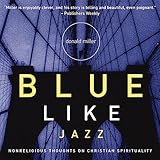
- Audible Audiobook
- Donald Miller (Author) - Donald Miller (Narrator)
- English (Publication Language)
- 04/02/2007 (Publication Date) - Harper Horizon (Publisher)
Step-by-Step Plan for Engaging with Blue Like Jazz by Donald Miller
1. Understand the “Jazz” Metaphor: Begin by considering the title’s implication.
- Action: Reflect on the characteristics of jazz music—improvisation, spontaneity, emotional depth, and the interplay of individual and collective expression.
- What to look for: How these jazz elements mirror Miller’s portrayal of faith as something dynamic, personal, and not always perfectly structured.
- Mistake to avoid: Dismissing the title as a mere stylistic choice, rather than recognizing it as a central metaphor for the book’s exploration of faith.
2. Read with an Open Mind: Approach Miller’s reflections without rigid expectations of definitive answers.
- Action: Allow Miller’s personal anecdotes and philosophical musings to unfold without immediately trying to categorize them within a strict theological framework.
- What to look for: The honesty in Miller’s own struggles with doubt and his attempts to reconcile faith with lived experience.
- Mistake to avoid: Expecting a systematic theological argument or a prescriptive guide to belief, which is not the book’s primary aim.
3. Connect Anecdotes to Ideas: Pay close attention to the personal stories Miller shares.
- Action: Identify how each narrative serves as a springboard for his reflections on faith, God, or the human behavior.
- What to look for: The specific details within the stories that illustrate broader spiritual or philosophical points.
- Mistake to avoid: Skimming over the narrative sections, viewing them as mere filler rather than integral components of his thought process.
4. Engage with the Questions: Miller frequently poses questions, both explicitly and implicitly.
- Action: Pause to consider the questions Miller raises and how they resonate with your own thinking about faith and life.
- What to look for: The open-ended nature of his inquiries, which invite personal contemplation rather than providing immediate solutions.
- Mistake to avoid: Becoming frustrated by the lack of concrete answers, and instead, embrace the value of the questioning itself.
5. Acknowledge the Counter-Narrative: Notice where Miller challenges conventional religious perspectives.
- Action: Identify instances where he critiques dogma, institutional religion, or rigid interpretations of faith.
- What to look for: His attempts to find God or meaning in unconventional places or through less traditional means.
- Mistake to avoid: Resisting Miller’s unconventional approaches due to a strong adherence to traditional religious frameworks, which might limit engagement with his insights.
6. Consider the “Blue” Element: Reflect on the emotional and aesthetic implications of the color blue.
- Action: Think about the associations with the color blue—melancholy, depth, vastness, and sometimes, a sense of longing.
- What to look for: How these connotations might inform Miller’s exploration of the sometimes somber or complex aspects of faith and doubt.
- Mistake to avoid: Overlooking the symbolic weight of the color in the title, which contributes to the book’s mood and thematic exploration.
Understanding Blue Like Jazz by Donald Miller: A Contrarian Perspective
Many readers approach Blue Like Jazz expecting a straightforward affirmation of faith, perhaps even a conversion narrative. However, a more critical lens reveals that Donald Miller’s work is more about the process of faith—its inherent messiness, its reliance on personal experience, and its uncomfortable relationship with doubt—than a definitive statement of belief. The book’s true strength, and its potential point of contention, lies in its validation of ambiguity and its challenge to the notion that faith must be built on absolute certainty. Miller doesn’t offer a polished theological system; he offers a window into a lived, often conflicted, spiritual journey.
The Myth of Definitive Answers in Blue Like Jazz
A common misconception is that Donald Miller provides concrete answers to life’s most profound spiritual questions within Blue Like Jazz.
- Myth: The book offers clear, irrefutable answers to theological questions and provides a roadmap for achieving spiritual certainty.
- Evidence: Miller’s writing is characterized by personal anecdotes, introspective musings, and open-ended questions. For instance, his discussions on the nature of God often explore paradox and mystery rather than offer definitive theological pronouncements. He frequently uses phrases that suggest exploration rather than conclusion, such as “I’ve always wondered…” or “It seems to me…”.
- Correction: Blue Like Jazz is fundamentally an exploration of faith and doubt, emphasizing the journey and the questions more than the destination. It validates the experience of seeking and wrestling with uncertainty, rather than providing a closed system of belief.
Expert Tips for Engaging with Blue Like Jazz
- Embrace the Anecdotal Foundation: Miller’s theological points are deeply rooted in his personal stories.
- Actionable Step: When reading an essay, actively identify the core personal experience Miller describes and then consider how it serves as the basis for his subsequent reflections. Ask yourself, “What specific event or observation is Miller using to illustrate his point about God, doubt, or meaning?”
- Common Mistake to Avoid: Treating the personal stories as mere literary embellishments, thereby missing the foundational connection to his theological explorations.
- Approach with a “Jazz” Mindset: The title is a crucial guide to interpreting the book’s content.
- Actionable Step: As you read, consider how the principles of jazz—improvisation, emotional expression, spontaneity, and the blend of individual freedom with communal harmony—apply to Miller’s depiction of faith. Look for moments where faith is presented as fluid and responsive, rather than static and rigid.
- Common Mistake to Avoid: Reading the book as if it were a traditional, structured theological text, which misses the improvisational and experiential nature Miller emphasizes.
- Recognize the Value of Doubt: Miller integrates doubt not as an enemy of faith, but as a potential component of it.
- Actionable Step: When Miller expresses doubt or questions traditional interpretations, view these moments not as a sign of weak faith, but as an honest engagement with complex realities. Reflect on how doubt can lead to deeper understanding or a more authentic faith.
- Common Mistake to Avoid: Dismissing Miller’s expressions of doubt as a sign that he lacks true faith, instead of recognizing it as a valid part of a nuanced spiritual journey.
Common Mistakes
- Mistake: Expecting a systematic theological treatise.
- Why it matters: Miller’s approach is narrative and reflective, not academic or dogmatic. This expectation can lead to disappointment if the reader seeks structured doctrine.
- Fix: Approach the book as a collection of personal explorations and philosophical musings, appreciating the journey of thought rather than a definitive answer.
- Mistake: Dismissing the personal stories as mere filler.
- Why it matters: The anecdotes are the bedrock upon which Miller builds his insights. They provide the context and emotional resonance for his theological explorations.
- Fix: Actively connect the narrative elements to the broader themes and questions Miller raises, recognizing them as integral to his message.
- Mistake: Reading with a closed mind to ambiguity.
- Why it matters: Blue Like Jazz embraces uncertainty and questions. A rigid perspective may hinder engagement with Miller’s nuanced exploration of faith.
- Fix: Be open to the idea that faith can coexist with doubt and that not all questions have simple answers.
- Mistake: Overlooking the “jazz” metaphor’s significance.
- Why it matters: The title is central to understanding Miller’s approach to faith as dynamic, improvisational, and deeply human.
- Fix: Consider how the characteristics of jazz music inform Miller’s portrayal of spirituality and life.
Decision Rules
- If reliability is your top priority for Blue Like Jazz by Donald Miller, choose the option with the strongest long-term track record and support.
- If value matters most, compare total ownership cost instead of headline price alone.
- If your use case is specific, prioritize fit-for-purpose features over generic ‘best overall’ claims.
Quick Comparison
| Option | Best for | Pros | Watch out |
|---|---|---|---|
| Quick Answer | General use | Blue Like Jazz by Donald Miller is a collection of essays exploring faith,… | Mistake to avoid: Dismissing the title as a mere stylistic choice, rather tha… |
| Who This Is For | General use | It is best suited for readers who appreciate introspective, non-dogmatic expl… | Mistake to avoid: Expecting a systematic theological argument or a prescripti… |
| What to Check First | General use | Readers should approach the book as a personal journey of questioning and dis… | Mistake to avoid: Skimming over the narrative sections, viewing them as mere… |
| Step-by-Step Plan for Engaging with Blue Like Jazz by Donald Miller | General use | Individuals grappling with existential questions and the complexities of fait… | Mistake to avoid: Becoming frustrated by the lack of concrete answers, and in… |
FAQ
- Q: Is Blue Like Jazz a book for Christians only?
- A: While written from a Christian perspective, its exploration of doubt, meaning, and the human behavior makes it relatable and thought-provoking for readers of various backgrounds or none.
- Q: What is Donald Miller’s background?
- A: Donald Miller is an American author known for