Denis Johnson’s Short Story Collection ‘The Largesse of the Sea Maiden
Denis Johnson’s posthumous collection, The Largesse of the Sea Maiden, offers a potent distillation of his late-career concerns: the elusive nature of grace, the persistent human search for meaning, and the profound spiritual currents that flow beneath lives marked by hardship. This is literary fiction that demands patience and rewards close attention, best suited for readers who appreciate lyrical prose grappling with existential and theological questions.
The Largesse of the Sea Maiden by Denis Johnson: Quick Answer
- This collection showcases Johnson’s signature style: a stark, often beautiful rendering of marginalized lives seeking transcendence.
- Readers should prepare for prose that is both deeply spiritual and unflinchingly observant of human frailty.
- A common misstep is to perceive the pervasive bleakness as nihilism, thereby missing the subtle manifestations of “largesse” or grace.
Who This Is For
- Readers already familiar with Denis Johnson’s work, particularly Jesus’ Son, who wish to engage with his mature thematic explorations.
- Those interested in literary fiction that delves into complex questions of faith, doubt, and redemption through characters navigating difficult circumstances.
What to Check First
- Authorial Context: Johnson’s late work often grapples with mortality and the nature of spiritual experience.
- Thematic Precedents: Familiarize yourself with Johnson’s recurring interest in addiction, broken systems, and the search for the divine in unconventional spaces.
- Prose Style: Recognize Johnson’s unique ability to elevate colloquial language into resonant, almost sacred, pronouncements.
- Collection Structure: Note that the stories, while thematically linked, operate with individual narrative integrity.
Step-by-Step Plan: Navigating The Largesse of the Sea Maiden
This structured approach aims to help readers engage deeply with the nuances of Johnson’s collection.
1. Initial Immersion: Read the stories for their immediate emotional and atmospheric impact.
- Action: Focus on the visceral feeling each story evokes.
- What to look for: Dominant moods, recurring sensory details, and the immediate power of Johnson’s language.
- Mistake to avoid: Prioritizing plot over atmosphere; the stories’ strength lies in their feeling and resonance.
2. Pattern Recognition: Reread with an eye for recurring motifs and symbols.
- Action: Identify repeated images or concepts across the stories.
- What to look for: Images of water, light, brokenness, and figures who are searching or lost.
- Mistake to avoid: Assigning rigid, singular meanings to symbols; Johnson’s usage is often layered and suggestive.
3. Character Analysis: Examine the internal lives and motivations of the protagonists.
- Action: Delve into what drives the characters.
- What to look for: Their desires, their perceived flaws, and their often-unorthodox paths toward understanding or solace.
- Mistake to avoid: Applying conventional moral judgments; Johnson’s characters operate within their own complex, often compromised, ethical frameworks.
4. Dichotomy Exploration: Investigate the interplay between spiritual yearning and material hardship.
- Action: Observe how grace and suffering coexist.
- What to look for: Moments of unexpected beauty or human connection juxtaposed with stark depictions of pain and frailty.
- Mistake to avoid: Focusing exclusively on the bleakness; the title implies a subtle, often hidden, generosity.
For those seeking profound literary fiction that grapples with existential and theological questions, Denis Johnson’s posthumous collection, The Largesse of the Sea Maiden, is an essential read. It offers a potent distillation of his late-career concerns.
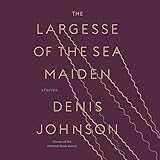
- Audible Audiobook
- Denis Johnson (Author) - Nick Offerman, Michael Shannon, Dermot Mulroney (Narrators)
- English (Publication Language)
- 01/16/2018 (Publication Date) - Random House Audio (Publisher)
5. Prose Appreciation: Pay close attention to Johnson’s sentence construction and word choice.
- Action: Notice the deliberate artistry in his language.
- What to look for: How his prose can evoke both beauty and unease, often within the same sentence.
- Mistake to avoid: Underestimating the careful control and intentionality of the language; it is deeply crafted.
6. Embrace Ambiguity: Accept that not all narrative threads will be neatly resolved.
- Action: Be comfortable with open endings and unresolved conflicts.
- What to look for: Characters who remain in states of flux and questions that linger after reading.
- Mistake to avoid: Demanding traditional closure; the stories gain power from their interpretive space.
7. Contextualize within Oeuvre: Consider the collection in relation to Johnson’s broader body of work.
- Action: See how these stories fit into his artistic development.
- What to look for: Echoes of previous themes and a sense of mature reflection on existence.
- Mistake to avoid: Treating the collection in isolation; it reflects an evolving artistic vision.
Common Mistakes Readers Make with The Largesse of the Sea Maiden
Several common misinterpretations can hinder a full appreciation of this collection. Understanding these can lead to a more rewarding reading experience.
- Mistake: Dismissing the collection as purely nihilistic.
- Why it matters: This overlooks Johnson’s consistent engagement with spiritual yearning and the subtle, often overlooked, presence of grace.
- Fix: Actively look for moments of unexpected kindness, beauty, or profound human connection, even within bleak settings.
- Mistake: Expecting straightforward narrative arcs and conventional resolutions.
- Why it matters: Johnson’s stories prioritize atmosphere, character interiority, and thematic resonance over traditional plot structures, often leaving characters in states of uncertainty.
- Fix: Approach the stories with an appreciation for their lyrical qualities and character studies, allowing ambiguity to enhance their impact.
- Mistake: Judging characters by conventional moral standards.
- Why it matters: Johnson’s characters are frequently flawed, broken, or on the fringes, operating within their own complex moral universes.
- Fix: Strive for empathy and understanding of their circumstances and motivations rather than immediate condemnation.
- Mistake: Underestimating the deliberate craft of Johnson’s prose.
- Why it matters: The deceptively simple, often colloquial language is meticulously constructed to convey deep emotional and spiritual truths.
- Fix: Read sentences aloud to appreciate their rhythm and sonic qualities, paying close attention to precise word choices and their implications.
The Largesse of the Sea Maiden by Denis Johnson: A Deeper Dive
Denis Johnson’s The Largesse of the Sea Maiden stands as a powerful testament to his late-career artistic vision, offering a collection of stories that are both deeply personal and universally resonant. Johnson, a master craftsman of prose, continues his exploration of the human spirit grappling with faith, doubt, and the often-unseen currents of grace that run through lives marked by hardship and spiritual searching. The title itself, “The Largesse of the Sea Maiden,” evokes a sense of benevolent, albeit mysterious, provision—a generosity that may be found in the most unexpected places, even amidst the “sea” of life’s overwhelming complexities and sorrows.
Johnson’s characters are often those who inhabit the margins of society: addicts, ex-convicts, the spiritually adrift. Yet, within their struggles, Johnson finds moments of profound beauty and startling clarity. This is not sentimental spirituality; it is a hard-won understanding that grace can manifest in the starkest of circumstances. For example, in stories like “Strangers,” the mundane is pierced by the extraordinary, challenging the reader’s perception of reality and faith. The prose mirrors this duality: often spare and direct, it can suddenly bloom into passages of exquisite lyricism, reflecting the inherent beauty that persists even in the face of decay.
Thematic Resonance in The Largesse of the Sea Maiden
The thematic core of The Largesse of the Sea Maiden is the persistent human quest for meaning and redemption. Johnson consistently explores the tension between the material world and the spiritual realm, suggesting that true grace is often found not in grand pronouncements but in quiet, overlooked moments. His characters, frequently wrestling with addiction, loss, or a deep-seated spiritual hunger, are the recipients of this “largesse,” whether they recognize it or not. The collection’s recurring imagery of water—sometimes cleansing, sometimes destructive—serves as a potent metaphor for the characters’ internal states and their relationship with the unknown, reflecting the vast, often chaotic forces shaping human lives.
Strengths and Limitations of the Collection
The primary strength of The Largesse of the Sea Maiden is Johnson’s distinctive prose style. His sentences possess a hypnotic rhythm, capable of conveying profound emotional weight with an apparent simplicity. He demonstrates an unparalleled gift for juxtaposing the sacred and the profane, finding moments of grace in the most unlikely circumstances.
A potential limitation for some readers lies in the collection’s thematic density and Johnson’s deliberate avoidance of conventional narrative closure. The stories often leave characters in unresolved states, reflecting the complexities of life rather than offering neat solutions. This can lead to a feeling of unease or even frustration for those who prefer more definitive endings. The stories demand a reader willing to sit with ambiguity and to find meaning in the lingering questions rather than in explicit answers.
Expert Tips for Reading Denis Johnson
BLOCKQUOTE_0
- Tip: Seek out the “whispers of grace.”
- Actionable Step: Actively scan for moments of quiet beauty, unexpected kindness, or profound connection, even in the most seemingly bleak or degraded settings.
- Common Mistake to Avoid: Overlooking these subtle instances by focusing solely on the overt hardship or moral failings of the characters.
- Tip: Embrace the power of ambiguity.
- Actionable Step: Allow narrative questions to remain unanswered and characters to exist in states of uncertainty, recognizing this as a reflection of lived experience.
- Common Mistake to Avoid: Becoming frustrated by a lack of explicit resolution, which can lead to dismissing the story’s deeper thematic resonance.
- Tip: Read for sonic and
Quick Comparison
| Option | Best for | Pros | Watch out |
|---|---|---|---|
| The Largesse of the Sea Maiden by Denis Johnson Quick Answer | General use | This collection showcases Johnson’s signature style: a stark, often beautiful… | Mistake to avoid: Prioritizing plot over atmosphere; the stories’ strength li… |
| Who This Is For | General use | Readers should prepare for prose that is both deeply spiritual and unflinchin… | Mistake to avoid: Assigning rigid, singular meanings to symbols; Johnson’s us… |
| What to Check First | General use | A common misstep is to perceive the pervasive bleakness as nihilism, thereby… | Mistake to avoid: Applying conventional moral judgments; Johnson’s characters… |
| Step-by-Step Plan Navigating The Largesse of the Sea Maiden | General use | Readers already familiar with Denis Johnson’s work, particularly Jesus’ Son… | Mistake to avoid: Focusing exclusively on the bleakness; the title implies a… |
Decision Rules
- If reliability is your top priority for The Largesse of the Sea Maiden by Denis Johnson, choose the option with the strongest long-term track record and support.
- If value matters most, compare total ownership cost instead of headline price alone.
- If your use case is specific, prioritize fit-for-purpose features over generic ‘best overall’ claims.