Dave Eggers’ The Monk Of Mokha: A True Story
The Monk Of Mokha by Dave Eggers: Quick Answer
- The Monk of Mokha by Dave Eggers is a compelling narrative about Yemeni coffee’s history and its protagonist’s quest to revive it.
- It offers a rich exploration of culture, resilience, and the global coffee trade, suitable for readers interested in history, food, and human perseverance.
- While engaging, the book’s extensive historical detail may be overwhelming for those seeking a purely plot-driven experience.
Who This Is For
- Readers who appreciate meticulously researched non-fiction that delves into the cultural significance of food and drink.
- Individuals interested in the complexities of global trade, political upheaval, and the human stories behind them, particularly concerning Yemen.
What to Check First
- Historical Depth: Assess your tolerance for detailed historical accounts. The book is rich in historical context, which is a strength but can also be dense.
- Pacing Preference: If you prefer fast-paced action, this book’s deliberate unfolding of events might not align with your typical reading habits.
- Interest in Coffee: A genuine interest in the origins and journey of coffee will significantly enhance your engagement with the narrative.
- Author’s Previous Work: Familiarity with Dave Eggers’ style in books like “What Is the What” can provide insight into his approach to complex, real-world narratives.
Step-by-Step Plan for Understanding The Monk Of Mokha
1. Understand the Protagonist’s Goal: Focus on Mokhtar Alkhanshali’s initial ambition to revive Yemen’s ancient coffee trade.
- What to look for: Alkhanshali’s personal connection to coffee and his motivation to bring it to a global market.
- Mistake: Overlooking Alkhanshali’s personal drive as a secondary element to the historical facts.
2. Trace the Coffee’s Journey: Follow the historical path of Yemeni coffee, from its ancient origins to its modern-day challenges.
- What to look for: The specific regions in Yemen known for coffee cultivation and the historical significance of the port of Mokha.
- Mistake: Skipping over the detailed descriptions of coffee cultivation and trade routes, which are central to the book’s argument.
3. Analyze the Geopolitical Context: Pay attention to how Yemen’s political instability and the ongoing civil war impact Alkhanshali’s mission.
- What to look for: Specific instances where conflict directly hinders the coffee shipments or endangers the people involved.
- Mistake: Underestimating the severity of the war’s impact, viewing it as mere background rather than a critical obstacle.
4. Examine the Global Coffee Industry: Understand the economic and social structures that govern the international coffee trade.
- What to look for: How Alkhanshali attempts to navigate established systems and create a more equitable model.
- Mistake: Assuming the coffee market is a simple supply-and-demand system without considering the power dynamics involved.
5. Appreciate the Resilience Narrative: Recognize the overarching theme of human perseverance in the face of adversity.
- What to look for: The personal sacrifices made by Alkhanshali and his family, as well as the dedication of Yemeni farmers.
- Mistake: Focusing solely on the business aspect and missing the profound human element of the story.
6. Consider the Book’s Structure: Note how Eggers weaves together Alkhanshali’s personal journey with extensive historical research.
- What to look for: The balance between narrative storytelling and factual exposition.
- Mistake: Expecting a linear, plot-driven novel; the book is more of a historical immersion.
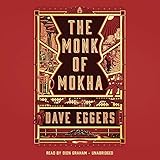
- Audible Audiobook
- Dave Eggers (Author) - Dion Graham (Narrator)
- English (Publication Language)
- 01/30/2018 (Publication Date) - Random House Audio (Publisher)
The Monk Of Mokha by Dave Eggers: A Deep Dive into Coffee’s Legacy
Dave Eggers’ The Monk Of Mokha by Dave Eggers is not only a story about coffee; it is a meticulously crafted account of a cultural revival, a testament to human resilience, and a stark illumination of the geopolitical forces that shape global commodities. The book centers on Mokhtar Alkhanshali, a Yemeni-American man who, after a period of introspection, embarks on an ambitious quest to reintroduce the ancient coffee of his homeland to the world. Eggers, known for his deep dives into complex human stories, brings his characteristic thoroughness to Alkhanshali’s journey, meticulously documenting not only the practicalities of sourcing and transporting coffee but also the rich history and cultural significance of this particular bean.
The narrative strength of The Monk Of Mokha by Dave Eggers lies in its dual focus. On one hand, it is a personal odyssey, charting Alkhanshali’s determination to connect with his heritage and build a business against formidable odds. On the other, it functions as a sweeping historical exploration, tracing the lineage of coffee from its discovery in Ethiopia, its cultivation in Yemen, and its vital role in the early global trade networks, all emanating from the historic port of Mokha. Eggers masterfully interweaves these threads, demonstrating how the past informs the present and how a single individual’s ambition can become a vessel for preserving cultural heritage. The book matters now because it highlights the fragility of cultural traditions in the face of conflict and the power of dedicated individuals to act as custodians of history.
Counterpoints and Considerations for The Monk Of Mokha by Dave Eggers
While the book is widely praised, a contrarian perspective invites a closer examination of its potential limitations for certain readers. The sheer volume of historical data and detailed exposition, while a testament to Eggers’ research, can at times slow the narrative pace. For readers primarily seeking a fast-moving plot or character-driven drama, the extensive historical digressions might feel more like an academic treatise than an engaging story.
Furthermore, the book’s focus on the revival of a specific commodity, while vital to the narrative, can also be interpreted as a microcosm of broader global economic inequalities. The challenges Alkhanshali faces are not just logistical; they are deeply rooted in the systemic disadvantages faced by nations like Yemen, caught in cycles of conflict and economic dependency. Eggers presents this context with clarity, but the reader must be prepared to grapple with the sobering realities of international trade and political instability.
Here is a table comparing narrative focus and reader expectation:
| Feature | Focus | Reader Expectation | Potential Disconnect |
|---|---|---|---|
| Historical Context | Deep dives into Yemeni coffee history, trade. | Appreciation for detailed historical accounts. | May feel dense or slow for readers seeking immediate plot progression. |
| Protagonist’s Journey | Alkhanshali’s personal quest and challenges. | Engagement with a personal success story. | The overwhelming external challenges can overshadow the personal triumph for some. |
| Geopolitical Analysis | Impact of Yemen’s conflict on trade. | Understanding of current global affairs. | The complexities of the war can be difficult to fully grasp without prior knowledge. |
Expert Tips for Engaging with The Monk Of Mokha
- Tip 1: Contextualize the Coffee: Before or during your reading, research the historical significance of the port of Mokha.
- Actionable Step: Look up images and brief historical summaries of Mokha as a major trading hub.
- Common Mistake to Avoid: Treating the “Mokha” in the title as merely a brand name without understanding its historical weight in the coffee trade.
- Tip 2: Understand the “Why”: Focus on Alkhanshali’s motivations beyond simple entrepreneurship; consider his desire to reclaim heritage and foster economic independence for Yemen.
- Actionable Step: Identify specific passages where Alkhanshali articulates his personal or cultural reasons for pursuing this venture.
- Common Mistake to Avoid: Viewing the story as solely a business success narrative, thus missing the deeper themes of cultural preservation and national identity.
- Tip 3: Pace Yourself with Historical Sections: Recognize that Eggers employs a layered approach. If historical sections feel dense, consider them as foundational knowledge rather than immediate plot drivers.
- Actionable Step: Take short breaks after particularly detailed historical accounts to process the information.
- Common Mistake to Avoid: Rushing through the historical exposition, which can lead to a fragmented understanding of the book’s central arguments.
BLOCKQUOTE_0
Common Myths
- Myth 1: The Monk of Mokha is just another book about coffee trends.
- Why it matters: This perception trivializes the book’s significant focus on history, geopolitics, and cultural heritage.
- Fix: Recognize that while coffee is the subject, the book uses it as a lens to explore deeper themes of identity, conflict, and economic justice.
- Myth 2: The book is solely a feel-good story about one man’s success.
- Why it matters: This overlooks the grim realities of Yemen’s ongoing conflict and the systemic challenges faced by those in developing nations.
- Fix: Acknowledge the profound difficulties and risks Alkhanshali and his family face, understanding that success is hard-won and precarious.
- Myth 3: Dave Eggers’ narrative style makes the historical facts dry.
- Why it matters: Eggers’ strength lies in humanizing complex subjects, but readers expecting a purely plot-driven novel might find the detail overwhelming.
- Fix: Appreciate Eggers’ journalistic rigor and his ability to weave factual accounts with personal narrative, understanding that the detail serves to enrich the story’s authenticity.
Decision Rules
- If reliability is your top priority for The Monk Of Mokha by Dave Eggers, choose the option with the strongest long-term track record and support.
- If value matters most, compare total ownership cost instead of headline price alone.
- If your use case is specific, prioritize fit-for-purpose features over generic ‘best overall’ claims.
FAQ
- Q1: Is The Monk of Mokha suitable for someone who doesn’t drink coffee?
- A1: Yes. While