Daniel O’Malley’s The Rook: A Thrilling Read
Quick Answer
- The Rook by Daniel O’Malley is a supernatural thriller distinguished by its intricate plot, unique world-building, and dry, dark humor.
- It centers on a protagonist with amnesia who must uncover her past and prevent a conspiracy within a secret British organization managing supernatural threats.
- Readers seeking deliberate pacing, complex mysteries, and a satirical take on bureaucracy will find this novel highly engaging.
Who This Is For
- Readers who enjoy intricate mysteries with a supernatural bent and a focus on organizational structure.
- Those who appreciate dark humor and a protagonist who actively pieces together their identity and circumstances.
What to Check First
- Protagonist’s Amnesia: Myfanwy Thomas’s lack of memory is central to the plot, driving her investigation into her own identity and the threats she faces.
- The Chequy Organization: This secret British agency is responsible for managing supernatural threats. Its internal workings, rules, and hierarchy are critical to understanding the narrative.
- Tone and Humor: The novel employs a distinct, dry, and often dark humor that satirizes bureaucracy and the handling of extraordinary events.
- World-Building Integration: Supernatural elements are not merely fantastical additions but are systematically integrated into a bureaucratic framework, requiring attention to detail.
Step-by-Step Plan for Understanding The Rook by Daniel O’Malley
1. Engage with Myfanwy’s Amnesia: Focus on Myfanwy’s internal experience as she navigates her amnesiac state and attempts to understand her role.
- What to look for: Her reactions to discovering her own capabilities and her past actions; how this lack of memory influences her decision-making.
- Mistake: Treating the amnesia as a simple plot device rather than the primary engine for character development and mystery.
2. Deconstruct the Chequy’s Structure: Observe the operational framework of the secret organization responsible for supernatural containment.
- What to look for: The rules, departments, hierarchies, and ethical guidelines that govern the Chequy’s actions.
- Mistake: Underestimating the significance of the bureaucratic details, which are integral to the plot’s mechanics and satirical elements.
3. Analyze the Supernatural Elements: Pay attention to the specific types of supernatural abilities and how they are managed within the Chequy.
- What to look for: The unique powers, their limitations, and the procedures in place for their control or utilization.
- Mistake: Expecting traditional fantasy magic systems; O’Malley’s approach is grounded in systemic management and procedural realism.
4. Follow the Timeline of Events: The narrative employs a non-linear structure, interweaving past events with the present investigation.
- What to look for: How revelations from Myfanwy’s past inform the current crisis and her understanding of the conspiracy.
- Mistake: Becoming disoriented by the shifting timelines; maintaining a clear understanding of key events as they are revealed is crucial.
5. Appreciate the Dark Humor: Identify instances of dry wit, irony, and satire that punctuate the more serious aspects of the story.
- What to look for: Moments where mundane bureaucratic language or procedures are applied to extraordinary situations.
- Mistake: Missing the humor, which can lead to a misinterpretation of the novel’s overall tone and thematic intent.
6. Identify the Antagonists: Recognize the various individuals and factions posing threats to Myfanwy and the Chequy.
- What to look for: The motivations, methods, and scale of the threats, which are often multifaceted.
- Mistake: Assuming a single, straightforward villain; the novel presents a more complex web of opposition.
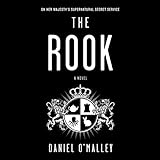
- Audible Audiobook
- Daniel O'Malley (Author) - Susan Duerden (Narrator)
- English (Publication Language)
- 03/01/2012 (Publication Date) - Little, Brown & Company (Publisher)
Common Myths
- Myth: The Rook is a fast-paced, action-heavy thriller.
- Correction: While suspenseful, the novel prioritizes intricate plotting, detailed world-building, and character investigation over constant action sequences. Readers expecting a relentless pace akin to a typical spy thriller might find the deliberate unfolding of the mystery and exposition to be slower than anticipated. The narrative’s strength lies in its methodical unraveling of complex conspiracies.
- Myth: Myfanwy’s amnesia makes her a passive observer.
- Correction: This is a misunderstanding of her role. Myfanwy’s amnesia is the catalyst for her active engagement with her situation. Her drive to uncover her identity and the truth behind the conspiracy forces her to be proactive, making her a determined and central agent in the narrative, rather than a passive recipient of events.
- Myth: The bureaucratic elements of the Chequy are simply filler.
- Correction: The detailed descriptions of the Chequy’s organizational structure, rules, and procedures are fundamental to the novel’s unique premise and satirical tone. These elements are not extraneous but are integral to the world-building, the plot’s logic, and the dark humor, providing context for how supernatural threats are managed.
Expert Tips for Engaging with The Rook
- Tip: Pay close attention to the epistolary elements within the narrative.
- Actionable Step: When encountering documents like memos, reports, or letters, pause to analyze the information they convey about the Chequy’s operations, character relationships, or plot developments.
- Common Mistake: Skimming or ignoring these inserts, which can lead to missing crucial details or nuanced insights into the world and its characters.
- Tip: Embrace the novel’s non-linear storytelling.
- Actionable Step: Recognize that the narrative structure mirrors Myfanwy’s fragmented memory. Track key revelations and character introductions as they appear, understanding that their chronological placement will become clear over time.
- Common Mistake: Becoming frustrated by the jumps in time or the delayed reveal of information. The structure is intentional, designed to build suspense and mirror the protagonist’s investigative process.
- Tip: Understand the satirical intent behind the supernatural bureaucracy.
- Actionable Step: Look for instances where mundane administrative processes are applied to extraordinary supernatural phenomena, highlighting the absurdities of institutional control and human nature.
- Common Mistake: Taking the supernatural elements too literally without appreciating the underlying commentary on organizations, power structures, and the inherent inefficiencies or ethical compromises within them.
Decision Criterion: Pacing Preference
For readers who prioritize a rapid plot progression and immediate action, The Rook by Daniel O’Malley may present a challenge. The novel’s deliberate pacing, which allows for in-depth exploration of its intricate world and complex character motivations, might feel slow. However, for those who appreciate a richly detailed narrative, a unique conceptual framework, and a protagonist’s journey of self-discovery through unraveling a conspiracy, the book offers a deeply rewarding experience. The decision to engage hinges significantly on an individual reader’s tolerance for detailed exposition and a less action-centric narrative structure.
The Rook by Daniel O’Malley: A World of Hidden Powers
Daniel O’Malley’s The Rook presents a meticulously constructed world where the mundane and the magical coexist, governed by the strictures of a secret British organization known as the Chequy. This is not a realm of wizards in towers, but of agents in drab offices managing supernatural threats with procedural efficiency. The novel’s brilliance lies in its commitment to this premise, exploring the practical, and often darkly humorous, implications of such an organization.
At its core, the story follows Myfanwy Thomas, who awakens with no memory of her life, her identity, or her role within the Chequy. Her journey is one of rediscovery, as she must not only piece together her past but also navigate a deadly conspiracy aimed at dismantling her organization from within. This amnesia serves as a clever narrative device, allowing the reader to learn about the complex world of the Chequy and its supernatural operatives concurrently with the protagonist.
Strengths and Limitations of The Rook by Daniel O’Malley
| Strength | Detail | Limitation | Detail |
|---|---|---|---|
| Intricate Plotting | The narrative weaves multiple threads of mystery, conspiracy, and personal discovery with remarkable coherence. | Pacing can be deliberate; requires reader attention. | The novel prioritizes exposition and plot development, which may feel slow to readers accustomed to relentless action. |
| Unique World-Building | The concept of a bureaucratic organization managing supernatural threats is original and executed with detailed, logical consistency. | Exposition can be dense. | Extensive explanations of the Chequy’s rules, hierarchy, and supernatural classifications may overwhelm some readers. |
| Dark and Dry Humor | The novel excels in its satirical wit, finding humor in the absurdity of supernatural bureaucracy and characters’ deadpan reactions. | Humor may not appeal to all tastes. | Readers who prefer straightforward or slapstick comedy might find O’Malley’s subtle, ironic humor less engaging. |
| Compelling Protagonist (Myfanwy Thomas) | Myfanwy’s amnesia and her subsequent quest for identity make her a relatable and active force driving the narrative. | Reliance on protagonist’s perspective. | While Myfanwy is central, the limited initial perspective can mean some of the world’s broader implications are revealed indirectly. |
BLOCKQUOTE_0
This quote encapsulates the pragmatic, albeit darkly humorous, philosophy underpinning the Chequy’s operations. It highlights the novel’s thematic exploration of control, order, and the necessary evils that maintain stability in a world brimming with unpredictable forces.
Decision Rules
- If reliability is your top priority for The Rook by Daniel O’Malley, choose the option with the strongest long-term track record and support.
- If value matters most, compare total ownership cost instead of headline price alone.
- If your use case is specific, prioritize fit-for-purpose features over generic ‘best overall’ claims.
FAQ
- Q: Is The Rook suitable for readers new to urban fantasy?
A: Yes, The Rook by Daniel O’Malley serves as a strong entry point. Its unique premise and detailed explanations of its world make it accessible