Daniel Kehlmann’s Historical Novel ‘Tyll
Quick Answer
- Tyll by Daniel Kehlmann offers a rich, sprawling narrative experience, but its historical grounding and philosophical depth may alienate readers seeking straightforward plot progression.
- Its strength lies in its intricate character studies and exploration of the Thirty Years’ War’s impact, though the novel’s structural complexity demands significant reader investment.
- Recommended for those who appreciate dense historical fiction and character-driven narratives, but those preferring fast-paced action or simple historical accounts should proceed with caution.
Who This Is For
- Readers who enjoy deeply researched historical fiction that delves into the philosophical and personal ramifications of conflict, rather than just recounting events.
- Those who appreciate Daniel Kehlmann’s previous works, particularly his intricate prose and willingness to engage with complex historical figures and periods.
What to Check First
- Historical Context Familiarity: While the novel provides context, a basic understanding of the Thirty Years’ War will enhance comprehension and appreciation of the events and their impact on the characters.
- Pacing Expectations: This is not a plot-driven thriller. The narrative unfolds deliberately, focusing on character development and thematic exploration over rapid plot advancement.
- Author’s Style: Kehlmann’s writing is characterized by intellectual rigor and a nuanced portrayal of human nature. If this style has not resonated previously, it may prove challenging here.
- Character Investment: The novel’s success hinges on the reader’s willingness to invest in its multifaceted characters, particularly the titular Tyll, whose motivations and actions are often ambiguous.
Step-by-Step Plan: Engaging with Tyll by Daniel Kehlmann
1. Begin with the Prologue:
- Action: Read the prologue carefully.
- What to look for: The introduction of Tyll Ulenspiegel and the initial framing of his life as a legend rather than a fixed historical event. Note the blend of folklore and historical reality.
- Mistake: Skimming the prologue, missing the foundational premise that Tyll is a figure shaped by myth and perspective, not just a historical person.
2. Embrace the Non-Linear Structure:
- Action: Accept that the narrative will jump between timelines and perspectives.
- What to look for: How each vignette contributes to the larger mosaic of Tyll’s life and the era. Observe the recurring motifs and thematic connections that emerge despite the temporal shifts.
- Mistake: Becoming frustrated by the lack of strict chronological order, hindering the ability to appreciate the thematic resonance across different points in Tyll’s life.
3. Focus on Character Psychology:
- Action: Pay close attention to the internal lives and motivations of the characters, especially Tyll.
- What to look for: The internal conflicts, moral ambiguities, and the ways characters grapple with the chaos of war and their own agency. Consider how Tyll’s jester persona masks deeper complexities.
- Mistake: Reducing characters to simple archetypes or expecting straightforward moral clarity, missing the nuanced psychological portraits Kehlmann crafts.
4. Analyze the Historical Backdrop:
- Action: Consider the Thirty Years’ War not just as a setting, but as an active force shaping the characters and their decisions.
- What to look for: How the war’s brutality, shifting alliances, and widespread suffering impact the lives of common people and those in positions of power. Note the novel’s focus on the war’s human cost.
- Mistake: Treating the war as mere historical window dressing, overlooking its integral role in the novel’s thematic development and character arcs.
For those drawn to intricate historical fiction and character-driven narratives, Daniel Kehlmann’s ‘Tyll’ offers a deeply rewarding, albeit demanding, experience.
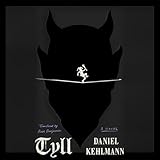
Tyll: A Novel
- Audible Audiobook
- Daniel Kehlmann (Author) - Firdous Bamji (Narrator)
- English (Publication Language)
- 02/11/2020 (Publication Date) - Random House Audio (Publisher)
5. Engage with the Philosophical Undercurrents:
- Action: Reflect on the novel’s exploration of themes such as fate, free will, the nature of truth, and the power of stories.
- What to look for: Moments where characters question their reality, the stories told about them, or the larger forces at play. Consider Tyll’s role as a jester and his commentary on societal truths.
- Mistake: Dismissing philosophical musings as digressions, failing to see how they are woven into the fabric of the narrative and character interactions.
6. Note Kehlmann’s Prose:
- Action: Appreciate the precision and elegance of Kehlmann’s language.
- What to look for: The carefully chosen words, the evocative descriptions, and the subtle humor that underpins the narrative. Observe how the style itself contributes to the novel’s intellectual weight.
- Mistake: Overlooking the artistry of the prose, focusing solely on plot and missing the aesthetic and intellectual pleasure derived from Kehlmann’s writing style.
Common Myths About Tyll by Daniel Kehlmann
- Myth: Tyll is a straightforward historical retelling of the jester Tyll Eulenspiegel.
- Why it matters: This misconception sets up expectations for a linear biography, leading to disappointment when the novel presents a fragmented, mythologized, and philosophically driven narrative.
- Fix: Understand that Kehlmann uses the legend of Tyll Eulenspiegel as a springboard to explore the Thirty Years’ War and broader questions about storytelling, truth, and human nature. The novel is more about the idea of Tyll and the era than a factual account.
- Myth: The novel’s complexity is a sign of pretentiousness or a lack of clarity.
- Why it matters: This judgment can prevent readers from engaging with the novel’s nuanced structure and thematic depth, dismissing it as overly academic or inaccessible.
- Fix: Recognize that the complex structure and philosophical inquiries are intentional devices used to mirror the fragmented reality of war and the elusive nature of truth. The “lack of clarity” is often a deliberate exploration of ambiguity.
- Myth: The Thirty Years’ War is just a distant, impersonal backdrop.
- Why it matters: This view minimizes the novel’s engagement with the profound human cost of conflict, reducing the historical setting to mere scenery.
- Fix: Actively look for how the war’s devastation, political machinations, and societal upheaval directly impact the characters’ lives, choices, and psychological states. The war is an engine of the narrative, not just a backdrop.
Tyll by Daniel Kehlmann: Key Considerations
| Decision Criterion | Reader Profile | Recommendation |
|---|---|---|
| Narrative Structure | Prefers linear, plot-driven stories | May find Tyll challenging and less engaging due to its fragmented, non-chronological approach. |
| Thematic Depth | Seeks philosophical exploration and character nuance | Will likely appreciate the novel’s intellectual richness and its examination of complex themes within a historical context. |
| Historical Focus | Interested in the human impact of war, not just events | Will find the novel’s depiction of the Thirty Years’ War through personal stories compelling and insightful. |
| Authorial Voice | Enjoys precise, elegant, and intellectually rigorous prose | Will likely find Kehlmann’s writing style a significant strength, contributing to the novel’s overall impact and memorability. |
| Pacing Preference | Requires fast-paced action and immediate gratification | May become impatient with the novel’s deliberate pacing and focus on character interiority over external events. |
BLOCKQUOTE_0
Expert Tips for Reading Tyll
- Tip 1: Embrace the Ambiguity of Tyll.
- Actionable Step: Resist the urge to pin down Tyll’s motivations or true nature. Instead, observe how he is perceived by different characters and how his legend evolves.
- Common Mistake to Avoid: Trying to find a single, definitive “real” Tyll, which negates the novel’s exploration of how figures become myths and how history is constructed.
- Tip 2: Track Recurring Motifs and Symbols.
- Actionable Step: Keep a mental or physical note of recurring images, phrases, or thematic elements (e.g., masks, illusions, the nature of truth, the absurdity of war).
- Common Mistake to Avoid: Treating each scene in isolation and failing to recognize the thematic threads that connect disparate parts of the narrative, leading to a fragmented reading experience.
- Tip 3: Contextualize the Thirty Years’ War Through Personal Stories.
- Actionable Step: Focus on how the grand historical events of the Thirty Years’ War manifest in the intimate lives and decisions of the characters, rather than seeking a comprehensive historical account.
- Common Mistake to Avoid: Expecting a textbook-like explanation of the war’s causes and consequences; the novel prioritizes the human experience of conflict.
Decision Rules
- If reliability is your top priority for Tyll by Daniel Kehlmann, choose the option with the strongest long-term track record and support.
- If value matters most, compare total ownership cost instead of headline price alone.
- If your use case is specific, prioritize fit-for-purpose features over generic ‘best overall’ claims.
FAQ
- Q: Is Tyll a good starting point for Daniel Kehlmann’s work?
- A: Not necessarily. While a standalone novel, its complex structure and philosophical bent might be better appreciated by readers already familiar with Kehlmann’s intellectual style, perhaps after reading Measuring the World.
- Q: How much historical accuracy should I expect in Tyll?
- A: Kehlmann uses historical events and figures as a foundation but prioritizes thematic exploration and character interpretation over strict