Crime and Philosophy: A Naked Singularity
A Naked Singularity by Sergio De La Pava: Quick Answer
- A Naked Singularity by Sergio De La Pava is a dense, philosophical novel that uses crime and its investigation as a framework to explore complex ideas about justice, determinism, and the human behavior.
- Its intricate plotting, extensive cast, and demanding intellectual content make it a significant undertaking, best suited for readers who relish challenging literary works.
- Those seeking a traditional narrative or straightforward plot resolution will likely find it demanding; its primary value lies in its thematic depth and structural ambition.
A Naked Singularity by Sergio De La Pava: Who This Is For
- Readers who appreciate literary fiction that engages deeply with philosophical concepts, particularly concerning morality, free will, and the legal system.
- Individuals willing to invest considerable time and mental energy into a novel with a complex, non-linear structure and a vast ensemble of characters.
What to Check First
- Philosophical Engagement: Evaluate your comfort level with sustained philosophical discourse interwoven directly into a narrative. The novel frequently delves into abstract arguments about justice and human behavior.
- Patience for Scope: The novel features a large cast and interconnected plotlines that unfold over a significant period. Be prepared for a deliberate pace and the need to track numerous characters and their relationships.
- Tolerance for Ambiguity: Do not expect simple answers or definitive conclusions. The novel embraces complexity and leaves many questions open to interpretation, mirroring the subjects it addresses.
- Interest in Legal and Moral Frameworks: While not a typical crime novel, its core revolves around the examination of criminal acts and the systems of justice and punishment, approached from a critical, philosophical perspective.
Step-by-Step Plan for Approaching A Naked Singularity
1. Initial Character Immersion: Begin by focusing on the central figures involved in the primary criminal events. Note their immediate circumstances and discernible motivations.
- Action: Identify recurring names and distinct personality traits in the early chapters.
- What to look for: Early plot catalysts and initial character dynamics.
- Mistake to avoid: Attempting to memorize the full backstory of every character; prioritize the core group first.
2. Engage with Philosophical Digressions: Treat philosophical passages not as interruptions but as essential components that illuminate the narrative’s thematic underpinnings.
- Action: Read these sections deliberately, seeking connections between abstract concepts and character actions or legal arguments.
- What to look for: Thematic resonance between philosophical ideas and plot developments.
- Mistake to avoid: Skimming or skipping these sections, as they are fundamental to the novel’s message.
3. Map Interconnectedness: As the narrative progresses, actively identify the links between seemingly disparate characters and events.
- Action: Look for shared experiences, indirect influences, or recurring motifs that bind different plot threads together.
- What to look for: Subtle connections that reveal the novel’s intricate design.
- Mistake to avoid: Assuming storylines are entirely separate; the novel’s power lies in its interconnectedness.
4. Embrace Structural Unorthodoxy: Recognize and adapt to the novel’s unconventional structure, which often employs non-linear timelines and shifting perspectives.
- Action: Observe how narrative shifts reveal character depth or thematic layers rather than seeking a chronological flow.
- What to look for: Patterns in the shifts and their contribution to the overall narrative.
- Mistake to avoid: Expecting a linear progression, which can lead to confusion and frustration.
5. Identify Thematic Anchors: Pinpoint the central philosophical questions the novel explores, such as determinism, the nature of justice, and the limits of human knowledge.
- Action: Note recurring questions, character debates, and narrative events that directly address these core themes.
- What to look for: Thematic consistency across different plotlines and character arcs.
- Mistake to avoid: Focusing solely on plot mechanics without considering the underlying philosophical inquiry.
For those drawn to deeply philosophical crime fiction, Sergio De La Pava’s ‘A Naked Singularity’ is a remarkable, albeit demanding, choice. It uses a crime investigation as a lens to explore profound questions about justice and human behavior.
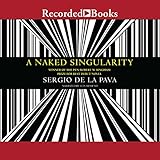
- Audible Audiobook
- Sergio De La Pava (Author) - Luis Moreno (Narrator)
- English (Publication Language)
- 06/22/2016 (Publication Date) - Recorded Books (Publisher)
6. Consider the “Naked Singularity” Concept: Understand how the title’s theoretical concept functions as a metaphor for the novel’s exploration of extreme complexity and unknowable truths.
- Action: Identify moments in the narrative that evoke overwhelming complexity, inscrutability, or the breakdown of conventional understanding.
- What to look for: Parallels between the scientific concept and the novel’s depiction of events.
- Mistake to avoid: Treating the title as a mere abstract reference; it is a critical interpretive lens.
A Naked Singularity: Navigating Its Thematic Depths
Sergio De La Pava’s novel operates less as a conventional narrative and more as an extended philosophical inquiry. The criminal events serve as a catalyst for dissecting profound questions about human agency, the nature of justice, and the inherent complexities that underpin societal structures. The author meticulously constructs a web of interconnected lives and events to illustrate how individual choices, societal forces, and potential predetermined paths converge in often unpredictable and impactful ways. The titular concept of a “naked singularity”—a theoretical point of infinite density—evokes a sense of ultimate complexity and unknowability, a theme that permeates the novel’s depiction of events that defy simple explanation or easy moral judgment.
The novel’s primary strength lies in its intellectual rigor. De La Pava does not shy away from presenting intricate philosophical arguments, often through lengthy internal monologues or dialogues that challenge readers to confront uncomfortable truths about responsibility and consequence. This approach, while deeply rewarding for those inclined towards such intellectual engagement, can also present a significant barrier for readers seeking a more plot-driven experience. The narrative is dense, demanding careful attention to detail and a willingness to grapple with abstract concepts alongside concrete events. The sheer scope of the novel, encompassing a wide array of characters and their intertwined fates, contributes to this sense of overwhelming complexity, mirroring the very “singularity” the title suggests.
A Naked Singularity by Sergio De La Pava: Strengths and Limitations
| Strength | Limitation | Reader Impact |
|---|---|---|
| Profound philosophical inquiry | Demanding narrative structure | Offers deep intellectual satisfaction for dedicated readers; potential for frustration. |
| Intricate character interconnections | Extensive cast requires significant tracking | Rewarding discovery of thematic resonance; can feel overwhelming initially. |
| Unflinching examination of justice | Lack of clear-cut resolutions | Provokes critical thought on legal and moral systems; may leave some unsatisfied. |
| Unique structural experimentation | Requires considerable reader investment | Provides a distinct literary experience; not for those seeking light reading. |
Expert Tips for Reading A Naked Singularity
- Tip: Embrace the philosophical interludes as essential narrative components.
- Actionable Step: When encountering philosophical passages, pause and consider how the abstract ideas relate to the characters’ actions or the unfolding plot.
- Common Mistake to Avoid: Skimming or skipping these sections, thereby missing crucial thematic context and authorial intent.
- Tip: Maintain a detailed character and plot log.
- Actionable Step: Keep a notebook or digital document to track characters, their relationships, key events, and recurring motifs.
- Common Mistake to Avoid: Relying solely on memory for a novel with such a vast scope and intricate web of connections, leading to confusion.
- Tip: Approach the novel with an expectation of ambiguity.
- Actionable Step: Accept that the novel may not provide definitive answers to its central questions, and focus on the process of exploration and the nuances presented.
- Common Mistake to Avoid: Seeking a conventional resolution or clear moral pronouncements, which are intentionally absent.
Common Myths About A Naked Singularity
- Myth: The novel is a straightforward crime procedural.
- Why it matters: This misconception can lead to disappointment if readers expect a traditional mystery with a clear culprit and resolution. The crime functions as a narrative device for deeper exploration.
- Fix: Understand that the emphasis is on the philosophical and systemic implications of crime and justice, rather than a conventional investigative plot.
- Myth: The philosophical sections are optional or can be skimmed.
- Why it matters: These passages are integral to the novel’s thematic core and provide the framework for understanding character motivations and the author’s commentary on justice and human nature.
- Fix: Treat the philosophical digressions as essential components of the narrative, actively engaging with the ideas presented as they illuminate the plot.
- Myth: The novel offers definitive answers to complex moral questions.
- Why it matters: The novel thrives on ambiguity and the exploration of paradoxes. Expecting clear-cut solutions will likely lead to dissatisfaction.
- Fix: Approach the novel with an openness to complexity and nuance. The value lies in the exploration of questions, not in the provision of simple answers.
BLOCKQUOTE_0
Decision Rules
- If reader accessibility is your top priority, this book is likely not the best fit unless you are specifically seeking a demanding intellectual challenge.
- If thematic depth and philosophical exploration are paramount, then A Naked Singularity by Sergio De La Pava offers significant rewards, provided you are prepared for its structural complexity.
- If plot-driven momentum is essential for your reading enjoyment, you may find this novel’s deliberate pace and philosophical digressions to be a barrier to engagement.
FAQ
- Q: Is A Naked Singularity by Sergio De La Pava a difficult book to read?
- A: Yes, it is considered a challenging read due to its philosophical density, complex narrative structure, and large cast of characters. It requires significant reader commitment and a willingness to engage with abstract concepts.
- **Q: How does the concept of a “naked singularity” relate to the novel’s themes?