Cixin Liu’s The Three-Body Problem: A Sci-Fi Epic
This review explores Cixin Liu’s seminal science fiction novel, The Three-Body Problem, detailing its core concepts, narrative strengths, and potential limitations for readers.
The Three-Body Problem by Cixin Liu: Quick Answer
- The Three-Body Problem by Cixin Liu is a complex, ideas-driven hard science fiction novel that blends astrophysics, history, and philosophy.
- It is best suited for readers who appreciate intricate scientific concepts and a grand, often bleak, cosmic perspective.
- Those seeking fast-paced action or straightforward character arcs may find its deliberate pacing and philosophical depth challenging.
The Three-Body Problem by Cixin Liu: Who This Is For
- Readers interested in hard science fiction that rigorously explores scientific principles and their societal implications.
- Individuals who enjoy narratives that span decades and grapple with profound questions about humanity’s place in the universe.
For those who appreciate intricate scientific concepts and a grand, often bleak, cosmic perspective, Cixin Liu’s novel is a must-read. It masterfully blends astrophysics, history, and philosophy into a compelling narrative.
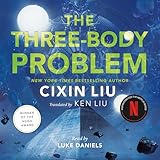
- Audible Audiobook
- Cixin Liu (Author) - Luke Daniels (Narrator)
- English (Publication Language)
- 11/11/2014 (Publication Date) - Macmillan Audio (Publisher)
What to Check First
- Scientific Basis: The novel heavily relies on concepts from physics, particularly orbital mechanics and theoretical astrophysics. Understanding basic principles of gravity and celestial motion will enhance comprehension.
- Historical Context: The narrative begins during China’s Cultural Revolution, providing crucial context for character motivations and plot developments. Familiarity with this period is beneficial.
- Pacing: This is not a book for those seeking immediate gratification. Its narrative unfolds deliberately, with significant portions dedicated to exposition and theoretical exploration.
- Thematic Scope: Be prepared for themes of existentialism, determinism, and the potential for interstellar conflict. The novel offers a decidedly non-optimistic view of humanity’s future.
Step-by-Step Plan for Understanding The Three-Body Problem
Navigating the intricate layers of The Three-Body Problem by Cixin Liu requires a methodical approach.
1. Engage with the Opening: Pay close attention to Ye Wenjie’s experiences during the Cultural Revolution.
- What to look for: The trauma and disillusionment that shape her worldview and her pivotal decision.
- Mistake to avoid: Dismissing the historical sections as mere backstory; they are foundational to the entire plot.
2. Deconstruct the “Three-Body Problem”: Grasp the scientific concept at the novel’s core.
- What to look for: How the chaotic nature of three celestial bodies interacting gravitationally influences the Trisolaran civilization and their need to find a new home.
- Mistake to avoid: Overlooking the scientific accuracy; Cixin Liu grounds his fiction in plausible physics.
3. Analyze the Trisolaran Civilization: Understand their motivations and technological capabilities.
- What to look for: Their desperation, their unique societal structure shaped by their unstable world, and their methods of interstellar communication and travel.
- Mistake to avoid: Assuming alien motivations are analogous to human ones; their existence is fundamentally different.
4. Follow Wang Miao’s Investigation: Track the nanotechnology researcher’s journey into the mystery.
- What to look for: The gradual unfolding of the conspiracy, the role of the “Frontiers of Science” organization, and the VR game “Three Body.”
- Mistake to avoid: Getting lost in the VR game’s narrative without connecting it back to the real-world plot; the game is a crucial exposition tool.
5. Evaluate the Philosophical Debates: Consider the novel’s exploration of humanity’s response to existential threat.
- What to look for: The differing factions (ETO) and their reactions to the impending Trisolaran invasion, from radical despair to desperate hope.
- Mistake to avoid: Focusing solely on the plot mechanics; the novel’s strength lies in its intellectual and philosophical provocations.
6. Absorb the Cosmic Perspective: Recognize the novel’s grand scale and implications.
- What to look for: The concept of the “Dark Forest” theory (though more developed in later books, its seeds are here) and humanity’s potential insignificance in a vast, indifferent cosmos.
- Mistake to avoid: Expecting a conventional hero’s journey; the narrative often prioritizes ideas over individual triumphs.
Common Myths
- Myth: The novel is simply about aliens invading Earth.
- Why it matters: This oversimplification misses the deep exploration of physics, sociology, and philosophy that underpins the narrative. The “invasion” is a catalyst for examining humanity’s own nature.
- Fix: Approach the book as a thought experiment on humanity’s response to overwhelming scientific and existential challenges, with the alien presence as a primary driver.
- Myth: The scientific concepts are too complex for a casual reader.
- Why it matters: While the science is detailed, Liu masterfully uses narrative and metaphor to make it accessible. The core ideas are presented in a way that can be grasped without an advanced physics degree.
- Fix: Trust the author’s ability to explain complex ideas. Focus on the conceptual implications rather than getting bogged down in every technical detail. The VR game “Three Body” serves as a simplified simulation of the core physics problem.
Expert Tips for Engaging with The Three-Body Problem
To fully appreciate The Three-Body Problem by Cixin Liu, consider these practical insights:
- Tip 1: Embrace the Scientific Exposition. The novel’s scientific grounding is a significant strength.
- Actionable Step: When encountering scientific explanations, particularly those related to orbital mechanics or nanotechnology, pause to consider their implications for the plot and the Trisolaran civilization.
- Common Mistake to Avoid: Skipping over scientific passages. These sections are not filler; they are integral to the narrative’s plausibility and thematic depth.
- Tip 2: Understand the Historical Context. The events of China’s Cultural Revolution are not incidental.
- Actionable Step: Briefly familiarize yourself with the basic historical period and its impact on intellectual and political thought in China. This will illuminate Ye Wenjie’s motivations.
- Common Mistake to Avoid: Underestimating the influence of historical trauma on character decisions. Ye Wenjie’s actions are a direct consequence of her experiences.
- Tip 3: Prepare for a Philosophical Journey. The novel probes deep questions about humanity, destiny, and the universe.
- Actionable Step: Reflect on the ethical dilemmas presented to the characters and the various factions’ responses to the existential threat.
- Common Mistake to Avoid: Expecting a straightforward action-adventure plot. The novel’s power lies in its intellectual and philosophical weight, often leading to bleak conclusions.
BLOCKQUOTE_0
Quick Comparison
| Option | Best for | Pros | Watch out |
|---|---|---|---|
| Quick Answer | General use | The Three-Body Problem by Cixin Liu is a complex, ideas-driven hard science f… | Mistake to avoid: Dismissing the historical sections as mere backstory; they… |
| Who This Is For | General use | It is best suited for readers who appreciate intricate scientific concepts an… | Mistake to avoid: Overlooking the scientific accuracy; Cixin Liu grounds his… |
| What to Check First | General use | Those seeking fast-paced action or straightforward character arcs may find it… | Mistake to avoid: Assuming alien motivations are analogous to human ones; the… |
| Step-by-Step Plan for Understanding The Three-Body Problem | General use | Readers interested in hard science fiction that rigorously explores scientifi… | Mistake to avoid: Getting lost in the VR game’s narrative without connecting… |
Decision Rules
- If reliability is your top priority for The Three-Body Problem by Cixin Liu, choose the option with the strongest long-term track record and support.
- If value matters most, compare total ownership cost instead of headline price alone.
- If your use case is specific, prioritize fit-for-purpose features over generic ‘best overall’ claims.
FAQ
- Q1: Is The Three-Body Problem a difficult book to read?
A1: It can be challenging due to its dense scientific concepts and philosophical themes, but Cixin Liu’s narrative structure and the inclusion of the VR game make it more accessible than it might initially appear. Patience and a willingness to engage with the ideas are key.
- Q2: Do I need to have a science background to enjoy this book?
A2: No, a formal science background is not required. The author provides explanations within the text, and the core concepts are designed to be understood through the narrative’s context. Focus on the “what if” rather than the precise mathematical “how.”
- Q3: How does The Three-Body Problem compare to other hard science fiction novels?
A3: It stands out for its ambitious scope, its exploration of Chinese history and culture, and its often-unflinching portrayal of the potential harsh realities of interstellar contact. It offers a unique blend of scientific rigor and philosophical inquiry that distinguishes it from many Western counterparts.
- Q4: What is the significance of the “Three-Body Problem” in physics?
A4: In physics, the “three-body problem” refers to the difficulty of predicting the individual motions of three celestial bodies interacting gravitationally. Unlike the predictable two-body problem, the system is chaotic and highly sensitive to initial conditions, making long-term prediction impossible. This unpredictability is central to the plight of the Trisolarans.