C. S. Lewis’s The Silver Chair: Narnia Adventure
The Silver Chair by C. S. Lewis: Quick Answer
- The Silver Chair by C. S. Lewis presents a more somber and allegorical Narnian narrative, focusing on themes of deception, truth, and spiritual warfare.
- This installment is best suited for readers who are already invested in the Chronicles of Narnia and are interested in its deeper thematic and allegorical layers.
- Readers prioritizing straightforward adventure or the return of established Pevensie characters may find this particular book less immediately engaging.
The Silver Chair by C. S. Lewis: Who This Is For
- Readers who have progressed through other books in C. S. Lewis’s The Chronicles of Narnia and wish to explore the series’ thematic evolution.
- Individuals interested in allegorical literature and the examination of complex moral and spiritual concepts within a fantasy framework.
What to Check First
- Series Context: This is the fourth book chronologically in The Chronicles of Narnia, but the eighth published. Familiarity with Narnia and its creator, Aslan, enhances comprehension.
- Allegorical Interest: The book contains substantial allegorical content, particularly concerning faith, doubt, and the manipulation of truth. If allegory is not of interest, the narrative may feel dense.
- Protagonist Focus: The main protagonists, Jill Pole and Eustace Scrubb, are new to Narnia. Their journey involves learning and discernment rather than leveraging established authority.
- Pacing and Tone: Expect a slower narrative pace and a more psychological journey compared to some of the more action-driven Narnian tales.
Understanding The Silver Chair by C. S. Lewis
The Silver Chair by C. S. Lewis represents a notable departure in tone and thematic complexity within The Chronicles of Narnia. The story follows Eustace Scrubb, previously introduced in The Voyage of the Dawn Treader, alongside a new character, Jill Pole. They are tasked by Aslan to find and rescue Prince Rilian, the missing son of King Caspian. The narrative takes a darker turn, exploring themes of deception, the nature of truth, and the insidious power of false narratives. Unlike earlier books with more direct quests, The Silver Chair delves into psychological manipulation and the struggle against unseen forces aiming to obscure reality.
The journey is perilous, not solely from physical dangers but from the pervasive influence of the Queen of Underland. Her magic is designed to make truth appear false and falsehood appear true, a concept that reflects C. S. Lewis’s own theological and philosophical inquiries. The introduction of characters like Puddleglum, the Marsh-wiggle, offers a grounded, albeit pessimistic, perspective that contrasts with the children’s initial optimism and subsequent despair. This book challenges readers to consider how easily truth can be distorted and the courage required to uphold it. This installment, published in 1953, showcases Lewis’s maturing engagement with theological concepts, moving beyond the more straightforward morality of earlier works like The Lion, the Witch and the Wardrobe.
For those ready to delve into the deeper, more allegorical aspects of Narnia, C. S. Lewis’s The Silver Chair is a must-read. This installment offers a unique blend of spiritual warfare and thematic complexity.
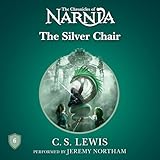
- Audible Audiobook
- C. S. Lewis (Author) - Jeremy Northam (Narrator)
- English (Publication Language)
- 05/10/2005 (Publication Date) - HarperCollins (Publisher)
Step-by-Step Plan: Navigating The Silver Chair’s Narrative Arc
1. Receive the Summons: Observe how Jill Pole and Eustace Scrubb are called to Narnia by Aslan.
- What to look for: The initial signs, Aslan’s specific instructions, and the characters’ immediate reactions to the call.
- Mistake to avoid: Dismissing the subtle signs as mere coincidences or unrelated events, hindering their understanding of the mission’s gravity.
2. Follow the Signs: Track the four Signs Aslan provides Jill as her guide.
- What to look for: The precise wording of each sign and how Jill interprets and applies them during their journey.
- Mistake to avoid: Misinterpreting the signs or failing to recall them when critical, leading to disorientation and potential missteps.
3. Encounter Puddleglum: Note the introduction of the Marsh-wiggle and his distinct, often gloomy, outlook.
- What to look for: Puddleglum’s initial cynicism and his eventual role as a steadfast companion.
- Mistake to avoid: Underestimating Puddleglum’s resilience and importance due to his pessimistic demeanor; his grounding nature is crucial.
4. Journey to the Underland: Witness the children and Puddleglum’s descent into the subterranean world controlled by the Queen.
- What to look for: The deceptive nature of the Underland and the Queen’s manipulative tactics designed to confuse and control.
- Mistake to avoid: Succumbing to the Queen’s illusions or accepting her pronouncements about Narnia as truth, which serves to distort reality.
5. Confront the Prince: Observe the interaction with the young man bound to the silver chair, who appears to be in a state of madness.
- What to look for: The prince’s erratic behavior and the underlying cause of his confinement and affliction.
- Mistake to avoid: Judging the prince solely on his current state without understanding the source of his distress and the enchantment he endures.
6. Break the Enchantment: Detail the process by which the Queen’s spell is ultimately broken.
- What to look for: The climactic scene where truth is asserted, and the Queen’s power is revealed as hollow and based on illusion.
- Mistake to avoid: Doubting the power of truth or the reliability of Aslan’s guidance during the final confrontation, which is the key to overcoming the enchantment.
7. Ascend to the Surface: Follow the characters’ return to the Narnian world and their reunion with King Caspian.
- What to look for: The resolution of Prince Rilian’s story and the characters’ reflections on their arduous journey.
- Mistake to avoid: Forgetting the lessons learned about truth and deception in the face of newfound safety and comfort.
Common Mistakes
- Mistake: Overlooking the allegorical depth.
- Why it matters: This diminishes the book’s thematic richness, reducing it to a simple adventure story when it offers profound commentary on faith and reality.
- Fix: Read with an awareness of Lewis’s Christian allegorical style, considering how characters and events represent spiritual concepts such as temptation, doubt, and redemption.
- Mistake: Underestimating the Queen of Underland’s influence.
- Why it matters: Her power lies in deception and psychological manipulation, making her a subtle but potent antagonist. Underestimating her means falling prey to her illusions.
- Fix: Be vigilant for moments where reality is questioned or distorted, and trust the established signs and Aslan’s word over immediate perceptions or persuasive arguments.
- Mistake: Focusing solely on Eustace and Jill’s newness to Narnia.
- Why it matters: While they are new, their journey is about developing their own faith and discernment, not just relying on prior Narnian knowledge.
- Fix: Recognize that their lack of experience is a narrative device to explore themes of learning to trust and discern truth independently, even when faced with doubt.
- Mistake: Assuming a straightforward quest narrative.
- Why it matters: The Silver Chair is more about internal struggles and the battle against doubt and falsehood than a typical external conflict.
- Fix: Prepare for a narrative that emphasizes psychological resilience and the active pursuit of truth, even when it is difficult and contradicts immediate sensory input.
Contrarian Viewpoint: Is The Silver Chair Overrated?
While critically acclaimed and a vital installment in The Chronicles of Narnia, The Silver Chair presents a compelling case for being overrated, particularly for readers seeking a more traditional heroic fantasy. The narrative hinges on psychological manipulation and the subtle erosion of truth, which, while thematically rich, can feel less engaging than the direct conflicts and clear-cut heroism found in books like Prince Caspian. The protagonists, Jill and Eustace, are less proactive heroes and more reactive figures, often struggling to discern reality. This focus on internal doubt and the insidious nature of deception, while profound, can make the plot feel slower and more abstract.
The strength of The Silver Chair lies in its allegorical depth, mirroring Lewis’s theological concerns about faith in the face of skepticism. However, this very strength can become a limitation for readers who prefer a more plot-driven adventure. The Underland’s pervasive fog of lies, while an effective metaphor for spiritual warfare, can make the narrative world feel less tangible and immediate. For instance, the prolonged period where the characters are under the Queen’s influence, struggling to recall truths, might test the patience of younger readers or those unaccustomed to Lewis’s more philosophical explorations. Compared to the epic scope of The Last Battle or the classic fairy-tale structure of The Lion, the Witch and the Wardrobe, The Silver Chair‘s emphasis on psychological warfare and the fragility of truth can feel less satisfying as a standalone adventure.
Literary Context and Thematic Significance
The Silver Chair occupies a unique position within C. S. Lewis’s The Chronicles of Narnia due to its pronounced engagement with themes of doubt, deception, and the nature of reality. Published in 1953, it arrived at a time when Lewis was deeply immersed in his work as a Christian apologist, and the book serves as a powerful allegory for spiritual warfare. The Queen of Underland and her kingdom represent the forces that seek to obscure truth and promote falsehood, a concept Lewis explored extensively in his essays and lectures. The narrative’s descent into the subterranean world mirrors a journey into the subconscious or into a state of spiritual confusion, where perceptions are deliberately distorted.
The character of Puddleglum, the Marsh-wiggle, is particularly significant. His persistent pessimism, often mistaken for simple negativity, functions as a form of grounded realism that paradoxically helps him resist the Queen’s enchantments. His famous speech, asserting that even a bleak and joyless existence in Narnia is preferable to a fabricated reality, encapsulates the book’s core message about the importance of holding onto
Quick Comparison
| Option | Best for | Pros | Watch out |
|---|---|---|---|
| The Silver Chair by C S Lewis Quick Answer | General use | <em>The Silver Chair</em> by C. S. Lewis presents a more somber and allegorical Narn… | Mistake to avoid: Dismissing the subtle signs as mere coincidences or unrelat… |
| Who This Is For | General use | This installment is best suited for readers who are already invested in the C… | Mistake to avoid: Misinterpreting the signs or failing to recall them when cr… |
| What to Check First | General use | Readers prioritizing straightforward adventure or the return of established P… | Mistake to avoid: Underestimating Puddleglum’s resilience and importance due… |
| Step-by-Step Plan Navigating The Silver Chairs Narrative Arc | General use | Readers who have progressed through other books in C. S. Lewis’s *The Chronic… | Mistake to avoid: Succumbing to the Queen’s illusions or accepting her pronou… |
Decision Rules
- If reliability is your top priority for The Silver Chair by C. S. Lewis, choose the option with the strongest long-term track record and support.
- If value matters most, compare total ownership cost instead of headline price alone.
- If your use case is specific, prioritize fit-for-purpose features over generic ‘best overall’ claims.