Brian Jacques’s Beloved Children’s Book Redwall
This review examines Redwall by Brian Jacques, a foundational work in children’s fantasy literature. It offers a detailed look at its narrative strengths, thematic depth, and suitability for its intended audience, providing actionable insights for potential readers.
Quick Answer
- Verdict: A richly imagined, action-packed adventure set in a medieval abbey, Redwall is a classic for young readers who enjoy detailed world-building and tales of heroism against overwhelming odds.
- Key Appeal: Engaging animal characters, a compelling good-versus-evil conflict, and a satisfying narrative arc.
- Consideration: The detailed descriptions and intricate plot may require a more patient reader, and some thematic elements are quite direct.
Who This Is For
- Children aged 8-12 who appreciate detailed fantasy worlds and animal protagonists.
- Readers seeking classic tales of courage, friendship, and the triumph of good over evil.
What to Check First
- Character Voice: Jacques imbues his animal characters with distinct personalities and motivations, a key strength that draws readers into the world.
- Pacing and Plot Complexity: The narrative is intricate, featuring multiple subplots and a significant cast of characters. Assess if this level of detail suits the reader’s preference.
- Thematic Directness: The themes of bravery, loyalty, and the fight against tyranny are presented clearly, which can be highly effective for younger audiences but may feel unsubtle to older readers.
- World-Building Detail: The Abbey of Redwall and its surrounding lands are described with a rich, almost culinary, attention to detail. This immersive quality is a hallmark of the series.
Step-by-Step Plan: Engaging with Redwall by Brian Jacques
1. Begin with Matthias’s Journey: Start with Matthias, the young mouse, and his quest to find the legendary sword of Martin the Warrior. What to look for: Matthias’s initial timidity and his transformation into a courageous hero. Mistake to avoid: Underestimating Matthias’s potential for growth early in the narrative.
2. Understand the Abbey’s Culture: Observe the daily life and traditions within the Abbey of Redwall. What to look for: The communal spirit, the importance of feasts, and the peaceful coexistence that defines the abbey’s inhabitants. Mistake to avoid: Overlooking the subtle cues of the abbey’s vulnerability and the peace it strives to maintain.
3. Identify the Antagonist: Recognize the threat posed by Cluny the Scourge, the one-eyed rat warlord. What to look for: Cluny’s cunning, ruthlessness, and his impact on the abbey’s inhabitants. Mistake to avoid: Dismissing Cluny as a simple villain; his strategic mind presents a significant challenge.
4. Follow the Quest for Martin’s Sword: Track Matthias’s expeditions beyond the abbey walls to find the legendary artifact. What to look for: The challenges faced, the allies encountered, and the historical context revealed about Martin the Warrior. Mistake to avoid: Skipping over the descriptive passages detailing the journey, as they build atmosphere and context.
5. Observe Inter-Species Dynamics: Note the interactions and alliances formed between different animal species within and outside the abbey. What to look for: The formation of unlikely friendships and the overcoming of natural instincts for a common cause. Mistake to avoid: Assuming all animals of a species will behave identically; Jacques emphasizes individual character.
6. Analyze the Siege of Redwall: Pay attention to the strategic elements of the siege and the abbey’s defense. What to look for: The ingenuity of the defenders and the psychological warfare employed by the attackers. Mistake to avoid: Focusing solely on the physical combat and missing the underlying themes of resilience and hope.
7. Appreciate the Resolution: Witness the conclusion of the conflict and the restoration of peace. What to look for: The sacrifices made, the lessons learned by the characters, and the enduring legacy of courage. Mistake to avoid: Expecting a simplistic “happily ever after” without acknowledging the cost of victory.
For those seeking a classic tale of heroism and adventure, Brian Jacques’s Redwall is an excellent choice. It masterfully blends engaging animal characters with a compelling good-versus-evil conflict.
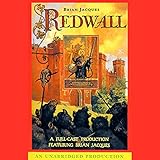
- Audible Audiobook
- Brian Jacques (Author) - Brian Jacques, Full Cast (Narrators)
- English (Publication Language)
- 10/31/2003 (Publication Date) - Listening Library (Publisher)
Redwall by Brian Jacques: Core Themes and Counterpoints
Redwall by Brian Jacques is celebrated for its robust themes of heroism, community, and the eternal struggle between good and evil. The narrative centers on the inhabitants of Redwall Abbey, a peaceful sanctuary of mice, badgers, and other woodland creatures, who are forced to defend their home against invading vermin, most notably the formidable rat, Cluny the Scourge.
The primary strength of Redwall lies in its richly detailed world-building and its cast of endearing animal characters. Brian Jacques excels at imbuing his creatures with distinct personalities, motivations, and even culinary preferences, making them relatable and memorable. The abbey itself is rendered with such vivid detail that it feels like a character in its own right, a bastion of civilization and warmth against the harshness of the outside world. The central conflict, pitting the gentle abbey dwellers against the marauding forces of Cluny, provides a clear moral framework and a compelling narrative engine.
However, a contrarian perspective might question the directness of its moral compass. The good characters are unequivocally good, and the villains are often depicted with little nuance, driven by inherent malice or greed. While effective for younger audiences, this stark dichotomy can sometimes feel less sophisticated than the more complex characterizations found in contemporary fantasy. Furthermore, the sheer volume of descriptive passages, particularly concerning food and feasts, while charming, can occasionally slow the narrative pace for readers accustomed to more rapid plot progression.
Counterpoint: The Simplicity of Good vs. Evil
While Redwall champions clear moral lines, some readers may find the black-and-white portrayal of characters limiting. The narrative rarely delves into the complexities of villainy beyond inherent nature or a lust for power, which contrasts with works that explore the gray areas of morality.
Decision Criterion: The primary decision criterion for recommending Redwall hinges on the reader’s tolerance for detailed, descriptive prose and a straightforward good-versus-evil narrative. Readers who thrive on intricate world-building and unambiguous heroism will find it exceptional. Those who prefer morally ambiguous characters and faster-paced plots might find it less engaging.
Common Myths About Redwall
- Myth 1: Redwall is just another generic animal fantasy story.
- Why it matters: This understates the unique quality of Jacques’s writing.
- Correction: While featuring animals, Redwall stands out due to its meticulous medieval setting, the almost culinary detail in its descriptions, and its epic scope, which sets it apart from simpler talking-animal tales.
- Myth 2: The feasts described in Redwall are simply filler.
- Why it matters: This misses a crucial thematic element.
- Correction: The elaborate feasts are integral to the abbey’s culture, symbolizing community, peace, and abundance. They serve as moments of respite and celebration, reinforcing the values the characters are fighting to protect.
Expert Tips for Reading Redwall
- Tip: Immerse yourself in the sensory details.
- Actionable Step: Pay close attention to the descriptions of food, the abbey’s architecture, and the natural environment.
- Common Mistake to Avoid: Skimming over descriptive passages, which are vital for understanding the atmosphere and the characters’ connection to their world.
- Tip: Track the lineage and historical echoes.
- Actionable Step: Note references to Martin the Warrior and other historical figures within the Redwall universe.
- Common Mistake to Avoid: Forgetting the significance of past heroes and their influence on present events; the past is a strong undercurrent in the narrative.
- Tip: Appreciate the character archetypes.
- Actionable Step: Identify the classic heroic journey elements in Matthias’s development and the archetypal roles of other characters.
- Common Mistake to Avoid: Expecting every character to defy their archetypal role; the power of Redwall often lies in the strength of these familiar structures.
BLOCKQUOTE_0
Decision Rules
- If reliability is your top priority for Redwall by Brian Jacques, choose the option with the strongest long-term track record and support.
- If value matters most, compare total ownership cost instead of headline price alone.
- If your use case is specific, prioritize fit-for-purpose features over generic ‘best overall’ claims.
FAQ
- Q: Is Redwall suitable for younger children, or is it more for older readers?
A: Redwall is generally considered suitable for middle-grade readers aged 8-12. While it contains battle scenes, they are not overly graphic, and the themes are clear and accessible.
- Q: Do I need to read the books in chronological order?
A: While each book in the Redwall series can often be read as a standalone story, reading them in publication order allows for a fuller appreciation of the evolving world and recurring motifs.
- Q: What makes Redwall different from other fantasy books featuring animals?
A: Redwall distinguishes itself with its deep, almost historical, world-building, the detailed descriptions of medieval life and cuisine, and its epic, multi-layered plotlines that often involve grand quests and large-scale sieges.
- Q: Are there any recurring characters across the Redwall series?
A: While most books feature new protagonists, some characters or their descendants may appear or be referenced in later installments, linking the stories within the broader Redwall universe.
| Book Title | Publication Year | Primary Protagonist Species | Key Conflict Type | Notable Feature |
|---|---|---|---|---|
| Redwall | 1986 | Mouse | Siege/Quest | Introduction to Redwall Abbey and Martin the Warrior |
| Mossflower | 1988 | Mouse, Badger | War/Rebellion | Prequel exploring the Abbey’s founding |