Binyavanga Wainaina’s How To Write About Africa
How To Write About Africa by Binyavanga Wainaina: Quick Answer
- “How To Write About Africa” by Binyavanga Wainaina is a satirical essay that deconstructs and critiques common, often harmful, Western writing conventions regarding the continent.
- It serves as a vital operational manual for writers aiming to produce accurate, respectful, and nuanced portrayals of Africa, moving beyond simplistic tropes.
- The essay’s primary value lies in its sharp, direct identification of clichés and its implicit call for authentic, specific representation grounded in reality.
How To Write About Africa by Binyavanga Wainaina: Who This Is For
- Writers, journalists, and academics preparing to engage with Africa through their work, whether in non-fiction, fiction, or academic research.
- Individuals seeking to critically analyze existing narratives about Africa and understand the impact of language on perception and representation.
What To Check First
- Identify the Satirical Intent: Recognize that Wainaina’s essay is not a prescriptive list of rules to follow, but a satirical critique of existing, flawed writing practices. The humor and exaggeration highlight the absurdity of common stereotypes.
- Pinpoint Target Tropes: Note the specific clichés Wainaina calls out: the exotic landscape, the perpetually suffering populace, the monolithic culture, and the absence of modernity. Examples include descriptions of “endless savannas” or characters defined solely by their perceived victimhood.
- Assess Authorial Context: Binyavanga Wainaina, a Kenyan author, wrote this essay from a position of lived experience and postcolonial critique. His perspective is essential for understanding the essay’s purpose: to reclaim narrative control.
- Examine Your Pre-existing Frameworks: Before writing, consider what images, assumptions, or narratives about Africa you currently hold. These may have been unconsciously absorbed from media or earlier writings.
Step-by-Step Plan: Deconstructing Tropes in How To Write About Africa
This plan outlines the practical steps for applying Wainaina’s critique to your writing process.
1. Deconstruct the Essay’s Core Criticisms:
- Action: Read “How To Write About Africa” with a focus on identifying the specific writing behaviors Wainaina satirizes.
- What to Look For: Passages where Wainaina lists forbidden words or phrases, or describes stereotypical scenarios. For example, his instruction to avoid describing “the African landscape” and instead use “the savanna” highlights the issue of generic, ungrounded descriptions.
- Mistake: Treating the essay as a simple checklist of “dos and don’ts” without grasping the underlying critique of exoticism and oversimplification.
2. Analyze the Function of Stereotypes:
- Action: Understand why Wainaina critiques these specific tropes. Consider their impact on readers’ perceptions.
- What to Look For: How clichés like “innocent children” or “Africa as a dark continent” erase individual agency, flatten complex realities, and reinforce colonial-era narratives. Wainaina’s point about Africa being a place of “modernity, of the internet, of the cellular phone” directly challenges these outdated depictions.
- Mistake: Dismissing the essay as mere literary pedantry, failing to recognize its connection to broader issues of misrepresentation and the perpetuation of harmful stereotypes.
3. Implement Specificity in Description:
- Action: When describing settings, replace vague, evocative terms with concrete, verifiable details.
- What to Look For: Instead of “a dusty village,” specify “a village in the Sahel region of Niger, characterized by mud-brick homes and sparse acacia trees.” This grounds the narrative in a tangible reality.
- Mistake: Falling back on generic, romanticized, or sensationalized adjectives that lack specific geographical or cultural anchors.
4. Humanize Characters with Agency:
- Action: Develop characters who are individuals with distinct motivations, professions, and daily lives, rather than archetypes.
- What to Look For: Give characters specific names, occupations (e.g., a software engineer in Nairobi, a farmer in rural Rwanda), and internal lives that reflect contemporary realities, not just historical or stereotypical roles.
- Mistake: Portraying African characters solely as victims, noble savages, or exotic figures, reducing them to props in a narrative defined by external perspectives.
5. Acknowledge Continental Diversity:
- Action: Consciously avoid treating Africa as a single, monolithic entity.
- What to Look For: Recognize that Africa comprises 54 distinct countries, each with its own cultures, languages, histories, and contemporary challenges and successes. When writing, specify the nation, region, or even city you are depicting.
- Mistake: Using sweeping generalizations that ignore the vast diversity of the continent, thereby perpetuating the very oversimplification Wainaina critiques.
For writers aiming to craft nuanced and respectful narratives about Africa, Binyavanga Wainaina’s ‘How To Write About Africa’ is an essential read. This satirical essay serves as a critical guide to deconstructing common Western writing conventions.
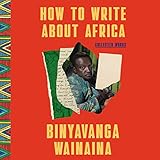
- Audible Audiobook
- Binyavanga Wainaina (Author) - Dominic Hoffman, Yinka Ladeinde (Narrators)
- English (Publication Language)
- 06/06/2023 (Publication Date) - Random House Audio (Publisher)
6. Prioritize Internal Voices:
- Action: Seek out and engage with narratives and perspectives created by Africans themselves.
- What to Look For: Contemporary African literature, journalism, and academic work that offer authentic, lived experiences and challenge external interpretations. Authors like Chimamanda Ngozi Adichie and Teju Cole provide excellent examples of nuanced portrayals.
- Mistake: Relying solely on external accounts or historical texts that may perpetuate outdated or biased viewpoints, thereby marginalizing the voices of those on the continent.
Common Mistakes to Avoid
- Mistake: Treating the essay as a literal instruction manual.
- Why it Matters: This misses the satirical intent and the critique of prescriptive advice that is often inherently flawed and culturally biased.
- Fix: Focus on the essay’s underlying principles: authenticity, specificity, nuance, and respect for diverse human experiences, rather than a rigid set of rules.
- Mistake: Continuing to use exoticizing or sensationalist language.
- Why it Matters: This perpetuates harmful stereotypes and misrepresents the complex realities of African life, exoticizing people and places for external consumption.
- Fix: Actively scrutinize your word choices. Replace vague, romanticized, or dramatic terms with grounded, factual descriptions that reflect the specific context.
- Mistake: Assuming Africa is a single, undifferentiated entity.
- Why it Matters: This erasure of diversity leads to gross generalizations that fail to capture the richness and complexity of 54 distinct nations and countless cultures.
- Fix: Specify locations, cultures, and individual experiences. Acknowledge the continent’s vast differences in your writing and research.
- Mistake: Neglecting the perspectives and voices of people from Africa.
- Why it Matters: External narratives can easily overshadow, distort, or misrepresent the lived realities of those on the continent, reinforcing colonial power dynamics.
- Fix: Prioritize reading and citing works by African writers, journalists, and scholars. Center their experiences and interpretations in your understanding and reporting.
Expert Tips for Authentic Representation
1. Actionable Step: When describing a setting in Africa, instead of using broad terms like “lush jungle” or “arid desert,” name the specific ecosystem, region, or even country. For example, specify “the Kibale Forest in Uganda” or “the Sahel region of Niger.” This provides concrete grounding.
- Common Mistake to Avoid: Relying on generic, evocative adjectives that could apply to many places but lack specific grounding, such as “vibrant,” “timeless,” or “exotic.” These terms often serve to exoticize rather than inform.
2. Actionable Step: When portraying characters, move beyond archetypes. Give them individual names, professions, aspirations, and daily concerns that reflect contemporary life, not just a romanticized past or a state of perpetual crisis. For instance, depict a young entrepreneur launching a tech startup in Lagos.
- Common Mistake to Avoid: Depicting African characters solely as victims, noble savages, or exotic figures, reducing them to props in a Western narrative or a simplistic depiction of “struggle.”
3. Actionable Step: Before publishing any piece about Africa, critically review it against Wainaina’s points. Ask yourself: “Am I inadvertently exoticizing, simplifying, or stereotyping? Have I relied on clichés?”
- Common Mistake to Avoid: Believing you are immune to perpetuating stereotypes, especially if you have limited direct experience or have primarily consumed media portrayals. Self-reflection is crucial.
Checklist for Authentic Representation
Apply these checks to your writing to ensure you are moving beyond common pitfalls identified in “How To Write About Africa by Binyavanga Wainaina.”
- [ ] Have I avoided generic geographical descriptors like “the savanna” or “the jungle” without specific context?
- [ ] Are the African characters I’ve depicted individuals with agency and complexity, or do they fit common stereotypes?
- [ ] Have I acknowledged the diversity of Africa, or am I treating it as a single, undifferentiated place?
- [ ] Does my writing focus on specific places and people, or does it rely on broad, sweeping generalizations?
- [ ] Have I considered the potential impact of my language on readers’ perceptions of Africa?
- [ ] Have I prioritized or included voices from within the continent to inform my perspective?
Quick Comparison
| Option | Best for | Pros | Watch out |
|---|---|---|---|
| How To Write About Africa by Binyavanga Wainaina Quick Answer | General use | “How To Write About Africa” by Binyavanga Wainaina is a satirical essay that… | Mistake: Treating the essay as a simple checklist of “dos and don’ts” without… |
| Who This Is For | General use | It serves as a vital operational manual for writers aiming to produce accurat… | Mistake: Dismissing the essay as mere literary pedantry, failing to recognize… |
| What To Check First | General use | The essay’s primary value lies in its sharp, direct identification of clichés… | Mistake: Falling back on generic, romanticized, or sensationalized adjectives… |
| Step-by-Step Plan Deconstructing Tropes in How To Write About Africa | General use | Writers, journalists, and academics preparing to engage with Africa through t… | Mistake: Portraying African characters solely as victims, noble savages, or e… |
Decision Rules
- If reliability is your top priority for How To Write About Africa by Binyavanga Wainaina, choose the option with the strongest long-term track record and support.
- If value matters most, compare total ownership cost instead of headline price alone.
- If your use case is specific, prioritize fit-for-purpose features over generic ‘best overall’ claims.
FAQ
- Q: Is “How To Write About Africa” meant to be taken literally as a set of rules?
- A: No, it is a satirical essay. Wainaina uses exaggeration and irony to critique the prevalent, often flawed, ways Africa has been written about. The goal is to encourage critical thinking and authentic representation, not to provide a prescriptive formula.
- Q: What is the most important takeaway from “How To Write About Africa by Binyavanga Wainaina”?
- A: The most crucial takeaway is the imperative to move beyond simplistic, stereotypical, and exoticizing portrayals of Africa and its people. It calls for nuance, specificity, and respect for the continent’s complex realities and diverse experiences.
*