Ben Okri’s Astonishing the Gods: A Journey of Spiritual Discovery
Quick Answer
- “Astonishing the Gods” by Ben Okri offers a profound, allegorical exploration of spiritual awakening and the nature of reality.
- Its strength lies in its poetic prose and philosophical depth, making it a rewarding read for those seeking introspective fiction.
- Readers should approach it as a contemplative experience rather than a plot-driven narrative to fully appreciate its impact.
Who This Is For
- Readers interested in philosophical fiction that delves into spiritual themes and the human behavior.
- Those who appreciate lyrical prose and are willing to engage with abstract concepts and symbolism.
For those seeking a deeply philosophical and introspective read, Ben Okri’s ‘Astonishing the Gods’ is an exceptional choice. It’s a novel that truly lives up to its title, offering a unique perspective on spiritual discovery.
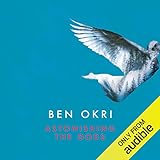
- Audible Audiobook
- Ben Okri (Author) - Adrian Lester (Narrator)
- English (Publication Language)
- 01/31/2019 (Publication Date) - Audible Studios (Publisher)
What to Check First
- Author’s Style: Ben Okri is known for his dense, metaphorical, and often dreamlike prose. If you prefer straightforward narratives, this may not be the best fit.
- Thematic Focus: The novel is less about plot progression and more about exploring ideas of illusion, reality, and spiritual transformation.
- Allegorical Nature: Expect a story that functions on multiple symbolic levels, requiring active interpretation from the reader.
- Pacing: The narrative unfolds deliberately, prioritizing internal experience and philosophical inquiry over external action.
Step-by-Step Plan for Engaging with Astonishing the Gods by Ben Okri
1. Initial Immersion: Begin reading with an open mind, allowing Okri’s language to wash over you. What to look for: The immediate sensory and emotional impact of the prose. Mistake to avoid: Trying to force a linear plot structure onto the text from the outset.
2. Identify Core Symbolism: As you read, note recurring images, characters, and events. What to look for: Patterns that suggest deeper meanings beyond the literal. Mistake to avoid: Dismissing symbolic elements as mere embellishment; they are central to the novel’s message.
3. Engage with Philosophical Questions: Pay attention to the questions the narrative raises about identity, reality, and purpose. What to look for: Moments of introspection and philosophical inquiry presented through the characters’ experiences. Mistake to avoid: Skipping over passages that feel dense or abstract; these often contain the novel’s key insights.
4. Embrace Ambiguity: Accept that not all questions will have definitive answers. What to look for: The power of suggestion and the beauty of unresolved mysteries. Mistake to avoid: Frustration with a lack of clear resolution; the ambiguity is part of the spiritual journey.
5. Reflect on the “Gods”: Consider what the concept of “gods” or divine presence signifies within the context of the novel. What to look for: Whether the “gods” represent external deities, inner potential, or the fundamental nature of existence. Mistake to avoid: Assuming a conventional religious interpretation; Okri’s use is likely more expansive.
6. Connect to Personal Experience: Relate the novel’s themes to your own understanding of life, consciousness, and transformation. What to look for: Resonance between the text’s explorations and your own inner landscape. Mistake to avoid: Treating the book solely as an external artifact; its true value lies in its capacity to provoke internal reflection.
Astonishing the Gods by Ben Okri: Deeper Thematic Exploration
Ben Okri’s “Astonishing the Gods” is not a novel to be passively consumed; it is an invitation to an internal pilgrimage. The narrative, centered on a woman who embarks on a spiritual quest, functions as an extended metaphor for the soul’s journey toward enlightenment. Okri masterfully employs a lyrical, almost incantatory prose style that draws the reader into a world where the boundaries between the physical and the spiritual are fluid. The protagonist’s encounters are less about external conflict and more about internal revelations, challenging conventional notions of reality and self. The novel asks profound questions: What is the true nature of the self? How do we perceive the world, and how might that perception be fundamentally altered? This is a work that rewards patience and contemplation, offering a unique perspective on the human search for meaning.
Common Myths
- Myth 1: “Astonishing the Gods” is a traditional fantasy novel with a clear plot.
- Why it matters: Misunderstanding the genre can lead to disappointment if readers expect typical fantasy tropes.
- Fix: Approach the novel as philosophical allegory. Its narrative structure is more akin to a spiritual journey or a dream sequence than a conventional quest with defined obstacles and resolutions.
- Myth 2: The novel is overly obscure and inaccessible.
- Why it matters: This perception can deter readers who might otherwise find value in its themes.
- Fix: Engage with the text by focusing on recurring imagery and emotional resonance. While abstract, the prose aims to evoke a feeling and a state of being, rather than demanding strict logical parsing. Think of it as experiencing a piece of music or art.
Expert Tips
- Tip 1: Read Aloud: Reading passages of “Astonishing the Gods” aloud can help you connect with the rhythm and musicality of Okri’s prose.
- Actionable Step: Select a few paragraphs that resonate with you and read them slowly, paying attention to the cadence and sound of the words.
- Common Mistake to Avoid: Reading silently and too quickly, which can cause the lyrical quality of the prose to be overlooked.
- Tip 2: Journal Your Reflections: The novel is designed to provoke thought. Keeping a journal can help you process the abstract concepts and personal connections that arise.
- Actionable Step: After reading a chapter or a significant passage, jot down any questions, images, or feelings that come to mind, without censoring yourself.
- Common Mistake to Avoid: Trying to find definitive “answers” within the text instead of embracing the questions it poses.
- Tip 3: Contextualize with Other Works: Understanding Okri’s broader thematic interests can enhance your reading of “Astonishing the Gods.”
- Actionable Step: Briefly research other works by Ben Okri, particularly those that explore similar spiritual or philosophical themes.
- Common Mistake to Avoid: Treating “Astonishing the Gods” as an isolated work, without considering its place within the author’s oeuvre.
BLOCKQUOTE_0
Decision Rules
- If reliability is your top priority for Astonishing the Gods by Ben Okri, choose the option with the strongest long-term track record and support.
- If value matters most, compare total ownership cost instead of headline price alone.
- If your use case is specific, prioritize fit-for-purpose features over generic ‘best overall’ claims.
FAQ
- Q1: Is “Astonishing the Gods” a difficult book to read?
- A1: It can be challenging due to its metaphorical language and abstract philosophical themes, but it is not necessarily “difficult” if approached with patience and an open mind. Its reward comes from contemplation, not from straightforward plot comprehension.
- Q2: What is the central message of “Astonishing the Gods”?
- A2: The novel explores the nature of spiritual awakening, the illusion of separation, and the transformative power of altered perception. It suggests that true reality lies beyond the superficial understanding of the world.
- Q3: How does Ben Okri’s writing style contribute to the novel’s themes?
- A3: Okri’s poetic and symbolic prose is integral to conveying the novel’s spiritual and philosophical dimensions. The style itself mirrors the fluid, dreamlike, and often mysterious nature of the spiritual journey it depicts.
- Q4: Should I read this book if I prefer fast-paced action stories?
- A4: If you primarily seek fast-paced action and a linear plot, this book may not align with your preferences. Its strengths lie in its introspective depth and lyrical exploration of consciousness.
| Aspect | Description | Impact on Reader |
|---|---|---|
| Prose Style | Lyrical, dense, metaphorical, dreamlike. | Evokes atmosphere, invites contemplation, can be challenging for literal readers. |
| Thematic Focus | Spiritual awakening, perception, illusion vs. reality, the nature of self. | Prompts introspection, philosophical inquiry, and personal reflection. |
| Narrative Structure | Allegorical, symbolic, non-linear. | Requires active interpretation, rewards patience, may frustrate those seeking plot. |
| Pacing | Deliberate, contemplative. | Allows for deep engagement with ideas, but can feel slow to some readers. |
| Character Arc | Primarily internal transformation rather than external achievement. | Focuses on shifts in consciousness and understanding. |